• 0 Items - £0.00
    • No products in the cart.

£64.99

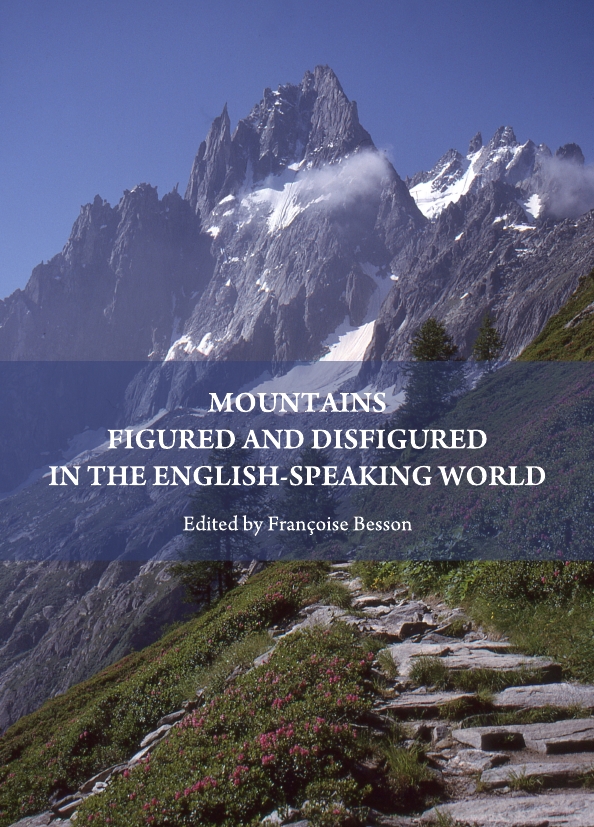
Mountains Figured and Disfigured in the English-Speaking World

Edited By: Françoise Besson

£64.99

This interdisciplinary book explores how mountains are represented in art and literature. It reveals the link between the world's shapes and human imagination, showing how art is a path to awareness and a vital tool for protecting the natural world.

The essays in this book, written by poets, novelists, mountain-climbers and academics from all over the world, evoke the representation of mountains in the English-speaking…
£64.99
£64.99
Share

The essays in this book, written by poets, novelists, mountain-climbers and academics from all over the world, evoke the representation of mountains in the English-speaking world as artists, writers, philosophers or mountain-climbers have represented them from the sixteenth to the twenty-first centuries.

From the Alps to the Pyrenees, from Mount Fuji to Mount Shasta, from the Himalayas to the Scottish Highlands, from Ikere in Nigeria to Devil’s Tower in the United States, from Uluru in Australia to the most northern mountain of the Arctic, the shapes of the world speak the same language and tell the world its own story.

This interdisciplinary book, weaving together mountaineering, literature, philosophy, painting, cinema, ecology, history, palaeontology, geography, geopolitics, toponymy, law, religion and myth, invites people to an innovative reading of mountains: it reveals the close relationship existing between the shapes of the world and all forms of writing and, at the same time, it shows how the representations of the imagination may be instrumental in protecting the natural world.

The story told by the landscape inscribes a broken line in the shapes of the world, tearing the landscape like a fragile page whenever historical and political events (wars, mining or deforestation) leave scars in the landscape; but writers’ and artists’ representations of mountains constitute a path to awareness as they are not only a painting of beauty, but an image of our link to nature and a warning as well.

For centuries the image of the mountain has conveyed a symbolism telling the story of human thought, and this book shows to what extent literature and art play an essential part in our awareness of nature.

Françoise Besson is Professor of English Literature at the University of Toulouse (UTM, CAS). Her research focuses on the relationship between landscape and writing in English, Native American and Canadian literature. Her books include Le Paysage pyrénéen dans la littérature de voyage et l’iconographie britanniques du dix-neuvième siècle (2000) and Pyrénées romanesques Pyrénées poétiques dans le regard britannique: XIXème siècle (2000). She is also the author of several collections of poems, tales and short stories.

Rick Bass, Robert Macfarlane, N. Scott Momaday , Kev Reynolds, Thomas Wharton, Rudy Wiebe, Scott Slovic, Niyi Osundare

Hardback

  • ISBN: 1-4438-1858-5
  • ISBN13: 978-1-4438-1858-2
  • Date of Publication: 2010-04-20

Ebook

  • ISBN: 1-5275-5403-1
  • ISBN13: 978-1-5275-5403-0
  • Date of Publication: 2010-04-20

Subject Codes:

  • BIC: AGN, D, RN
  • THEMA: AGN, D, RN
730
  • "It is not surprising then, that Writing to Save the Planet is a persuasive document in which she gathers an army of writers, past and present, and cherry-picks some of their most powerful arguments as weapons to protect the environment and all forms of natural life. Not content to limit her research to the obvious promoters of conservation, she trawls through every conceivable genre to bolster her armoury. There’s a chapter devoted to the theatre, with some surprising results; others in which she looks at the work of poets; at travel writing, children’s fiction and even one which includes comics that contain warnings of ecological disaster through a combination of simple text and visual imagery. No literary stone has been left unturned, and the copious footnotes and bibliography not only betray the fact that this is a work created by an academic mind, but tempt the general reader with the promise of more books to explore. In this respect, Writing to Save the Planet is a dangerous seduction for one whose overloaded shelves are already groaning with much-loved works I couldn’t bear to be without, but which need culling to make way for new titles! My copy of her book is now defaced with annotations and underlining as time and again a passage would make me stop, re-read and absorb before moving on."
    - Kev Reynolds Outdoor Writers & Photographers Guild (Spring 2019)