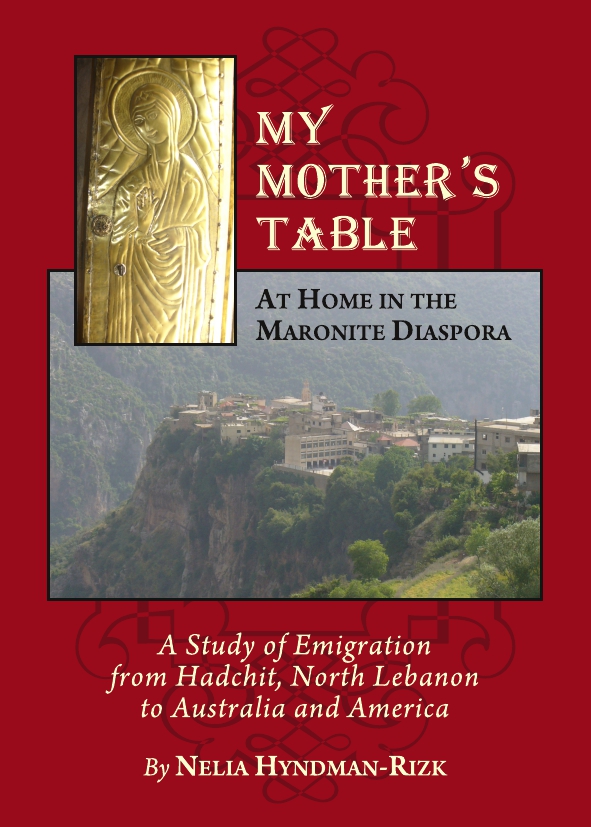
In the era of globalisation, studies of migration focus on mobility, deterritorialised identities and diasporic forms of belonging across nation state boundaries. Indeed, uprootedness from the soil of home and place has resulted in a general condition of ‘homelessness’ in late modernity, referred to as the diasporic condition. This study explores the construction of home amongst immigrants from Hadchit and their descendants in Australia and America and shows how their strategies of home-building depend upon the capacity to imagine themselves as being united by kinship, a shared village of origins and as part of the broader communal Maronite identity (Mwarne), which now transcends nation state boundaries. Patrilineage (bayt), village (day’aa) and sect (ta’eefa) have historically defined Lebanese sectarian identities and now, as this study shows, are deployed as a strategy of home-building and community construction in diaspora. However, capitalist social relations of production in Australia and America have transformed bayt, day’aa and ta’eefa amongst the second, third and fourth generations through the gendered renegotiation of the marriage contract from relations of descent to relations of consent. Thus, the Hadchitis now face a crisis of (re)production and attribute this, in the case of Australia, to the state being hukum niswen, ruled by women, an inversion of the gendered order of power in Lebanon. Through pilgrimages to the ancestral village, however, émigrés seek a spiritual resolution to the contradictions of migration through the restoration of their connection to place, but find they cannot seamlessly belong in Hadchit. Meanwhile, multicultural crisis and a milieu of anti-Lebanese racism limit their claims to national belonging in Australia and America. This study finds, therefore, that the contradictions of the migration process are unresolvable through physical mobility, because the feeling of ‘home’ is a metaphysical state of being, which transcends place and is defined by its affective, social and spiritual dimensions. The elusive quality that defines home and provides a sense of unconditional belonging is, in fact, socially constructed by women, through their daily practices of care within the home and the most important woman for the construction of homeliness is the matriarch, sit el bayt—the power of the house. Thus, the place where the immigrant can be at home is metaphorically at their ‘mother’s table.’