• 0 Items - £0.00
    • No products in the cart.

£41.99

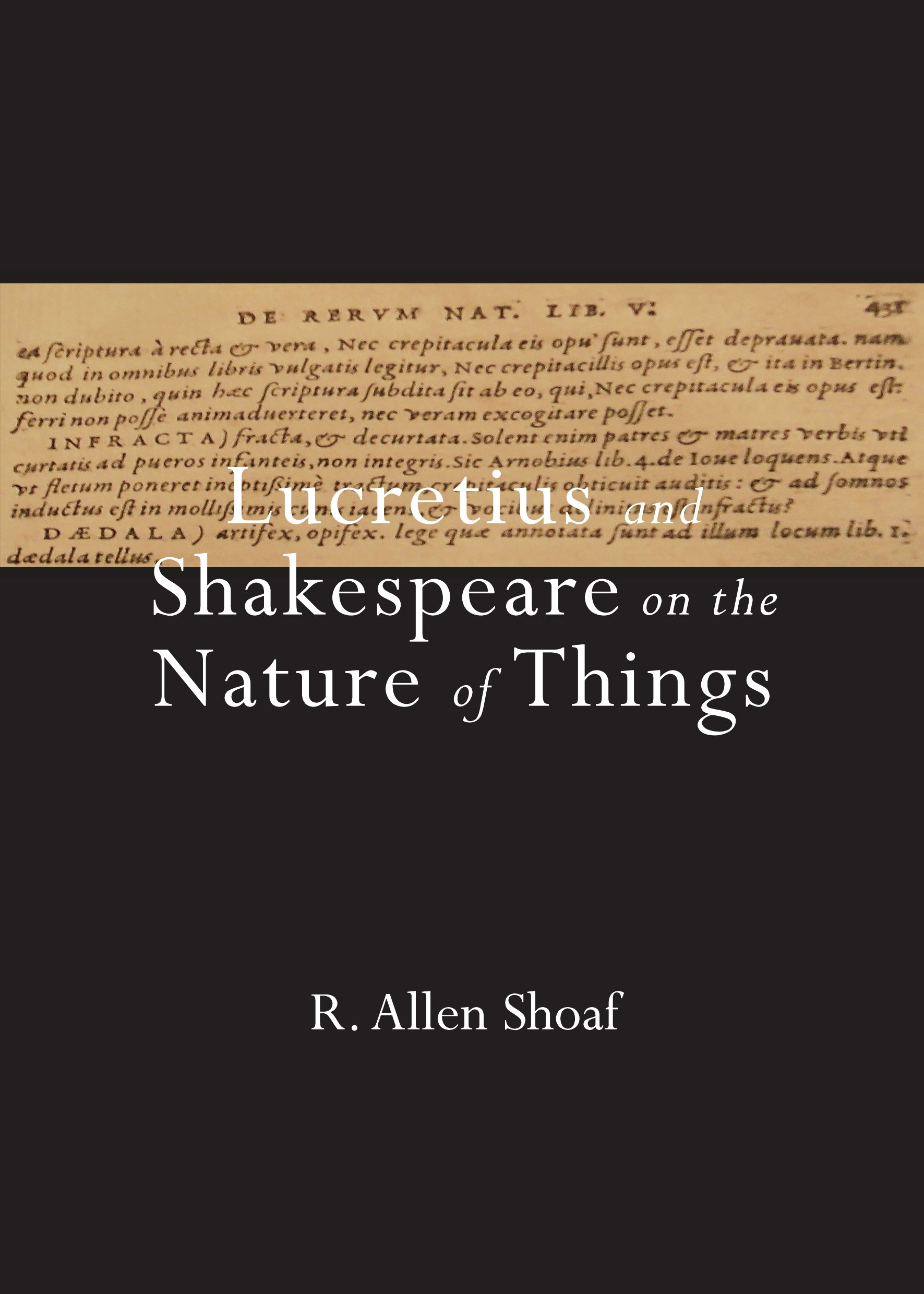
Lucretius and Shakespeare on the Nature of Things

By: Richard Allen Shoaf

£41.99

This book reveals Shakespeare as an early modern materialist inspired by Lucretius. In chapters on six important plays, it demonstrates how he writes an “atomic” poetry of joining and splitting language to explore the art of nature and the nature of art.

Lucretius and Shakespeare on the Nature of Things maps large, new vistas for understanding the relationship between De rerum natura and Shakespeare’s works. In chapters…
£41.99
£41.99
1-4438-6531-1 , , ,
Share

Lucretius and Shakespeare on the Nature of Things maps large, new vistas for understanding the relationship between De rerum natura and Shakespeare’s works. In chapters on six important plays across the canon (King Lear, Macbeth, Hamlet, The Merchant of Venice, The Tempest, and A Midsummer Night’s Dream), it demonstrates that Shakespeare articulates his erotics of being, his “great creating nature” (The Winter’s Tale), by drawing on imagery he learned from Ovid and other classical poets, but especially from Lucretius, in his powerful epic that celebrates Venus and her endless creativity. Responding to Lucretius’s widely admired Latinity in his exposition of the life of man in nature, Shakespeare emerges as an early modern materialist who writes poetry that is effectively “atomic,” marked (as we might say today) by fission (hendiadys, for example) and fusion (synoeciosis, for example), joining and splitting, splitting and joining language and character as no other poet has ever done – To give away yourself keeps yourself still; My grave is like to be my wedding bed; I begin/To doubt the equivocation of the fiend/That lies like truth. Readers of Shoaf’s book will encounter anew, through both fresh evidence and close reading, Shakespeare’s universally acknowledged commitment to the art of nature and the nature of art. With Lucretius’s poetry as inspiration, Shakespeare becomes the poet of the material, both in art and in nature, immensely creative with his dædala lingua like dædala natura – his wonder-crafting tongue like wonder-working nature.

R. Allen Shoaf, Alumni Professor of English at the University of Florida, is the author of more than a dozen books and nearly 100 papers and reviews, twice a holder of Fellowships of the National Endowment for the Humanities, Founding Editor of the prize-winning journal Exemplaria: A Journal of Theory in Medieval and Renaissance Studies, which he edited from 1987 until 2008, and the winner of six teaching awards in the University over the past 30 years, including “University-wide Teacher of the Year.” He is the author also of several books of poetry, most recently Pied-Piper Philology: Love Words, and a regular contributor to poetry magazines. A former Marshall Scholar (class of 1970) in the University of East Anglia (BA Hon 1972), he has dedicated his career to Chaucer, Shakespeare, and Milton, authoring books and numerous articles on all three poets, and has also published regularly over the past 40 years in Dante scholarship, especially regarding the relationship between late medieval sign theory and the Commedia.

Hardback

  • ISBN: 1-4438-6531-1
  • ISBN13: 978-1-4438-6531-9
  • Date of Publication: 2014-10-17

Ebook

  • ISBN: 1-4438-6953-8
  • ISBN13: 978-1-4438-6953-9
  • Date of Publication: 2014-10-17

Subject Codes:

  • BIC: DS, DSGS, HPCB
  • THEMA: DS(2ACB), DSG(5PX-GB-S), DSBD
165

Meet The Author