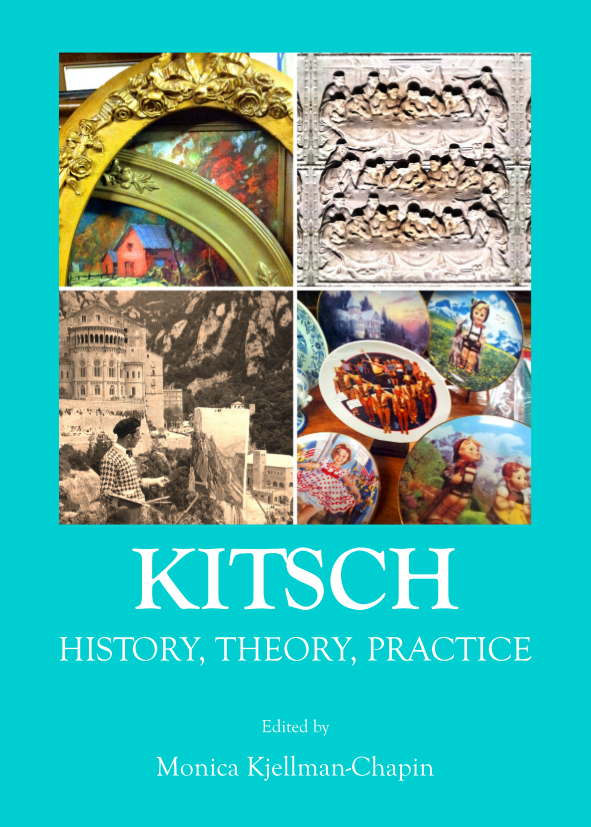
Kitsch: the mere word evokes mental images of cutesy collectibles, treacly trinkets, sweetly sentimental scenes, thematically trite tabletop tchotchkes, or perhaps anemic appropriations of canonical works of art. Frequently dismissed as facile, lowbrow, or one-off, throwaway aesthetics, kitsch elicits responses that range from the sardonic smirk laced with derision to the grin glimmering with the indulgence in a “guilty” pleasure. Kitsch, however, is surprisingly mobile and complex, as evidenced by its recent renewal as “kitschy cool.” This ambiguity not only allows it to gesture towards a disparate array of artifacts and ideations, but also to be pushed and pulled in various applicatory directions. The contributors to this collection address the problem of how and what kitsch might signify, and approach the kitsch question as a complex, nuanced interrogative. They consider kitsch in relation to its historical association with pseudo-art, its theoretical underpinnings and connections to class, the deliberate mobilization of kitsch in the work of specific artists, kitsch as a form of practice, as well as kitsch’s traffic with race, patriotism, and postmodernism. The essays in this collection necessarily cut a wide interpretative path, mapping the terrain of the phenomenon of kitsch – historically, conceptually, practically – in multivocal ways, befitting the polysemous creature that is kitsch itself. Drawing upon art history, popular culture studies, philosophy, and visual culture, the authors’ responses to the “big” question of kitsch move well beyond habitual artificial boundaries, far beyond the simple binaries of good/bad, high/low, elite/popular, or art/kitsch, into far more complex, challenging, and ultimately rewarding territory.