• 0 Items - £0.00
    • No products in the cart.

£34.99

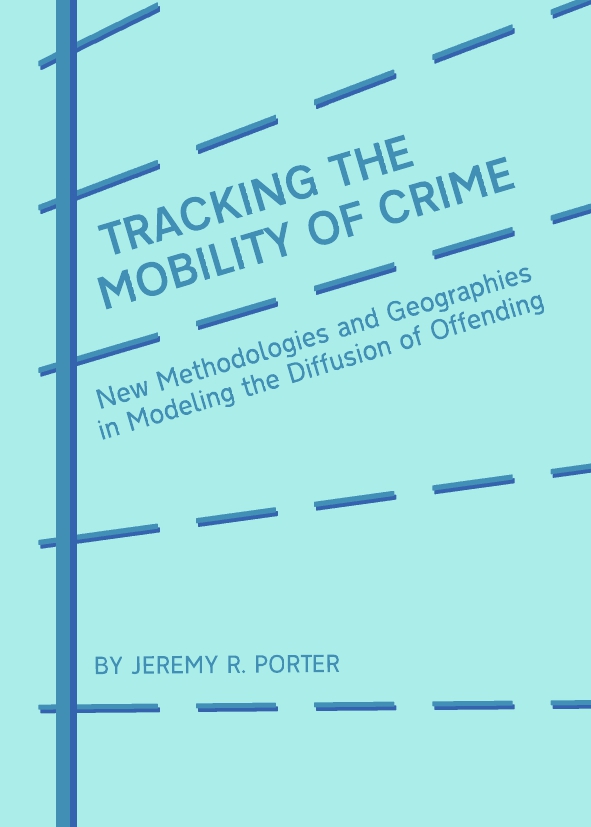
Tracking the Mobility of Crime

New Methodologies and Geographies in Modeling the Diffusion of Offending
By: Jeremy R. Porter

£34.99

This study introduces a new approach to examining sub-county geographies of crime. Using Census data and spatial statistics, it identifies significant processes in the spatial mobility and spread of criminal activity, extending methods of analysis.

Recently, increased attention has been given to the social and environmental context in which criminal offending occurs. This new interest in the human ecology of…
£34.99
£34.99
1-4438-2505-0 , ,
Share

Recently, increased attention has been given to the social and environmental context in which criminal offending occurs. This new interest in the human ecology of crime is largely demographic, both in terms of subject matter and increasingly in terms of the analytic methods. Building on existing literature within the social ecology of crime, this study introduces a new approach to developing and examining sub-county geographies of reported crime through the use of existing Census place and county definitions coupled with spatial demographic methods. This process of spatially decomposing counties into Census places and what Esselstyn (1953) earlier called “open country,” or non-places, allows for the development of a unique, but phenomenologically appropriate sub-county geography. The new sub-county geography substantively holds meaning jurisdictionally given the current organization of the criminal justice system as well as demographically in the conceptualization of “rural” and “urban” in the demographic analysis of crime. Using 1990 and 2000 Agency-level Uniform Crime Report data in conjunction with recently developed spatial statistics, significant processes of spatial mobility in regards to the spread of criminal activity are identified. This represents an extension and adaptation of current and evolving methods used in identifying processes of the spatial diffusion of crime.

Dr Jeremy R. Porter is Assistant Professor at the City University of New York—Brooklyn College. He recently completed a postdoctoral appointment in the Sociology Department at Rice University and central to this research is the ecological examination of social and spatial inequalities in the education, economic, and criminal justice systems.

Hardback

  • ISBN: 1-4438-2505-0
  • ISBN13: 978-1-4438-2505-4
  • Date of Publication: 2010-10-06

Ebook

  • ISBN: 1-4438-2534-4
  • ISBN13: 978-1-4438-2534-4
  • Date of Publication: 2010-10-06
145

Subject Codes:

  • BIC: JHB, JHBC, JHBD
  • BISAC: SOC004000, SOC015000, SOC019000, SOC006000, SOC027000, SOC026030
  • THEMA: JHB, JHBC, JHBD
145
  • “Porter's study successfully integrates recent attempts to spatialize the quantitative analysis of reported crime on both theoretical and analytical grounds. His tour de force of combining sub-county geographies with administrative-level crime reports to the FBI and the use of cutting-edge spatial statistics sets a new bar for criminologists who wish to speak to the ecology of crime. The founders of the Chicago School who traded on Galpin's use of maps must be smiling!
    - Furthermore, while his use of federally collected data of reported criminal offending is used for substantive purposes, it is obvious that this work holds much potential beyond criminology. In fact, it is applicable to the fields of statistics, demography, sociology, and criminology. The application and replication of this research with any aggregate-level count data makes the research an extremely useful tool for any research involving the use of aggregate level count data.” —Frank M. Howell, Adjunct Professor, Emory University & Emeritus Professor, Mississippi State University
  • “The analysis in this work offers more promise for reinvigorating county-level analysis that any other I have encountered. As both a demographer and human ecologist what is most impressive is the command of the theoretical basis of the works on the geography of crime, with the knowledge base of a demographer and the empirical bases of spatial analysis. The merger and/or interaction of these areas will clearly be a fruitful area of scholarship for years to come and this research is at the cutting-edge of such work.
    - I was particularly impressed by the author’s ability to show how crime spreads spatially across and among areas, something that has been virtually impossible to assess in analysis using counties in standard multivariate regression models or factorial models. This work is theoretically grounded, methodologically innovative and substantively important. I would adopt the book for use in a criminology, demography or human ecology course. In sum, I congratulate the author for writing a work that contributes to each of the disciplines noted above and most importantly rigorously examines the important linkages between them. If I can help in any way in disseminating information about this work please let me know and please continue this innovative and integrative area of research.”

Meet The Author