
• 0 Items - £0.00
    • No products in the cart.

£54.99

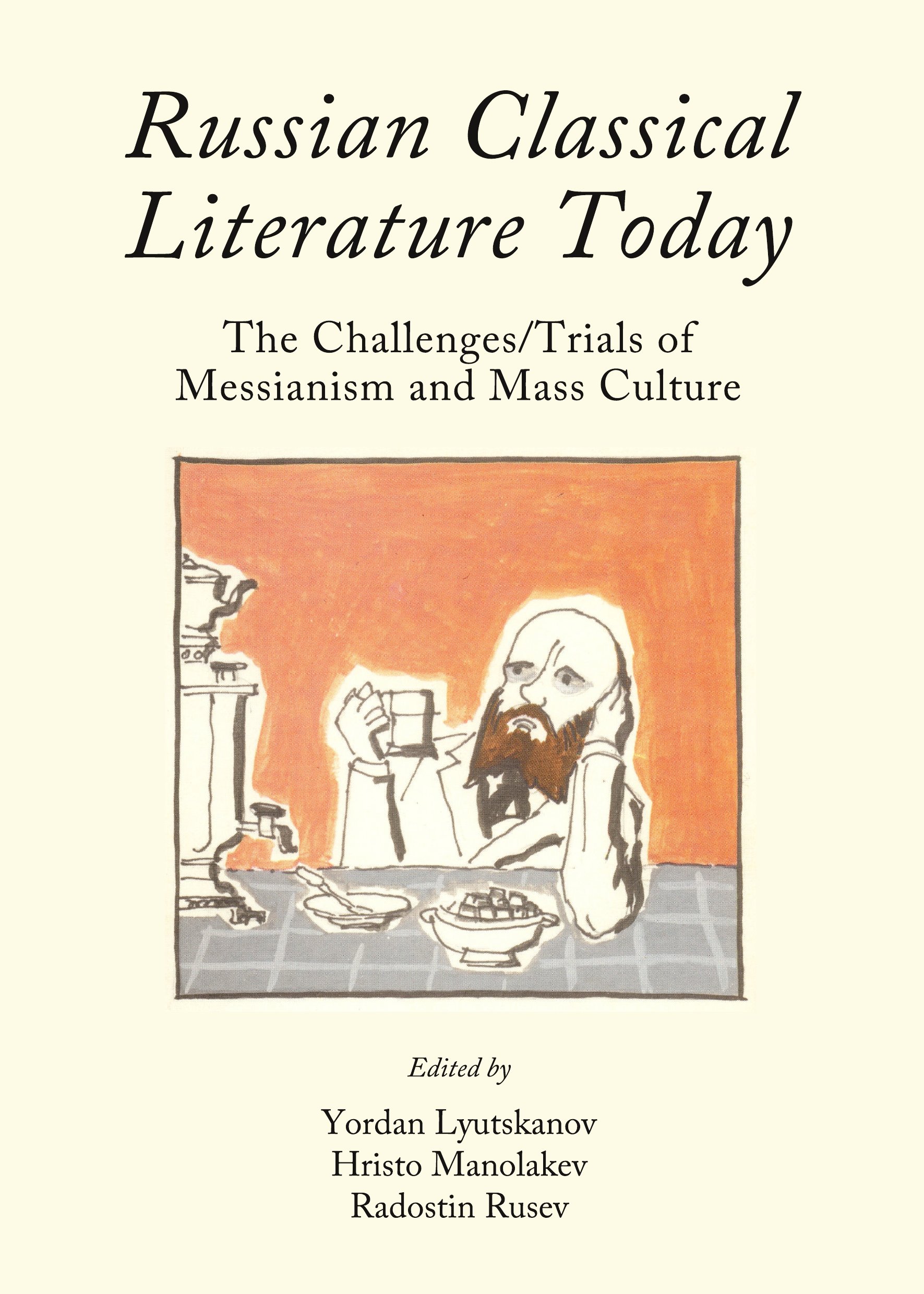
Russian Classical Literature Today

The Challenges/Trials of Messianism and Mass Culture
Edited By: Yordan Ljutskanov, Hristo Manolakev, Radostin Rusev

£54.99

This book explores the struggle for Russia's literary canon. It reveals how contemporary culture reworks the classics while resisting political and economic pressures, showing how a new canon is forged.

This book explores a range of (mis)uses of the Russian classical literature canon and its symbolic capital by contemporary Russian literature, cinema, literary scholarship, and…
£54.99
£54.99
Share

This book explores a range of (mis)uses of the Russian classical literature canon and its symbolic capital by contemporary Russian literature, cinema, literary scholarship, and mass culture. It outlines processes of current canon-formation in a situation of the expiration of a literature-centric culture that has been imbued with specific messianism and its doubles.

The book implements Pierre Bourdieu’s theory of the cultural field, focussing on a field’s constitutive pursuit of autonomy and on its flexible resistance to the double pressure of the political field and the economic field. It provides material for elaborating this theory through postulating the principal presence of a third factor of heteronomy: the ‘strong neighbour’ within the cultural field.

Furthermore, this volume demonstrates the heuristic of comparing the current Russian (mis)uses of classical literature to prior Russian and current foreign ones. As such, it also discusses such issues as the historical relativity of a literary field’s (notion of) autonomy and the geo-cultural variability of the Russian literary canon.

Yordan Lyutskanov, PhD (2006), is Associate Professor at the Institute for Literature at the Bulgarian Academy of Sciences, and is the author of Fortune’s Vestige: Dmitry Merezhkovsky’s novel “Julian the Apostate” (An Analysis of Its Classicizing Symbolism) (2008; in Bulgarian) and The Thinkability of Someone/the Other: Early Eurasianism and its Bulgarian Neighbours (2012; contains chapters in Bulgarian, English, and German). He is predominantly interested in intermediality, modernism, and cross-Black Sea interliterary contacts and parallels.

Hristo Manolakev is Associate Professor in the Department of Russian Language and Literature at St. Cyril and St. Methodius University of Veliko Tărnovo, and is the author of three monographs; two in Bulgarian – Between Image and Reading: Translated Russian Fiction During the Bulgarian National Revival (1996); and Text and Boundaries. A. S. Pushkin and His “Povesti Belkina” (2001) – and one in Russian: Griboedov – Dostoevskii – Gogol’: Typology and Hermeneutics of Word (2011). His research interests include 19th century Russian literature, and Russian-Bulgarian cross-literary contacts between the 18th and 20th centuries.

Radostin Rusev is a PhD holder in Russian literature (1993) and Associate Professor at the Institute for Literature, Bulgarian Academy of Sciences. He is a specialist in the poetics of Russian literature of the 20th and 21st centuries. His research focus is the Russian-Bulgarian literary dialogues of the 20th century. Rusev headed the Institute’s research projects “The Russian Literary Emigration in Bulgaria” (2002–2007) and “The Russian Literature in the Internet: Texts and Reading” (2007–2010). He is the author of the monograph With a Mask and Several Faces: Valentin Rasputin and Russian “village prose” in 1960–80s (2000), and the editor-in-chief of the Encyclopaedic Dictionary of Russian Émigré Periodicals in Bulgaria (1920–1943) (2012).

The editors share a research interest in the Russian émigré culture and literature of the 1920s–1930s.

Hardback

  • ISBN: 1-4438-5904-4
  • ISBN13: 978-1-4438-5904-2
  • Date of Publication: 2014-09-15

Ebook

  • ISBN: 1-4438-6182-0
  • ISBN13: 978-1-4438-6182-3
  • Date of Publication: 2014-09-15

Subject Codes:

  • BIC: APFA, DS, HRQA
  • BISAC: LIT004240, LIT006000, LIT020000, SOC026040, SOC022000, SOC052000
  • THEMA: ATFA, DS, QRYA
400