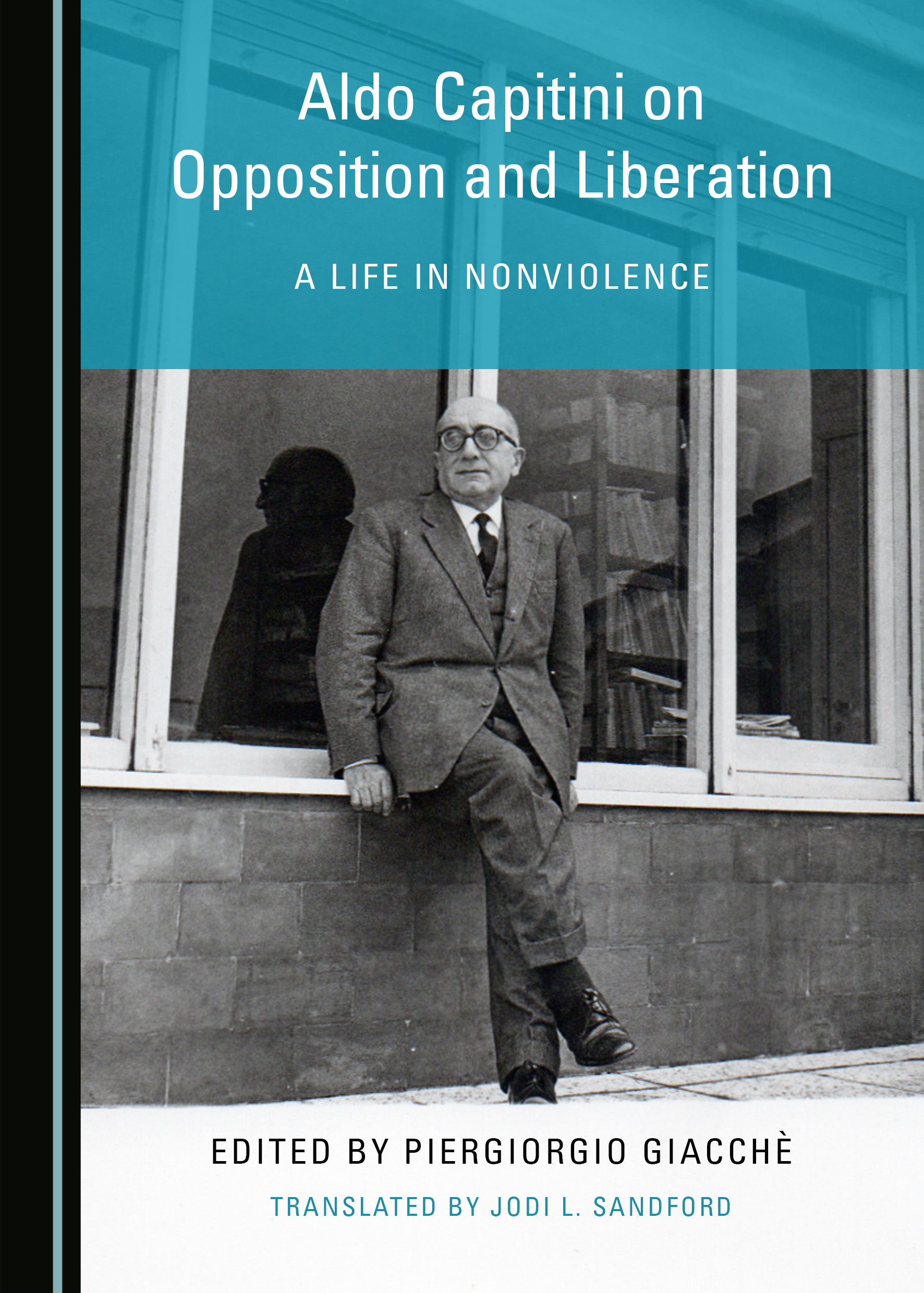
This translation of Aldo Capitini’s quasi-autobiography is long overdue. It presents an edited series of his writings spanning his lifetime (1899-1968). An Italian philosopher of nonviolence, poet, teacher, political and non-secular religious man of compresence and persuasion, Capitini encouraged his readers to embrace the philosophy of noncooperation, nonviolence, and nonmendacity. Self-taught, later removed from his university position and imprisoned as an anti-fascist, he opted for liberalsocialism and “on-the-ground strategies for social change”. His civil rights movement, somewhere between that of Martin Luther King and Gandhi, insisted on ever-pertinent and frighteningly contemporary concepts. The founder of the first Italian vegetarian association (1952) and the first Perugia Assisi Peace March (1961), Capitini preferred to work from the bottom-up and refused to become an elected political figure, which eventually led to his exclusion from official political participation. His revolutionary voice epitomizes a fundamental part of democratic involvement: if we participate, “today’s utopia can be tomorrow’s reality”.