• 0 Items - £0.00
    • No products in the cart.

From £29.99

The Universal Deep Structure of Modern Poetry

By: John A.F. Hopkins

From £29.99

Traditional criticism is inadequate for modernist poetry. This book offers a new methodology, showing how these poems are built around deep-level propositions. By comparing images, readers can reconstruct meaning and uncover signifying mechanisms that may well be universal.

With something of a poetry renaissance currently under way worldwide, there is now, more than ever, a need for a solidly-based methodology for interpreting poems:…
From £29.99
From £29.99
1-5275-4625-X , ,
Share

With something of a poetry renaissance currently under way worldwide, there is now, more than ever, a need for a solidly-based methodology for interpreting poems: something more empirical than traditional ‘lit-crit’ approaches, and something more linguistically-informed than the version of ‘postmodernism’ rampant in certain Anglophone universities. The latter approach, which tends to allow the individual reader to do what he/she likes with a poetic text, is inadequate to interpret modernist poetry, whose English-language precursors may be found in the late Romantics; its pioneers were already writing (in France) as early as 1840. What is so different about the modernists? Most importantly, their works are monumental, in that they are strongly resistant to deconstruction. Contributing to this resistance is the fact that they are built around two deep-level propositions, each of which generates a set of indirectly-signifying images, sharing the same internal structure, but having a different vocabulary. Thus, they do not signify according to linear narrative, but according to these propositions—and the relation between them—which may be reconstructed by a careful comparison of images on the textual surface.

Every text—as subject-sign—refers to an intertextual object-sign, which is usually another poem, but may also be a film or other form of art. Mediating between these two signs is their reader-constructed interpretant, which completes the semiotic triad. As this book shows, the novelty of this sign is thrown into relief by the contrast it makes with a lexical counterpart from the reader’s experience, which differs from the interpretant in structure. The book’s inclusion of French and Japanese, as well as English poems, shows that deep-level signifying mechanisms may well be universal, with considerable research and pedagogical implications.

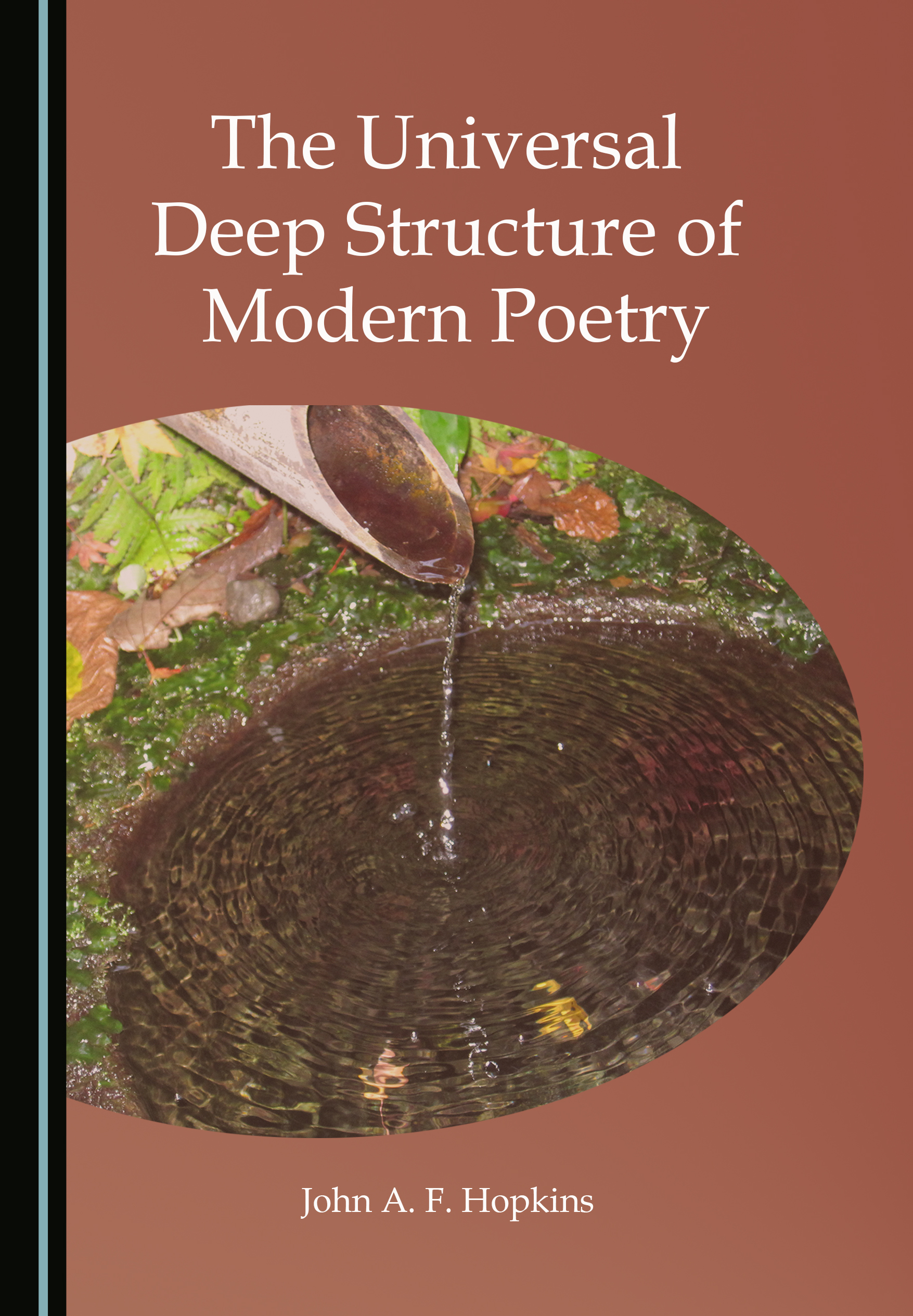
John A.F. Hopkins was a career diplomat in Tokyo (1968-1973), and holds MA degrees in French Literature and Linguistics, and a PhD in Linguistics and Semiotics. He is the author of Présentation et critique de la théorie sémiotique littéraire de Michael Riffaterre (1994), as well as numerous articles—in English, French and Japanese—on the semiotics of poetry. He has lectured in Japanese language and literature in New Zealand (1978-1980), and been Visiting Professor in Semiotics of Literature at several universities in France. He was Associate Professor and subsequently Professor in the Literature Department of Tamagawa University, Japan.

Hardback

  • ISBN: 1-5275-4625-X
  • ISBN13: 978-1-5275-4625-7
  • Date of Publication: 2020-04-16

Paperback

  • ISBN: 1-5275-8260-4
  • ISBN13: 978-1-5275-8260-6
  • Date of Publication: 2022-03-29

Ebook

  • ISBN: 1-5275-4910-0
  • ISBN13: 978-1-5275-4910-4
  • Date of Publication: 2022-03-29
255

Subject Codes:

  • BIC: DC, H
  • BISAC: LIT006000, LIT014000, LIT024000, LAN009000, LAN016000, LAN009010
  • THEMA: DC, NH
255
  • “Following in the footsteps of Michael Riffaterre, and modifying his theory that poems are generated by transforming an elementary sentence or matrix into a series of images, John Hopkins boldly proposes a method for interpreting modern poetry. Specifying the need for two matrices for each poem instead of only one, this unusual and challenging book helps to account for the thematic tensions characteristic of poems of at least the last century.”
    - Jonathan Culler Cornell University

Meet The Author