• 0 Items - £0.00
    • No products in the cart.

From £19.99

Soupy Sales and the Detroit Experience

Manufacturing a Television Personality
By: Francis Shor

From £19.99

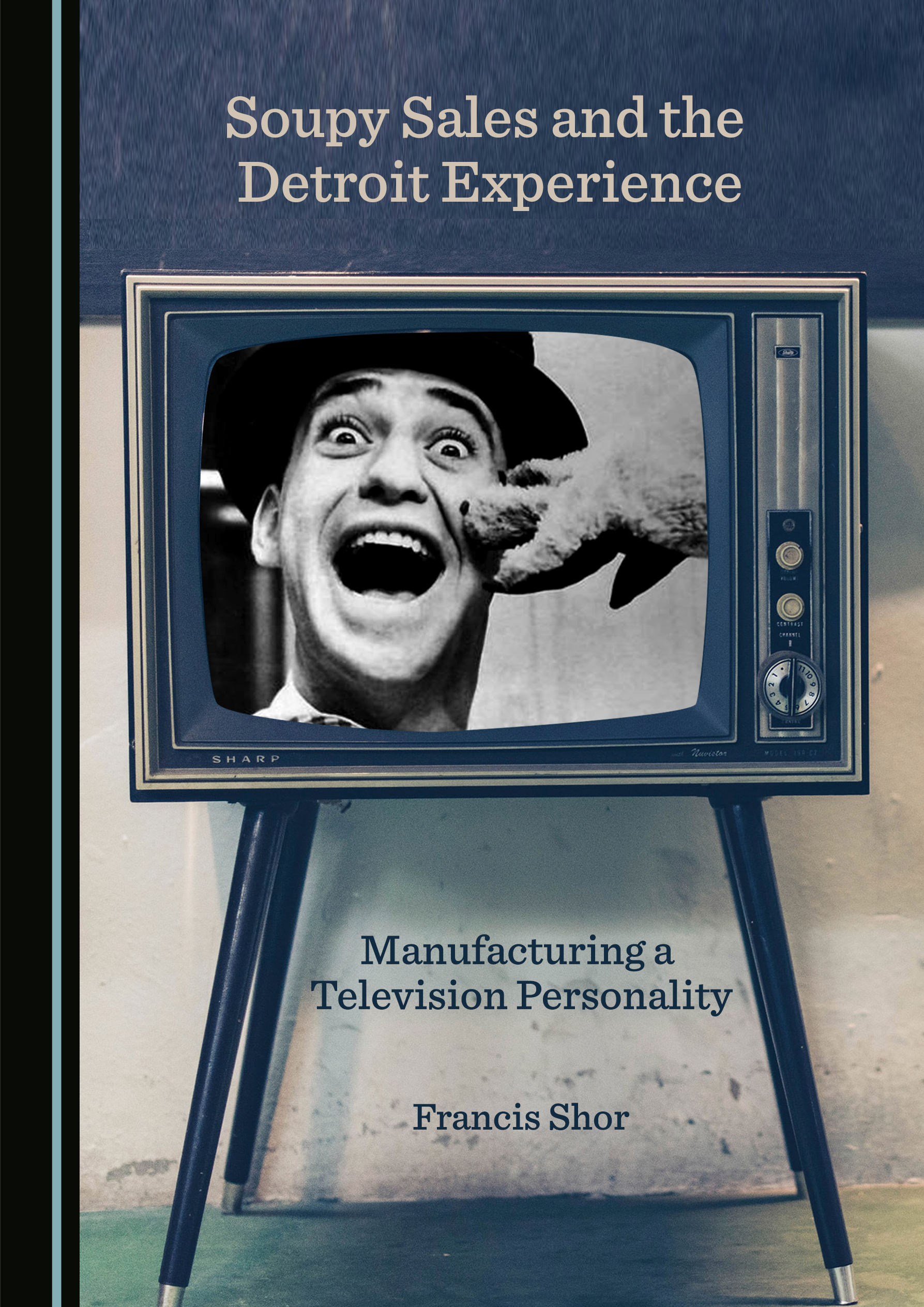
While Soupy Sales achieved national fame in the 1960s, the template was set in Detroit. This study of his early WXYZ TV shows explores the manufacturing of a personality and offers insights into 1950s pop culture, the Cold War, Jewish-inflected humor, and jazz.

When Soupy Sales left Detroit in 1960 after seven years on WXYZ TV, he was the highest-paid local television personality and one of the most…
From £19.99
From £19.99
1-5275-7553-5 , , ,
Share

When Soupy Sales left Detroit in 1960 after seven years on WXYZ TV, he was the highest-paid local television personality and one of the most well-known and loved celebrities in town. His daytime television programs in the early morning and noontime had an enormous and devoted following. The latter, Lunch with Soupy Sales, was nationally syndicated on ABC on Saturday, starting in the fall of 1959. His late evening program, Soupy’s On, featured everything from renowned jazz artists to pop singers to satirical skits. While he would achieve more celebrity status in Los Angeles and New York during the 1960s, the template for the puppet characters, comedy routines, and zany sketches had been set in Detroit.

This study of the content and context of Soupy’s time on WXYZ TV provides important insights into key threads of popular culture in the 1950s, including the role of television and its impact on the family and children, the influence of Cold War and consumerist ideology, Jewish-inflected humor, and jazz, especially as a component of the Detroit socio-cultural history in this period. All of these seemingly disparate topics, however, lead back to identifying the manufacturing of a television personality at a particular moment in time and in a specific location.

Beyond the network of Soupy fans, anyone interested in how a television personality achieves local and national prominence should consider reading this book. Also, those who want to understand the role of the media and popular culture in the 1950s will be enlightened, and even entertained, by this exploration of Soupy Sales’ Detroit experience.

Francis Shor is an Emeritus Professor of History at Wayne State University, USA. During his long academic career, he authored numerous books, the most recent being Weaponized Whiteness: The Constructions and Deconstructions of White Identity Politics (2020), and hundreds of articles covering a broad range of topics in 20th century US and global social and cultural history. In addition to his academic work, he has been a long-time peace and justice activist, serving on the Boards of Peace Action of Michigan and the Michigan Coalition for Human Rights (MCHR).

Hardback

  • ISBN: 1-5275-7553-5
  • ISBN13: 978-1-5275-7553-0
  • Date of Publication: 2021-11-12

Paperback

  • ISBN: 1-5275-7640-X
  • ISBN13: 978-1-5275-7640-7
  • Date of Publication: 2021-11-08

Ebook

  • ISBN: 1-5275-7682-5
  • ISBN13: 978-1-5275-7682-7
  • Date of Publication: 2021-11-08
145

Subject Codes:

  • BIC: BGF, JFCA, JFDT
  • THEMA: DNBF, JBCC1, JBCT2
145
  • "Francis Shor's Soupy Sales and the Detroit Experience is an important contribution to the understanding of this fertile period of television history."
    - Daniel P. Murphy Professor of History, Hanover College, Hanover, Indiana, USA
  • "This thoroughly-researched and well-written volume contributes to our more nuanced understanding of the first decades of television broadcasting in the US. Shor’s book captures the spirit of the performer and charts his ability to manufacture a delightful comic persona that deeply resonated with his televisual community. Francis Shor’s invaluable case study of local media stardom and TV production is intertwined with a cultural history of the vibrant, tension-filled Motor City at the height of its economic power. Shor admirably overcomes these obstacles, creating a rich circuit of culture study across seven chapters. He examines newspaper reviews and interviews, and collects local viewers’ memories, together with incorporating insights from Sales’ autobiography."
    - Kathryn Fuller-Seeley Historical Journal of Film, Radio and Television Vol. 0, No. 0 (02 Feb 2024)
  • “Mention the name Soupy Sales to any Baby Boomer and you’ll most likely be met with a huge smile and a memory of one of his whacky shows that appealed as much to adults as they did to children. But few know about the early days in Soupy’s career, and the soil into which the seeds of his comic sensibilities were planted. Francis Shor does a terrific job of chronicling Soupy’s early days in television, especially those important Detroit years, before he made it to Los Angeles and then New York, where he created some of his most memorable characters. Shor makes a compelling case for placing Sales squarely in the pantheon of other legendary TV comedians like Pinky Lee and Milton Berle.”
    - Charles Salzberg Co-Author (with Soupy Sales), Soupy Sez: My Life and Zany Times and twice-nominated Shamus Award author of the Henry Swann series
  • “Francis Shor’s lively study of comedian Soupy Sales’ career in the early years of Detroit TV is a total delight! The stories about the young viewers’ engagement with the show at lunchtime, and Soupy’s innovative performances and production in both daytime and nighttime local television in the 1950s and 1960s are fascinating. Shor’s meticulously researched and captivating book adds wonderful new chapters to our knowledge of TV studies and the cultural history of Detroit.”
    - Kathryn Fuller-Seeley William P. Hobby Centennial Professor of Communication, The University of Texas at Austin; author, Jack Benny and the Golden Age of American Radio Comedy
  • “Entertaining and well-written, this story of Soupy Sales and his years in Detroit is a time machine transporting the reader back to the 1950s in a wonderful way. Supplemented with information about the comedy landscape of the time and the unique relationship Soupy had with Detroit, the book is historically valuable while simultaneously being warm and nostalgic.”
    - Lawrence Epstein Author, The Haunted Smile: The Story of Jewish Comedians in America
  • “An entertaining read about a beloved pop-cultural icon that also captures the complexity of Detroit’s economic, political, and social landscape in the 1950s. This book will change the way you understand Soupy Sales’s humor, the wild popularity of his TV show, and his enduring impact on an entire generation of viewers. This is cultural history with pie-in-the-face explanatory power.”
    - Catherine Cangany, PhD Executive Director, Jewish Historical Society of Michigan; author, Frontier Seaport: Detroit's Transformation into an Atlantic Entrepôt
  • “Francis Shor has done the painstaking research of relating Sales’ evening program, “Soupy’s On,” to the jazz life of Detroit. Many prominent jazz artists appeared on the program when they played in Detroit jazz clubs. This is a most unique and valuable addition to Detroit jazz history.”
    - Lars Bjorn Professor Emeritus of Sociology, University of Michigan; author (with Jim Gallert), Before Motown: A History of Jazz in Detroit

Meet The Author