For millennia, philosophy has failed to define art. This searching critique reveals why and proposes a new philosophy, demonstrating that art is quintessentially involved in the meaning of life, our impulse for self-knowledge, and understanding the human condition.
Jürgen Lawrenz
Author's books
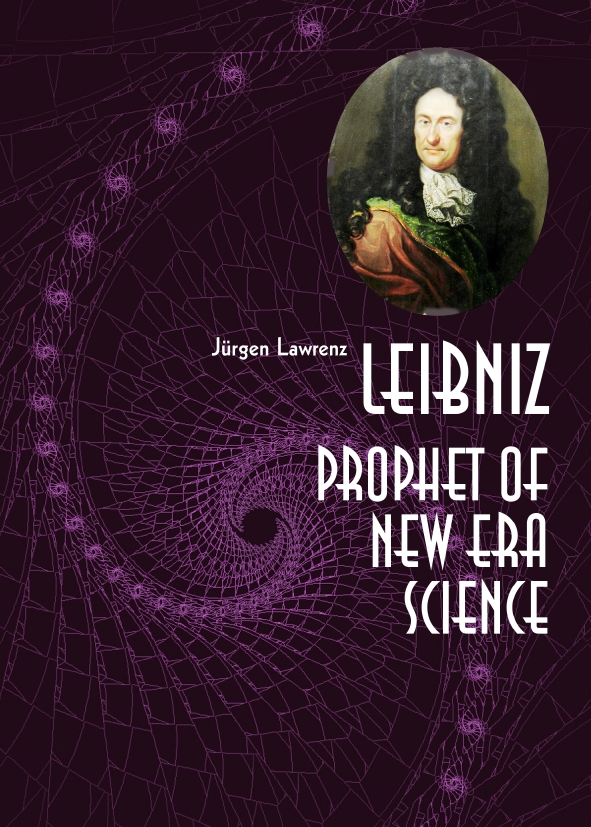
Modern scientists and philosophers confront the prophetic legacy of Leibniz, whose 17th-century metaphysics presaged today’s research into relativity, quantum cosmology, complexity theory, and the computer era, revealing his profound impact on science.
This provocative book argues that life and mind elude purely materialistic explanations. It posits intelligence as a precondition for organic existence, a serious challenge to modern science, and culminates in a philosophical proof of the mind system.
These essays argue for the persisting relevance of metaphysical speculation. Delving into thinkers from Hegel to Wittgenstein, the focus is on the autonomous agency of the human being—a concept at odds with the mechanistic doxa under which modern science is compelled to operate.
The Metamorphoses of Philosophy I
Charting 3000 years of Western thought, this book explores how philosophical ideas emerge from the interplay of culture, cognition, and values. This first volume traces philosophy’s origins to its peak in ancient Greece, with a compelling contrast to classical Chinese thought.
The Metamorphoses of Philosophy II
Providing a phenomenology of the Western mind, this second of three volumes maps philosophy’s re-emergence in scholasticism and early modern science, up to its peak in the great metaphysical systems of 19th century German philosophy.
The Metamorphoses of Philosophy III
A 3000-year journey into the Western mind. This book explores how ideas emerge from the interplay of philosophy, culture, and science. In a conversational style, it powerfully challenges scientific reductionism, appealing to historians and all deep thinkers.
The Nature of Reality and the Reality of Nature
Drawing on unpublished papers, this study unveils a Leibniz of breathtaking boldness, whose ambition was to solve the enigma of existence by uniting physical reality with metaphysical possibility.