
View more
This product has multiple variants. The options may be chosen on the product page
From £32.99
This book explores the nonlinear features of natural phenomena through mathematical models. It focuses on practical methods to investigate these problems, presenting approaches applicable to a wide class of nonlinear equations and guiding even uninitiated readers.
This book explores the nonlinear features of natural phenomena through mathematical models. It focuses on practical methods to investigate these problems, presenting approaches applicable to a wide class of nonlinear equations and guiding even uninitiated readers.
View more
This product has multiple variants. The options may be chosen on the product page
View more
This product has multiple variants. The options may be chosen on the product page
From Nonlinear Dynamics to Trigonometry’s Magic
A Definite Vision of the Lorenz Equations
This book unravels the mathematics of nonlinear dynamics using simple trigonometry. A tutorial for beginners and experts, it examines the fundamental example of Chaos, the Lorenz-Haken equations, with an original approach. For physicists, mathematicians, and students alike.
This book unravels the mathematics of nonlinear dynamics using simple trigonometry. A tutorial for beginners and experts, it examines the fundamental example of Chaos, the Lorenz-Haken equations, with an original approach. For physicists, mathematicians, and students alike.
View more
This product has multiple variants. The options may be chosen on the product page
View more
This product has multiple variants. The options may be chosen on the product page
From £32.99
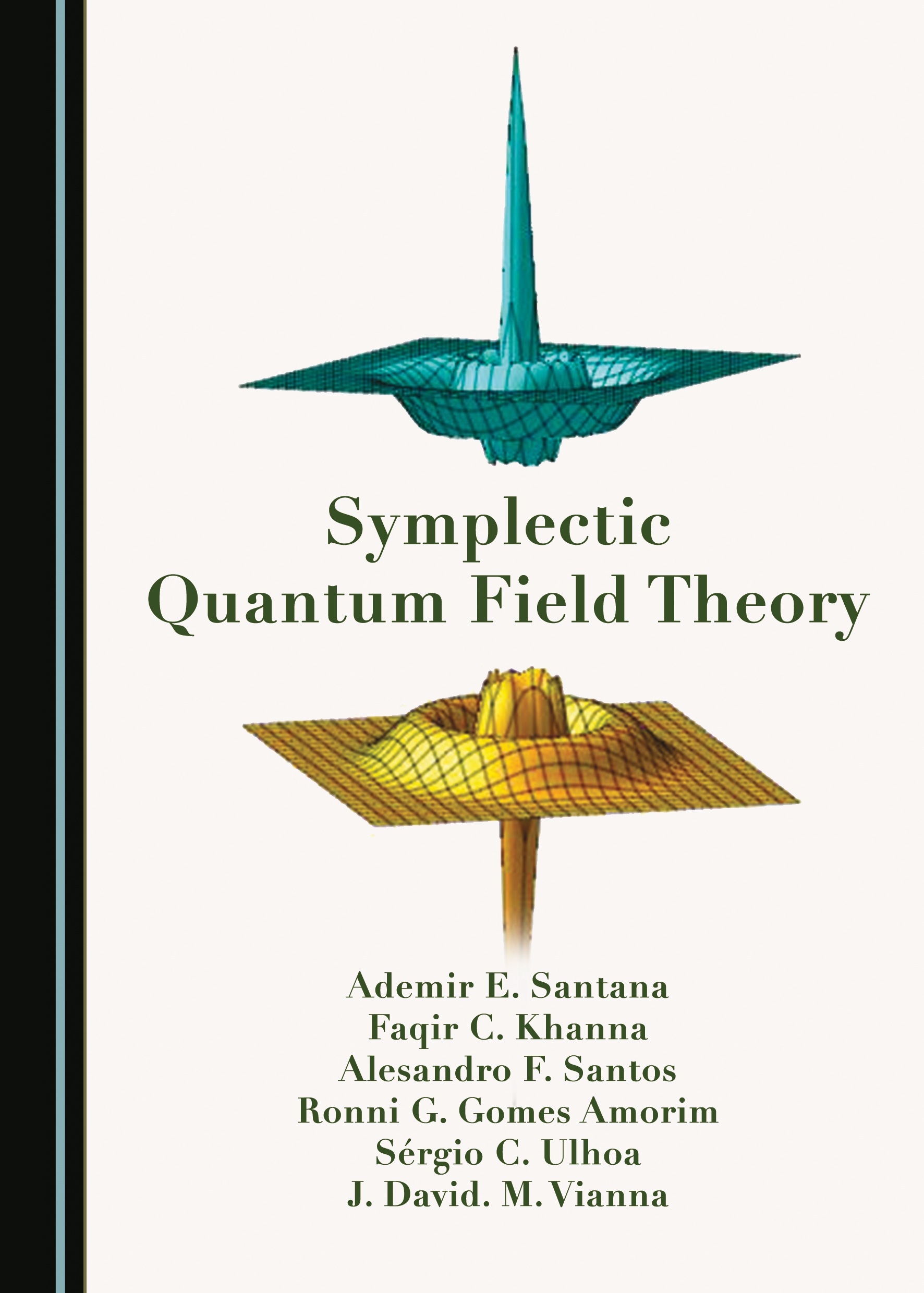
This monograph covers symmetries on a symplectic manifold, giving rise to quantum field theory via phase space and the Wigner function. This approach describes quantum chaos, introduces gauge symmetries, and leads to Symplectic Schrödinger, Klein-Gordon, and Dirac equations.
This monograph covers symmetries on a symplectic manifold, giving rise to quantum field theory via phase space and the Wigner function. This approach describes quantum chaos, introduces gauge symmetries, and leads to Symplectic Schrödinger, Klein-Gordon, and Dirac equations.
View more
This product has multiple variants. The options may be chosen on the product page
View more
This product has multiple variants. The options may be chosen on the product page
From £32.99
This book addresses the complex N-body problem, providing a general approach to show that many mass configurations can be solved deterministically. It gives the reader the tools to master binary, trinary, and quadruple structured configurations for real and theoretical work.
This book addresses the complex N-body problem, providing a general approach to show that many mass configurations can be solved deterministically. It gives the reader the tools to master binary, trinary, and quadruple structured configurations for real and theoretical work.
View more
This product has multiple variants. The options may be chosen on the product page

View more
This product has multiple variants. The options may be chosen on the product page
From £32.99
This volume presents research on gas-discharge plasma for creating powerful, tunable excilamps. It details the application of these studies to develop efficient blue-green and ultraviolet radiation sources for specialists in plasma physics and quantum electronics.
This volume presents research on gas-discharge plasma for creating powerful, tunable excilamps. It details the application of these studies to develop efficient blue-green and ultraviolet radiation sources for specialists in plasma physics and quantum electronics.
View more
This product has multiple variants. The options may be chosen on the product page
View more
This product has multiple variants. The options may be chosen on the product page
£64.99
A self-study guide to Solid State Physics for students of Physics, Engineering, and Materials Science. It contains carefully selected problems and detailed solutions, with core concepts presented concisely and with minimal math to help you master problem-solving.
A self-study guide to Solid State Physics for students of Physics, Engineering, and Materials Science. It contains carefully selected problems and detailed solutions, with core concepts presented concisely and with minimal math to help you master problem-solving.
View more
This product has multiple variants. The options may be chosen on the product page
View more
This product has multiple variants. The options may be chosen on the product page
£64.99
This book describes a new interpretation of the Standard Model based on relations between particle masses and stable intervals in nuclear data. A combined analysis of these two data sets is performed for the first time, revealing many new relations based on the electron.
This book describes a new interpretation of the Standard Model based on relations between particle masses and stable intervals in nuclear data. A combined analysis of these two data sets is performed for the first time, revealing many new relations based on the electron.
View more
This product has multiple variants. The options may be chosen on the product page

View more
This product has multiple variants. The options may be chosen on the product page
From £32.99
Explore magnetic nanoparticles (MNPs) as powerful adsorbents for purifying water. This book provides an in-depth overview of MNP synthesis, properties, and applications in removing heavy metals and organic pollutants, enhancing water quality for environmental and human health.
Explore magnetic nanoparticles (MNPs) as powerful adsorbents for purifying water. This book provides an in-depth overview of MNP synthesis, properties, and applications in removing heavy metals and organic pollutants, enhancing water quality for environmental and human health.
View more
This product has multiple variants. The options may be chosen on the product page
View more
This product has multiple variants. The options may be chosen on the product page
From £32.99
For advanced students, this book establishes a path from the study of phase transitions to the current understanding of living matter. It explores concepts from statistical mechanics, non-linear systems, chaos and self-organization drawn from physics, chemistry and biology.
For advanced students, this book establishes a path from the study of phase transitions to the current understanding of living matter. It explores concepts from statistical mechanics, non-linear systems, chaos and self-organization drawn from physics, chemistry and biology.
View more
This product has multiple variants. The options may be chosen on the product page

View more
This product has multiple variants. The options may be chosen on the product page
From £20.00
Entropy is one of the most interesting concepts in physics. Although a well-defined concept, it is still frequently perceived as one cloaked in mystery. This book, however, discusses entropy and the Second Law of Thermodynamics in such a way that everyone can understand them.
Entropy is one of the most interesting concepts in physics. Although a well-defined concept, it is still frequently perceived as one cloaked in mystery. This book, however, discusses entropy and the Second Law of Thermodynamics in such a way that everyone can understand them.
View more
This product has multiple variants. The options may be chosen on the product page
View more
This product has multiple variants. The options may be chosen on the product page
£64.99
This book is devoted to a quasi-classical treatment of quantum transitions, with an emphasis on magnetic and electric dipolar resonance. In addition to known results, it presents parametric resonance for electric dipoles, which may lead to spontaneous electric polarization.
This book is devoted to a quasi-classical treatment of quantum transitions, with an emphasis on magnetic and electric dipolar resonance. In addition to known results, it presents parametric resonance for electric dipoles, which may lead to spontaneous electric polarization.
View more
This product has multiple variants. The options may be chosen on the product page
View more
This product has multiple variants. The options may be chosen on the product page
From £32.99
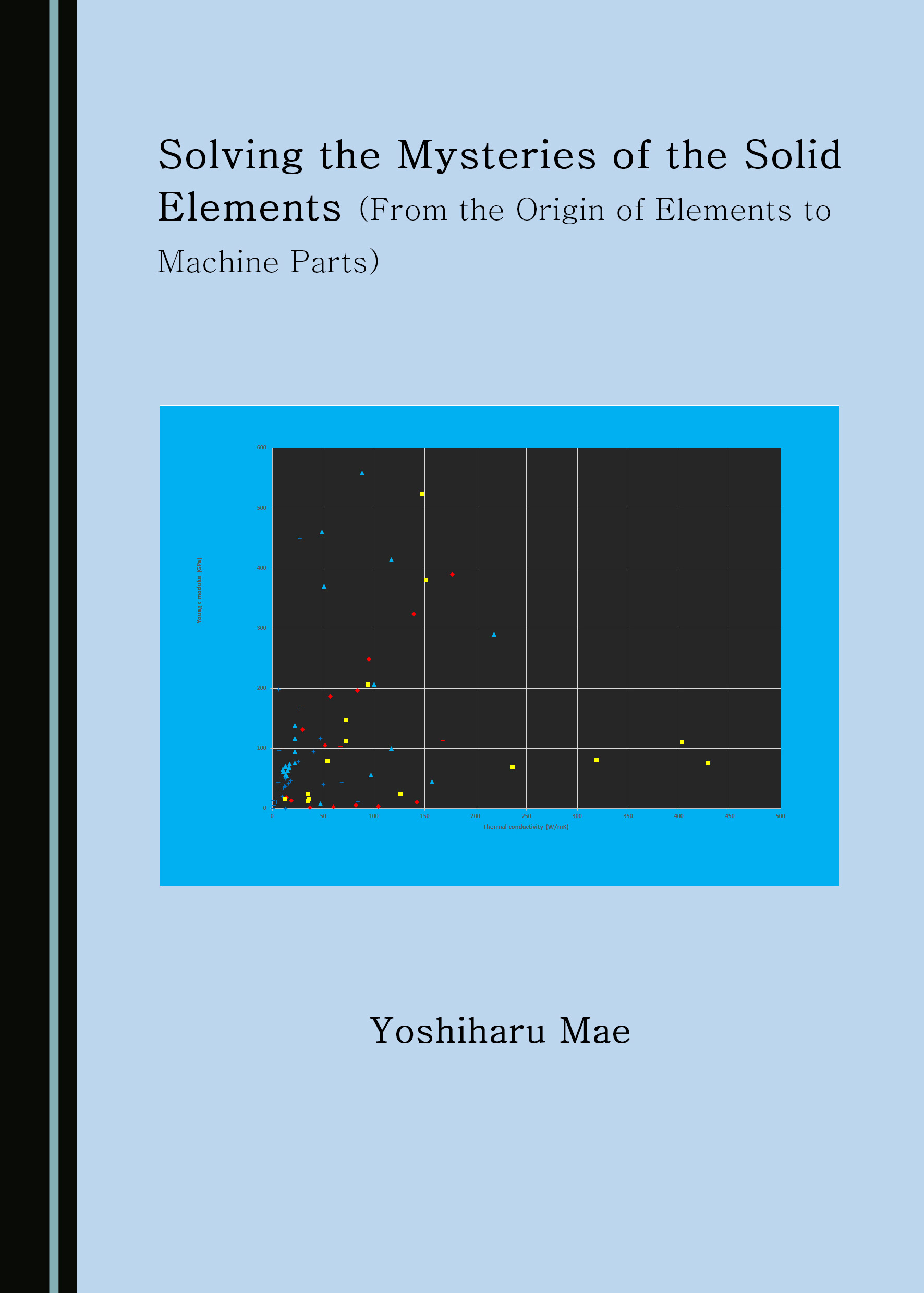
This book graphically represents metallic and semi-metallic elements, allowing their nature to be interpreted. Each element is plotted in a diagram with thermal conductivity on the abscissa and the Young’s modulus on the ordinate.
This book graphically represents metallic and semi-metallic elements, allowing their nature to be interpreted. Each element is plotted in a diagram with thermal conductivity on the abscissa and the Young’s modulus on the ordinate.
View more
This product has multiple variants. The options may be chosen on the product page
View more
This product has multiple variants. The options may be chosen on the product page
£64.99
This book proposes a model of light knot electronic structure, challenging the interpretation of quantum entanglement and proving a paradox in the uncertainty relationship. It establishes the foundation for a deterministic, local-realism quantum mechanics.
This book proposes a model of light knot electronic structure, challenging the interpretation of quantum entanglement and proving a paradox in the uncertainty relationship. It establishes the foundation for a deterministic, local-realism quantum mechanics.
View more
This product has multiple variants. The options may be chosen on the product page
View more
This product has multiple variants. The options may be chosen on the product page
£64.99
The muon is vital to particle, nuclear, and atomic physics, and a key component of the Standard Model. Muonic processes provide crucial information on the weak interaction. This book explores the various aspects of muon physics, highlighting the most recent experiments conducted.
The muon is vital to particle, nuclear, and atomic physics, and a key component of the Standard Model. Muonic processes provide crucial information on the weak interaction. This book explores the various aspects of muon physics, highlighting the most recent experiments conducted.
View more
This product has multiple variants. The options may be chosen on the product page
View more
This product has multiple variants. The options may be chosen on the product page
From £31.99
This volume describes all facets of reactor physics in an easily comprehensible manner, without any loss of rigour. It presents the main mathematical formulas of these areas, providing a detailed explanation of the conceptual ideas behind them.
View more
This product has multiple variants. The options may be chosen on the product page
View more
This product has multiple variants. The options may be chosen on the product page
From £31.99
This book highlights a new area in laser ablation in liquid, focusing on pseudo-line tension and the cavitation bubble. It theoretically reproduces the bubble's dynamics and offers insights into its role in nanoparticle growth and its effect on the liquid's thermal properties.
This book highlights a new area in laser ablation in liquid, focusing on pseudo-line tension and the cavitation bubble. It theoretically reproduces the bubble’s dynamics and offers insights into its role in nanoparticle growth and its effect on the liquid’s thermal properties.
View more
This product has multiple variants. The options may be chosen on the product page

View more
This product has multiple variants. The options may be chosen on the product page
From £31.99
Einstein’s geometric time versus Bergson’s experienced duration. Are they two separate entities? Relying on research into space-time and the philosophy of mind, this book posits that the physical world evolves predictably and examines if our relationship to time can be modified.
Einstein’s geometric time versus Bergson’s experienced duration. Are they two separate entities? Relying on research into space-time and the philosophy of mind, this book posits that the physical world evolves predictably and examines if our relationship to time can be modified.
View more
This product has multiple variants. The options may be chosen on the product page

View more
This product has multiple variants. The options may be chosen on the product page
From £31.99
With an irreverent tone, the author debunks modern physics using common sense and experimental evidence. He proposes a new unifying model where all events are connected, from the subatomic to galaxies. This provocative read requires no advanced scientific knowledge.
With an irreverent tone, the author debunks modern physics using common sense and experimental evidence. He proposes a new unifying model where all events are connected, from the subatomic to galaxies. This provocative read requires no advanced scientific knowledge.
View more
This product has multiple variants. The options may be chosen on the product page
View more
This product has multiple variants. The options may be chosen on the product page
From £31.99
This book provides solutions to problems in solid-state physics that have eluded scientific explanation for decades, tackling mysteries like the structure of thin films, the existence of amorphous metals, and the cause of the Giant Hall Effect.
This book provides solutions to problems in solid-state physics that have eluded scientific explanation for decades, tackling mysteries like the structure of thin films, the existence of amorphous metals, and the cause of the Giant Hall Effect.
View more
This product has multiple variants. The options may be chosen on the product page
View more
This product has multiple variants. The options may be chosen on the product page
From £30.99
For physics scholars and general readers, this book explores the action of ultra-low doses on biological systems. It covers medicinal remedies like homeopathy, the influence of color and form, and the Twin Correlation.
For physics scholars and general readers, this book explores the action of ultra-low doses on biological systems. It covers medicinal remedies like homeopathy, the influence of color and form, and the Twin Correlation.
View more
This product has multiple variants. The options may be chosen on the product page
Processing Your Order
Please wait while we securely process your order.
Do not refresh or leave this page.
You will be redirected shortly to a confirmation page with your order number.