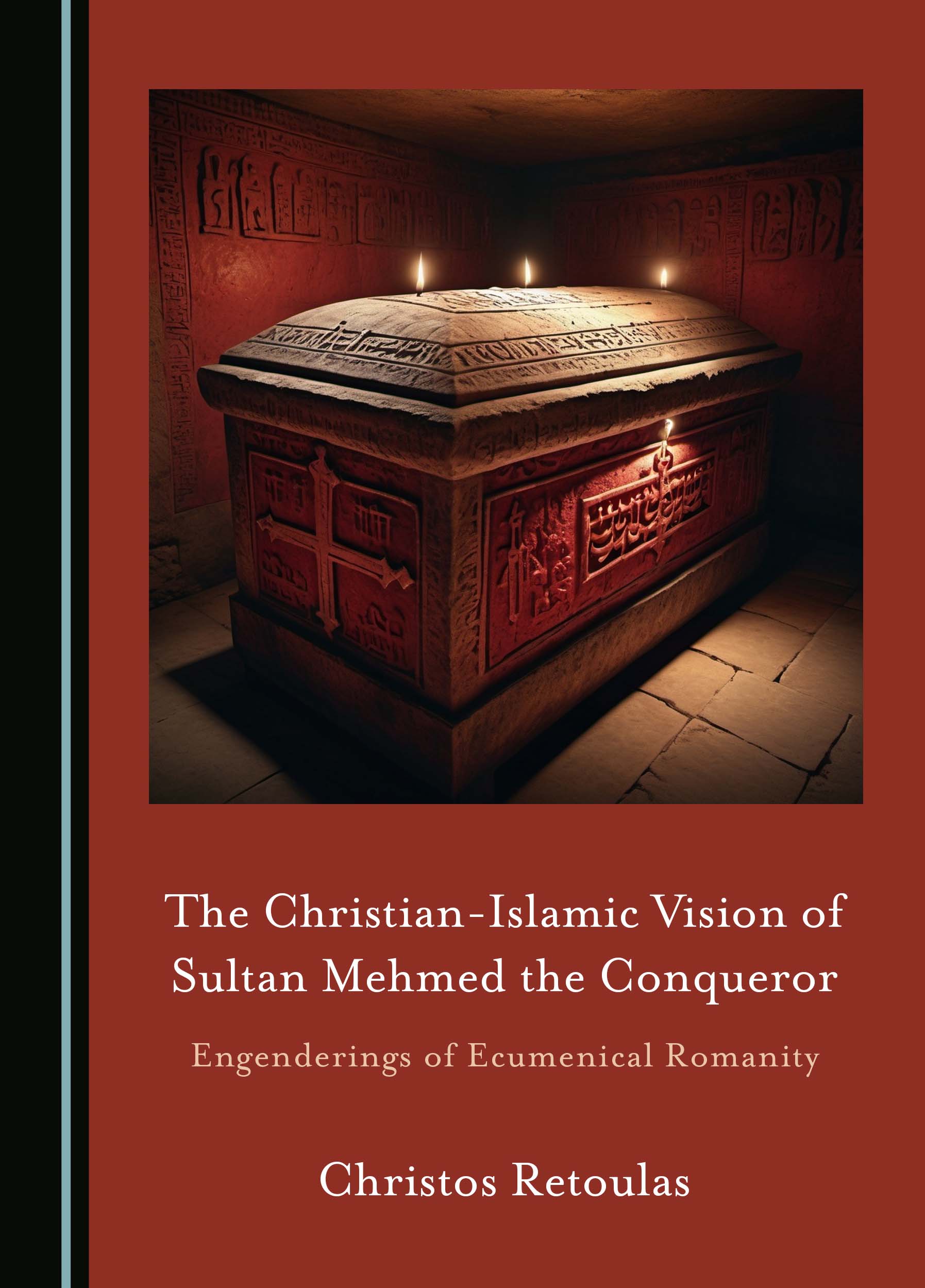
In its telos, this book is about debt, a debt to a martyr of Ecumenical Romanity: Mehmed the Conqueror. From the point of view of wholistic comprehensiveness, his Christian-Islamic Roman vision constituted the apex of Orthodox Christian and Seljuk/Ottoman vahdet-i vücud Islamic Ecumenicity in the cosmocratic line of Alexander the Great (especially his Sogdian/Bactrian heritage), Julius Ceasar, and above all, Constantine the Great. Nevertheless, his struggle for its engendering was stopped in its tracks. The flow of the uncreated undercurrent that fed its life was turned from a pounding river into a limping creek by the worldly forces of the cacodoxical West, a perfidiously conspiratorial and parochial son, and a lurking doctor in the service of that adulterous daughter of Constantinople, Venice. All in all, Fatih Ceasar Basileus Sultan Mehmed Manuel encountered Estombol (Εἰς τήν πόλιν/Is·tin·polin/Istanbul), who he restored into Konstantiniyye/Constantinople. It is this debt that Ecumenical Romanity owes him.
After the Postsecular and the Postmodern
A vanguard of scholars asks what comes after the postsecular and postmodern in Continental philosophy of religion. This volume argues philosophy must liberate itself from theological norms and mutate into a new speculative practice to confront the challenges of our time.