• 0 Items - £0.00
    • No products in the cart.

From £37.99

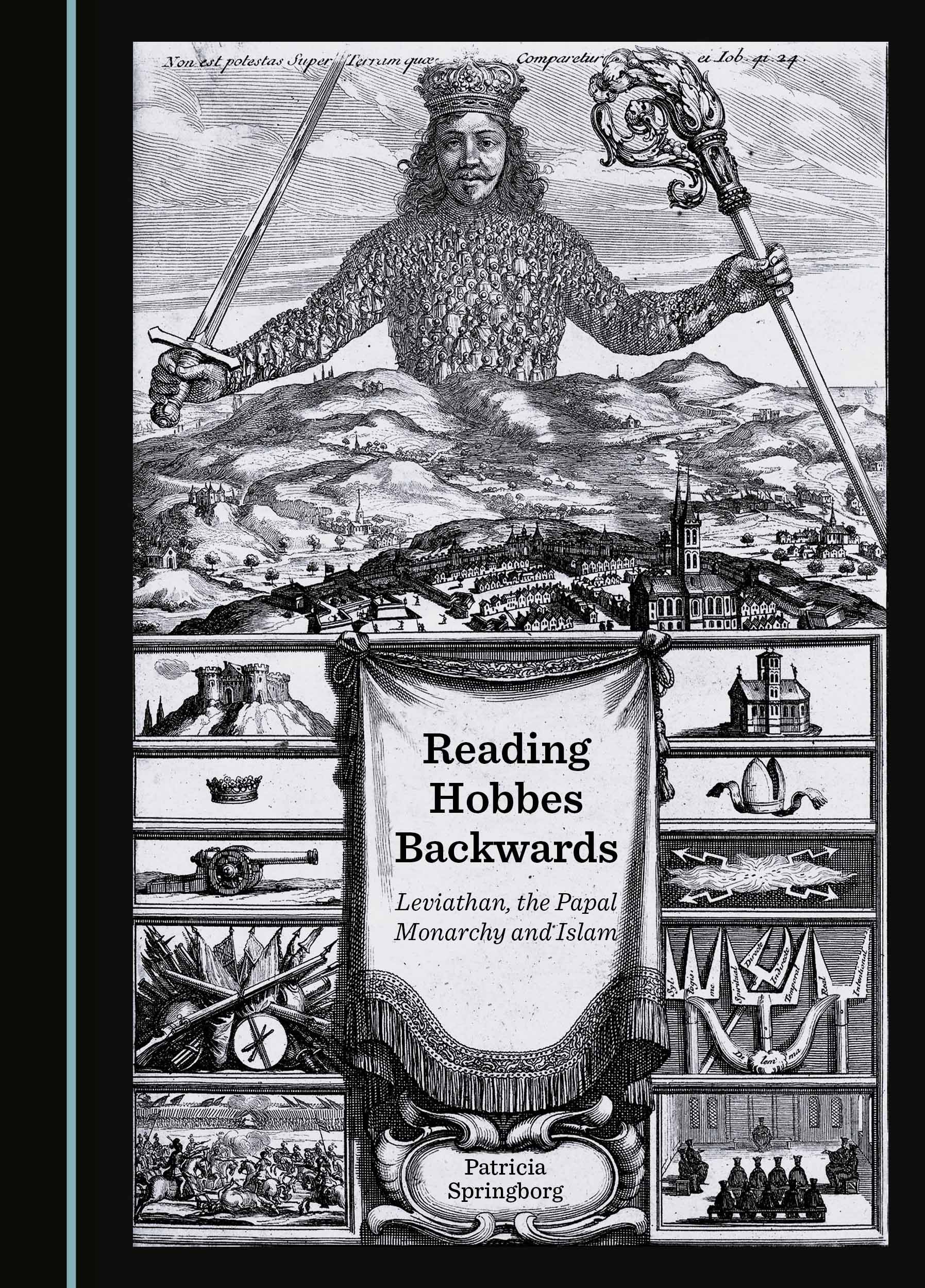
Reading Hobbes Backwards

Leviathan, the Papal Monarchy and Islam
By: Patricia Springborg

From £37.99

Beyond Leviathan lies Hobbes the peace theorist. Unable to speak freely as a courtier’s client, he used clandestine philosophy and satire to attack the sectarian causes of religious war and champion classical civic humanism.

Reading Hobbes Backwards treats Thomas Hobbes (1588-1679) as a peace theorist, who from early manuscripts of his system made by disciples in England and France,…
From £37.99
From £37.99
1-0364-0918-X , , , ,
Share

Reading Hobbes Backwards treats Thomas Hobbes (1588-1679) as a peace theorist, who from early manuscripts of his system made by disciples in England and France, to the late Historia Ecclesiastica, saw sectarianism and Trinitarian doctrines supporting the papal monarchy as the ultimate cause of the punishing religious wars of the post-Reformation. But Hobbes was also indebted to scholasticism and the millennia-old Aristotle commentary tradition, Greek, Byzantine, Jewish and Islamic, surviving in the universities of Paris and Oxford, naming his ‘English Politiques’ Leviathan after the scaly monster of the Book of Job, perhaps as a decoy. Politically connected through Cavendish circles and the Virginia Company, Hobbes was a courtier’s client who, until Leviathan, could not speak in his own voice. Adept at ‘political surrogacy’, he authored satires and burlesques which he could own or disown, while promoting the moral education of classical civic humanism against sectarianism. The Appendix provides a synopsis of his relatively inaccessible Latin Church History, an exercise in ‘clandestine philosophy’ from which Hobbes’s intentions in Leviathan can be read off. Chapters are referenced and cross-referenced to be read independently, serving both as reference work and text-book.

Patricia Springborg (DPhil Oxon) was lecturer and Professor of Political Theory at the University of Sydney, Australia (1974–2005) and most recently Guest Professor in the Centre for British Studies of the Humboldt University in Berlin, Germany (2013–22). She has taught in the USA at the University of Pennsylvania, and UC Berkeley and has been a stipendiary fellow at Institutes for Advanced Study in Washington DC, Berlin, Oxford and Uppsala. She has authored some 80 refereed articles and 8 authored or co-authored books, including The Cambridge Companion to Hobbes’s Leviathan (2007) and the first English translation and critical edition of Hobbes’s Historia Ecclesiastica (2008).

Hardback

  • ISBN: 1-0364-0918-X
  • ISBN13: 978-1-0364-0918-0
  • Date of Publication: 2024-10-18

Paperback

  • ISBN: 1-0364-5408-8
  • ISBN13: 978-1-0364-5408-1
  • Date of Publication: 2025-07-23

Ebook

  • ISBN: 1-0364-0919-8
  • ISBN13: 978-1-0364-0919-7
  • Date of Publication: 2025-07-23

Subject Codes:

  • BIC: HBAH, JFCX, JPA
  • THEMA: NHAH, JBCC9, JPA
534
  • "The first sentiment experienced upon closing this book is that one understands Hobbes better than prior to opening it. The second one is that it represents an important milestone in the building of a consistent interpretation about a notoriously difficult set of texts. This book is both an extensive synthesis that could serve as an expert companion to Hobbes, and a personal interpretation, original, patiently built, and well documented."
    - Sebastien Bauer, Institut des Sciences Juridique et Philosophique de la Sorbonne, France
  • "Springborg’s book, longer than usual, is a masterpiece."
    - Sebastien Bauer, Institut des Sciences Juridique et Philosophique de la Sorbonne, France
  • "Reading Hobbes Backwards is a captivating and pathbreaking account of Hobbes’s view of peace, why it was urgent, how difficult it was to achieve, and that it could never be realised without addressing the problem of religious fanaticism. Patricia Springborg has written another brilliant book that will fascinate intellectual historians everywhere."
    - Richard Whatmore Professor of Modern History, St. Andrews University, UK, Editor of Global Intellectual History

Meet The Author