• 0 Items - £0.00
    • No products in the cart.

From £43.99

A Transdisciplinary, Engaged, Phenomenological Investigation of Dwelling and Landscape Language

By: Andrew Turk

From £43.99

This innovative, transdisciplinary book uses phenomenology to explore complex dwelling relationships. It discusses landscape language case studies with Indigenous peoples in Australia and the USA, showing how different cultures turn terrain into landscape.

This book includes revised dissertation chapters from the author’s (second) PhD, which was awarded in 2020 by Murdoch University, Australia. It also includes three chapters…
From £43.99
From £43.99
1-0364-0964-3 , , , ,
Share

This book includes revised dissertation chapters from the author’s (second) PhD, which was awarded in 2020 by Murdoch University, Australia. It also includes three chapters summarising recent developments. This was an innovative, transdisciplinary, research project, using phenomenology as the over-arching meta-paradigm. The investigation involved collaborations and literature reviews across numerous disciplines, including philosophy, geography, ethnoecology, sociology and cultural studies. The book discusses three landscape language (ethnophysiography) case studies with Indigenous peoples in Australia and the USA. It features a detailed discussion of transdisciplinarity and provides a comprehensive example of how this approach can be applied to complex dwelling relationships, which people, from different cultures, have with specific topographic environments, turning terrain into landscape. It involves using phenomenology as a transdisciplinary meta-paradigm and describes phenomenological methods for integrating physical and social sciences, including an analysis of the worldviews of Indigenous peoples (for example, Manyjilyjarra Jukurrpa as Heideggerian topology).

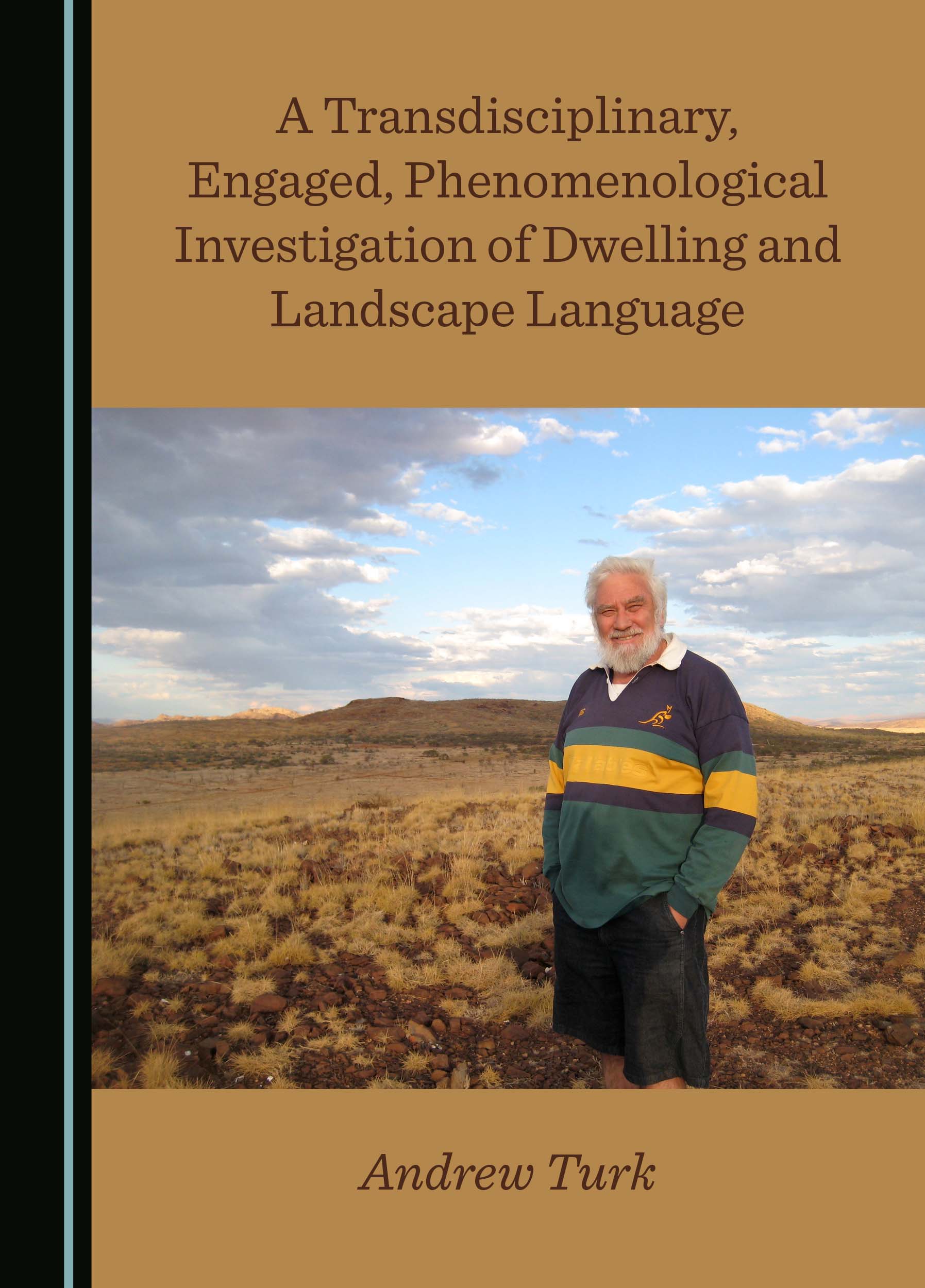
Andrew Turk has qualifications in Surveying, Applied Science (Cartography), Psychology and Philosophy. He completed his first PhD in 1992 (concerning HCI for GIS) and his second in 2020. He was a mapping surveyor from 1969 to 1983, conducting research regarding satellite imagery, digital topographic mapping and geographic information systems. In 1983, Andrew started teaching at the University of Melbourne, Australia. From 1993, Andrew worked at Murdoch University, Australia, teaching human factors for information systems and conducting interdisciplinary research. Andrew also worked with Aboriginal communities regarding native title, community development, cultural information and media. From 2000, he researched cultural/linguistic aspects of landscapes, conducting Australian and USA case studies, and retired in 2007. In 2020 he achieved his second PhD, including a case study with Manyjilyjarra people, aided by linguist Clair Hill and Kanyirninpa Jukurrpa. He continues to research and publish as a Murdoch University Adjunct Associate Professor.

Hardback

  • ISBN: 1-0364-0964-3
  • ISBN13: 978-1-0364-0964-7
  • Date of Publication: 2024-09-26

Paperback

  • ISBN: 1-0364-5224-7
  • ISBN13: 978-1-0364-5224-7
  • Date of Publication: 2025-06-23

Ebook

  • ISBN: 1-0364-0965-1
  • ISBN13: 978-1-0364-0965-4
  • Date of Publication: 2025-06-23

Subject Codes:

  • BIC: GT, HPCF3, JFSL9
  • THEMA: GT(5PB-AU-A), QDHR5(5PB-NZ-A), JBSL11(5PB-US-E)
641

Meet The Author