• 0 Items - £0.00
    • No products in the cart.

From £35.99

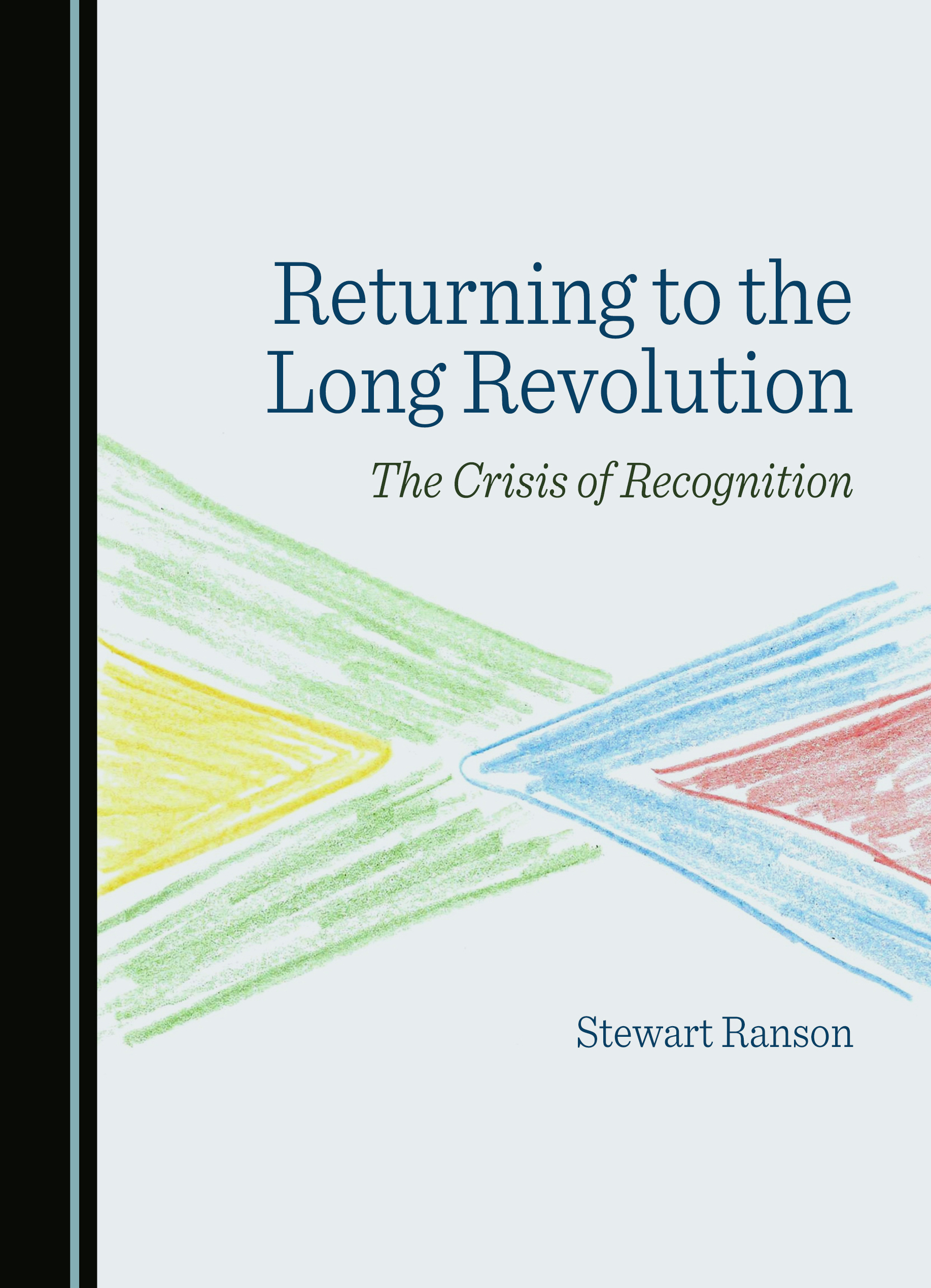
Returning to the Long Revolution

The Crisis of Recognition
By: Stewart Ranson

From £35.99

The key to motivating change lies in a radical re-imagining of democratic citizenship. We must reconfigure ourselves from being passive consumers to active citizens, empowered to participate in and take responsibility for remaking the communities in which we live and work.

Facing fundamental changes to the climate, the environment and the nature of work will require cooperative action for an effective response. This presents a crisis…
From £35.99
From £35.99
1-0364-1156-7 , , , ,
Share

Facing fundamental changes to the climate, the environment and the nature of work will require cooperative action for an effective response. This presents a crisis of recognition, of different communities needing to learn how to value the practices of collaboration for a common purpose. The central argument of this book is that the key to motivating such change now lies in a radical re-imagining of our democratic citizenship, empowering citizens to participate in and take responsibility for remaking the communities in which they live and work. We need to reconfigure ourselves from being clients, dependent on professional knowledge, or consumers competing in a market place, to becoming active citizens, makers of our worlds. Only a transformation of democracy can enable public participation in this way, and through practice in deliberating common goods, achieve mutual recognition of cultural differences and social cohesion.

Stewart Ranson has made understanding change in public governance the focus of his research: in the 1970s the reorganisation of local authorities from differentiated professional organisation to corporate management; in the 1980s implementing local management enabling schools to respond to public choice; in the 1990s studies of parent participation in school forums and governing bodies forging partnership in place of detachment; beyond 2000, research into new patterns of community governance with schools, colleges and community centres working together to meet local needs. He was Professor of Education at Warwick University (2005-9), the UK, and an Associate Fellow of the Institute of Governance and Public Management in the Business School (2009-2012), the UK. Previously at the University of Birmingham, the UK, he was a researcher and lecturer at the Institute of Local Government Studies for fifteen years before being appointed as Professor of Education in the School of Education (1989-2004). He is now Professor Emeritus at the University of Warwick (2009-).

Hardback

  • ISBN: 1-0364-1156-7
  • ISBN13: 978-1-0364-1156-5
  • Date of Publication: 2024-09-18

Paperback

  • ISBN: 1-0364-5171-2
  • ISBN13: 978-1-0364-5171-4
  • Date of Publication: 2025-06-16

Ebook

  • ISBN: 1-0364-1157-5
  • ISBN13: 978-1-0364-1157-2
  • Date of Publication: 2025-06-16

Subject Codes:

  • BIC: HPS, J, JNF
  • THEMA: QDTS, J, JNF
233
  • "Stewart Ranson’s new book revisits vital questions of public governance. In it, he deepens arguments he has long made in favour of a thoroughgoing reconfiguration of the public space and for renewal of democratic citizenship."
    - Patrick Yarker, Editor, FORUM, UK
  • "At times the high level of abstraction in which arguments can be couched makes for a demanding read, but [t]his book will be of especial interest and service to students of governance and politics at degree level, and all the more if the publisher adds an index to any second edition. Sixth Form students of C19th and C20th history, and their teachers, will gain much from the illuminating and critically-edged survey of that long struggle for the common good based on ‘the conception of equal social worth, grounded in common community membership’ (p10) which comprises almost the whole of the book’s first half."
    - Patrick Yarker Editor of Forum, UK
  • "This book offers a crucial analysis of the historic struggles for social democracy and democratic education."
    - Professor Sally Tomlinson Senior Research Fellow in the Department of Education, the University of Oxford.
  • "This is a monumental work, distilling Stewart Ranson’s tough thinking and path-breaking research over a long career. Analysing the historic struggles for social justice, Ranson (in the tradition of Raymond Williams) re-imagines the challenge required to create a political order of social democracy and mutual recognition."
    - Professor John Benington Formerly Director of the Institute of Governance and Public Management, the University of Warwick.

Meet The Author