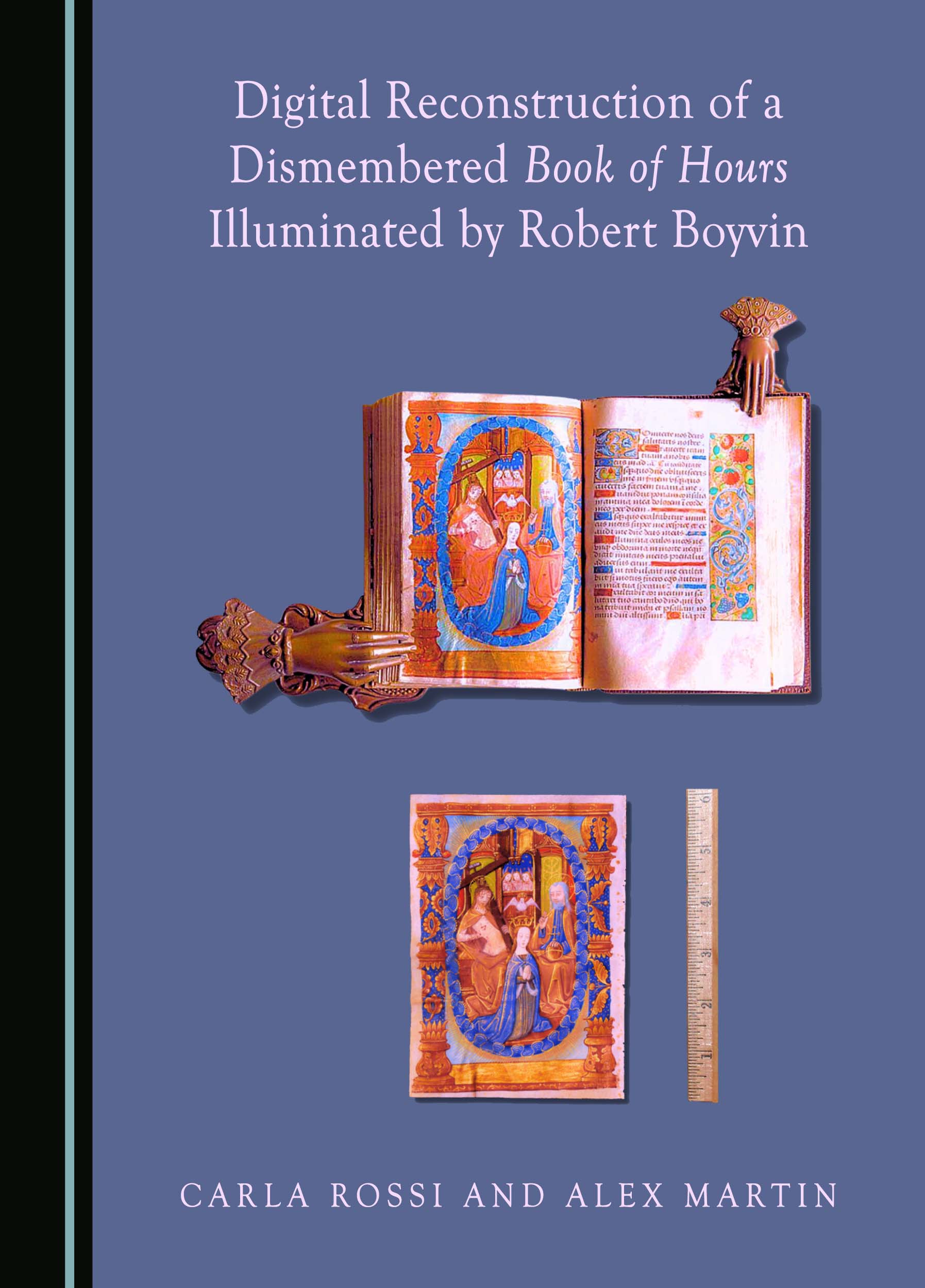
This volume digitally reconstructs a 15th-century Book of Hours illuminated by Robert Boyvin, which was dismembered by a notorious American dealer. Utilising the WBRM methodology, it integrates digital humanities and philological research to restore the manuscript, addressing the ethical challenges associated with manuscript dismemberment. The study examines the manuscript’s historical context, its connection to Cardinal Georges d’Amboise, and Louis de La Londe. Through provenance and dating analysis, it provides a comprehensive understanding of this cultural treasure and advocates against biblioclasm. It underscores the ethical responsibility of preserving our heritage, critiques the complicity of some scholars in manuscript dismemberment, and highlights the omission of critical information in cataloguing platforms. Aimed at scholars, preservationists, and enthusiasts, this book revitalises a dismembered masterpiece and enriches the discourse on the ethical handling of historical artefacts.
This pioneering book introduces the “feminine,” a dimension of film not reducible to women’s experience. Exploring this Jungian concept through movies spanning seven decades, it enhances the appreciation of film as a depth psychological medium.