• 0 Items - £0.00
    • No products in the cart.

£77.99

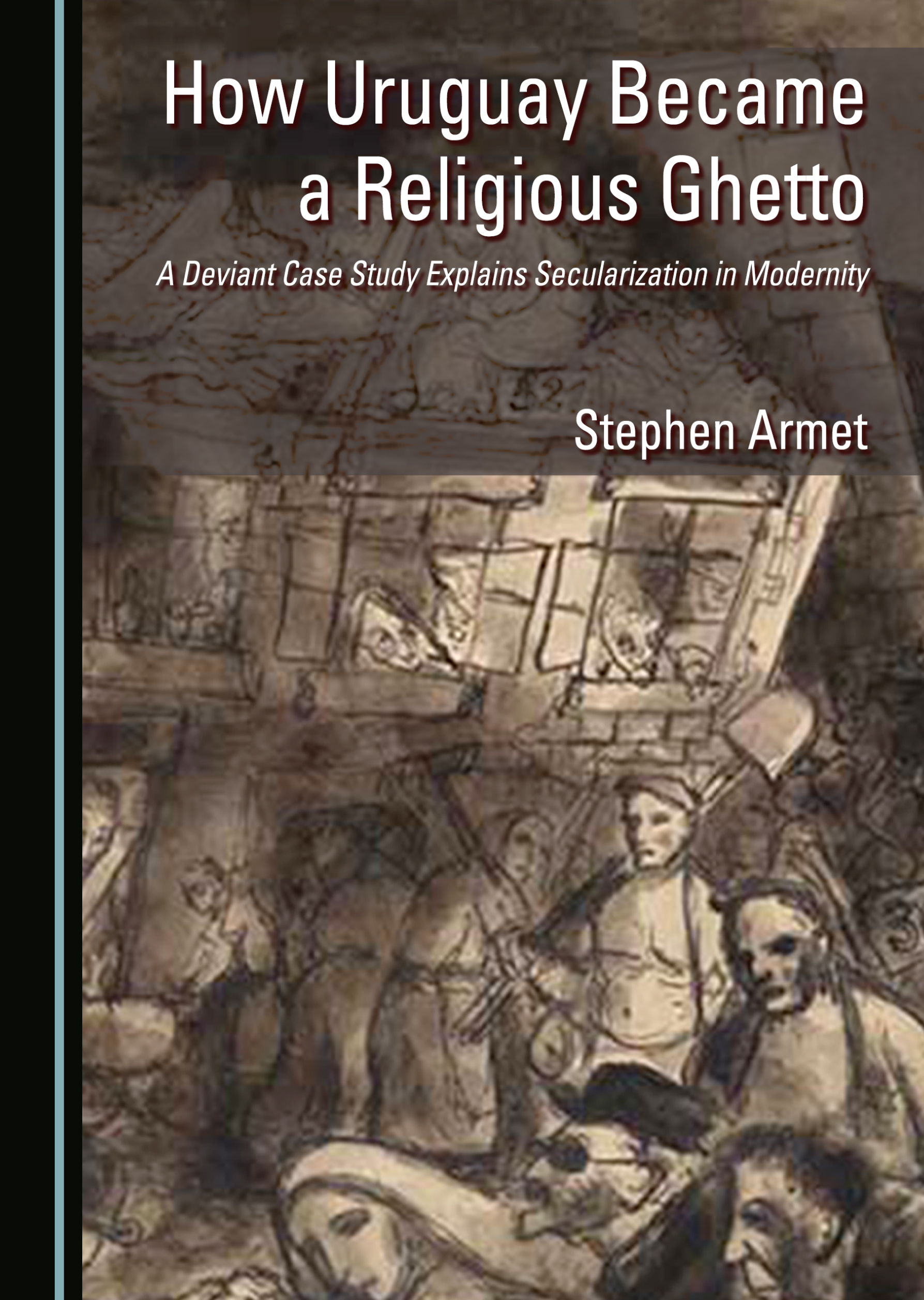
How Uruguay Became a Religious Ghetto

A Deviant Case Study Explains Secularization in Modernity
By: Stephen Armet

£77.99

Why is Uruguay an intensely secular society in a highly religious continent? This deviant case study argues that secularization is not an inevitable process, but is carried out by people and groups who manifestly want to laicize society and its sub-structures.

Uruguayan society is an outlier when considering religious intensity among Latin American societies while presenting a paradox to sociologists of religion. Embedded in a continent…
£77.99
£77.99
1-0364-4121-0 , ,
Share

Uruguayan society is an outlier when considering religious intensity among Latin American societies while presenting a paradox to sociologists of religion. Embedded in a continent characterized by relatively high religiosity and religious adherence historically, how do sociologists explain that Uruguay became an intensely secular society since the turn of the twentieth century? Modernity theory has developed into a very particular theoretical model for understanding history such that secularization is believed to be inevitable, linear, and isomorphic in that it produces predictable uniformity–which is Eurocentric. In contrast, this deviant case study offers a counterfactual understanding using Bourdieu’s concepts of field and capital to explain how secularization develops. This project contributes to the scholarly debate by showing that secularization is not an inevitable macro-social mechanical process imputed to impersonal and abstract forces, but is carried out by people and groups who manifestly want to laicize society and its sub-structures.

After working for ten years in community development in the Ciudad Bolivar slum of Bogota, Colombia and San Pedro de Pavas slum of San Jose, Costa Rica, among marginalized communities, Stephen Armet earned his Doctorate in Sociology in 2014 at the University of Notre Dame, USA. While fulfilling several appointments as a Visiting Professor of Sociology, he has been a Research Associate with the Programa Latinoamericano de Estudios Socioreligiosos (PROLADES) based in Costa Rica since 2016. Recent projects include published research on urban poverty, political engagement by the urban poor, immigration, social theory, Liberation Theology, and social movements.

Hardback

  • ISBN: 1-0364-4121-0
  • ISBN13: 978-1-0364-4121-0
  • Date of Publication: 2025-05-16

Ebook

  • ISBN: 1-0364-4122-9
  • ISBN13: 978-1-0364-4122-7
  • Date of Publication: 2025-05-16

Subject Codes:

  • BIC: HRAM, HRAM2, HRAM9
  • THEMA: QRAM, QRAM2, QRAM9
313

Meet The Author