• 0 Items - £0.00
    • No products in the cart.

£66.99

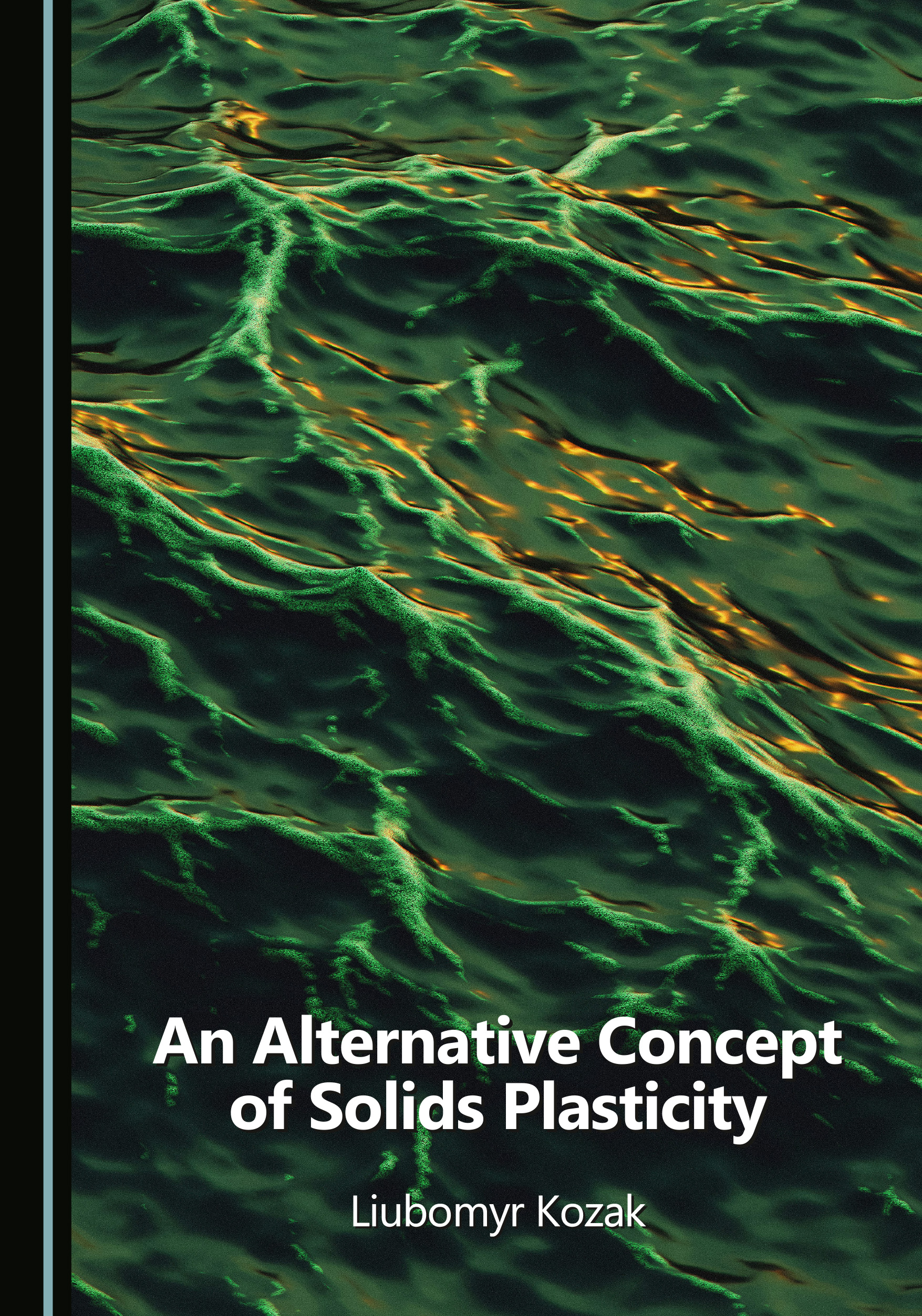
An Alternative Concept of Solids Plasticity

By: Liubomyr Kozak

£66.99

Plasticity in solids is determined not by defects, but by the distribution of valence electrons. An isotropic distribution causes lattice instability, making solids more plastic but less strong. This work introduces a novel model of a plastic crystal based on this concept.

This monograph offers an alternative explanation for the plasticity of solids. According to it the plasticity or brittleness of solids is determined by the spatial…
£66.99
£66.99
Share

This monograph offers an alternative explanation for the plasticity of solids. According to it the plasticity or brittleness of solids is determined by the spatial distribution of valence electrons—whether isotropic or anisotropic. In the case of an isotropic distribution, a spherically symmetric interatomic potential forms, leading to additional atomic rapprochement, lattice compression, and ultimately the transformation of the crystal lattice into an unstable state with respect to small shear deformations.
The effect of defects on the plasticity of solids is secondary.
The findings establish a direct relationship between lattice stability and the plasticity and strength of solids: solids with a stable lattice are strong but exhibit low plasticity, whereas those with an unstable lattice are more plastic but less strong. Furthermore, lattice compression induces both electrical conductivity and plasticity in solids, transforming them into metals.
Building on the concept of lattice instability, the monograph introduces a novel model of a plastic crystal. In this model, internal atoms occupy metastable positions, stabilized by a thin surface layer, rendering the crystal in a state of unstable equilibrium. According to this model, plastic deformation occurs as atoms shift toward positions of lower potential energy under external forces.
This work will be valuable to specialists in solid-state physics, metallurgy, and materials science. It will also serve as a key resource for researchers, students, and postgraduate scholars in higher education institutions.

From 1997 to 2022, Liubomyr Kozak served as an Associate Professor at Ivano-Frankivsk National Technical University of Oil and Gas (Ukraine). His academic expertise lay in materials science, the thermodynamics of plasticity and strength, heat transfer, and energy-saving technologies.
Throughout his career, he has taught various courses, including Materials Science, Thermodynamics and Heat Transfer, and Energy Saving.
He earned his PhD in 1987 from the Physics and Mechanics Institute of the Ukrainian National Academy of Sciences. His dissertation focused on the influence of hydrogen gas on the crack growth rate in high-strength steels.
Before that, in 1975, he obtained his diploma in mechanical engineering from Lviv Polytechnic University, Ukraine, specializing in cars and tractors.
Currently, he is retired and dedicates his time to research and scholarly activities.

Hardback

  • ISBN: 1-0364-5445-2
  • ISBN13: 978-1-0364-5445-6
  • Date of Publication: 2025-10-06

Ebook

  • ISBN: 1-0364-5446-0
  • ISBN13: 978-1-0364-5446-3
  • Date of Publication: 2025-10-06

Subject Codes:

  • BIC: TGM, PHFC, TGMD5
  • THEMA: TGM, PHFC
142

Meet The Author