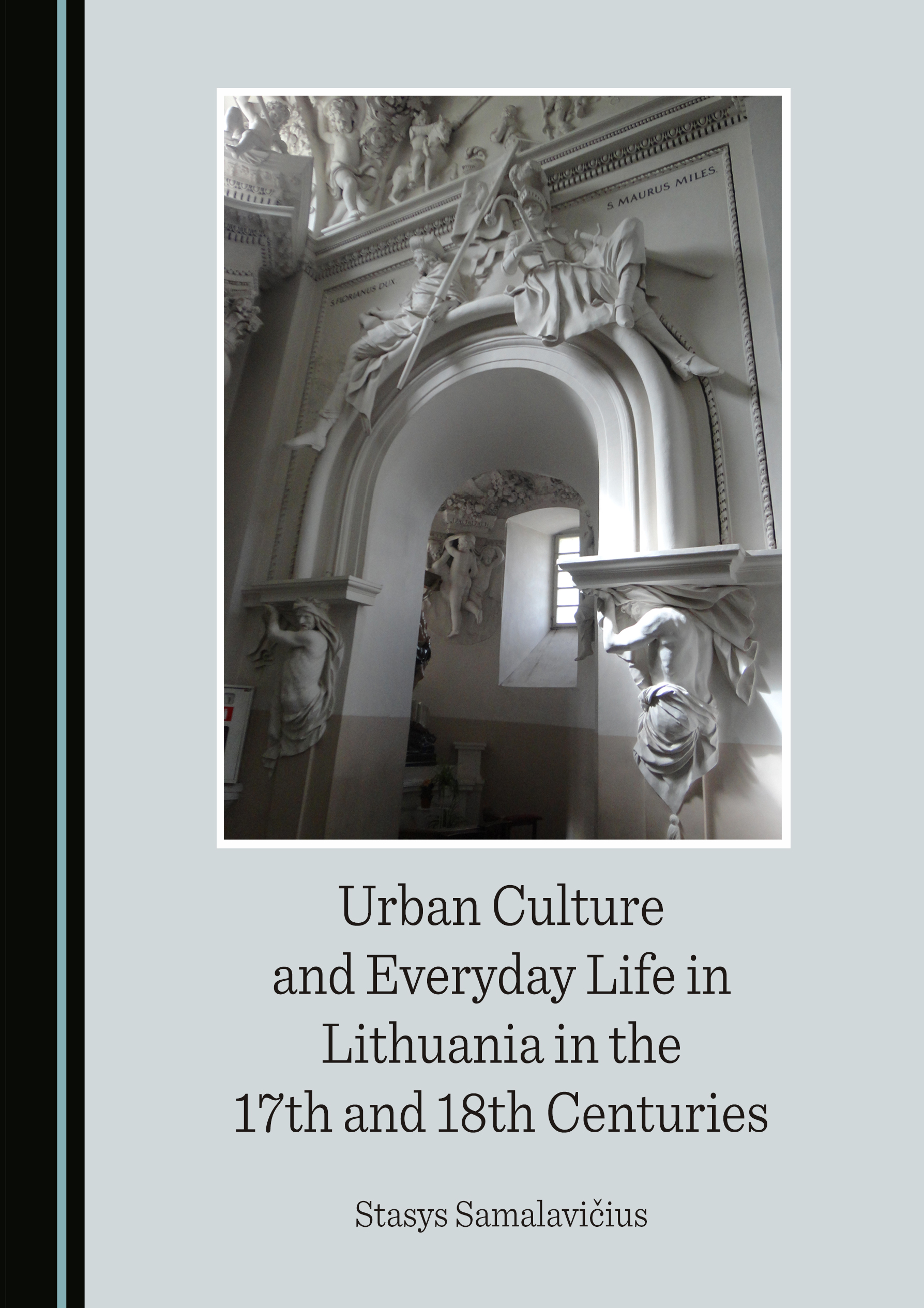
This book is a collection of scholarly studies analyzing the material culture of burghers in the seventeenth and eighteenth centuries in the Grand Duchy of Lithuania and its capital, Vilnius (Wilno). The book covers a wide range of subjects, including what the houses of urban dwellers – mostly merchants and artisans – and their windows, ceilings, and floors looked like and what materials were used for burghers’ dwellings. The furnishings and other elements of their interior (paintings, lightning devices, wall paintings, carpets, curtains, etc.) are thoroughly analyzed. The author also discusses the stoves and fireplaces used by urban dwellers and the signboards used by merchants and reflects on their symbolic meanings. In addition, some aspects of the burghers’ everyday life, such as the character of their festivities, the role of inns, and the peculiarities of the local consumption of mead, are examined. The book will be useful to architectural and cultural historians as well as all those whose scholarly interests are related to the history and culture of Eastern Europe and the urban legacy of the Grand Duchy of Lithuania.