
• 0 Items - £0.00
    • No products in the cart.

From £19.99

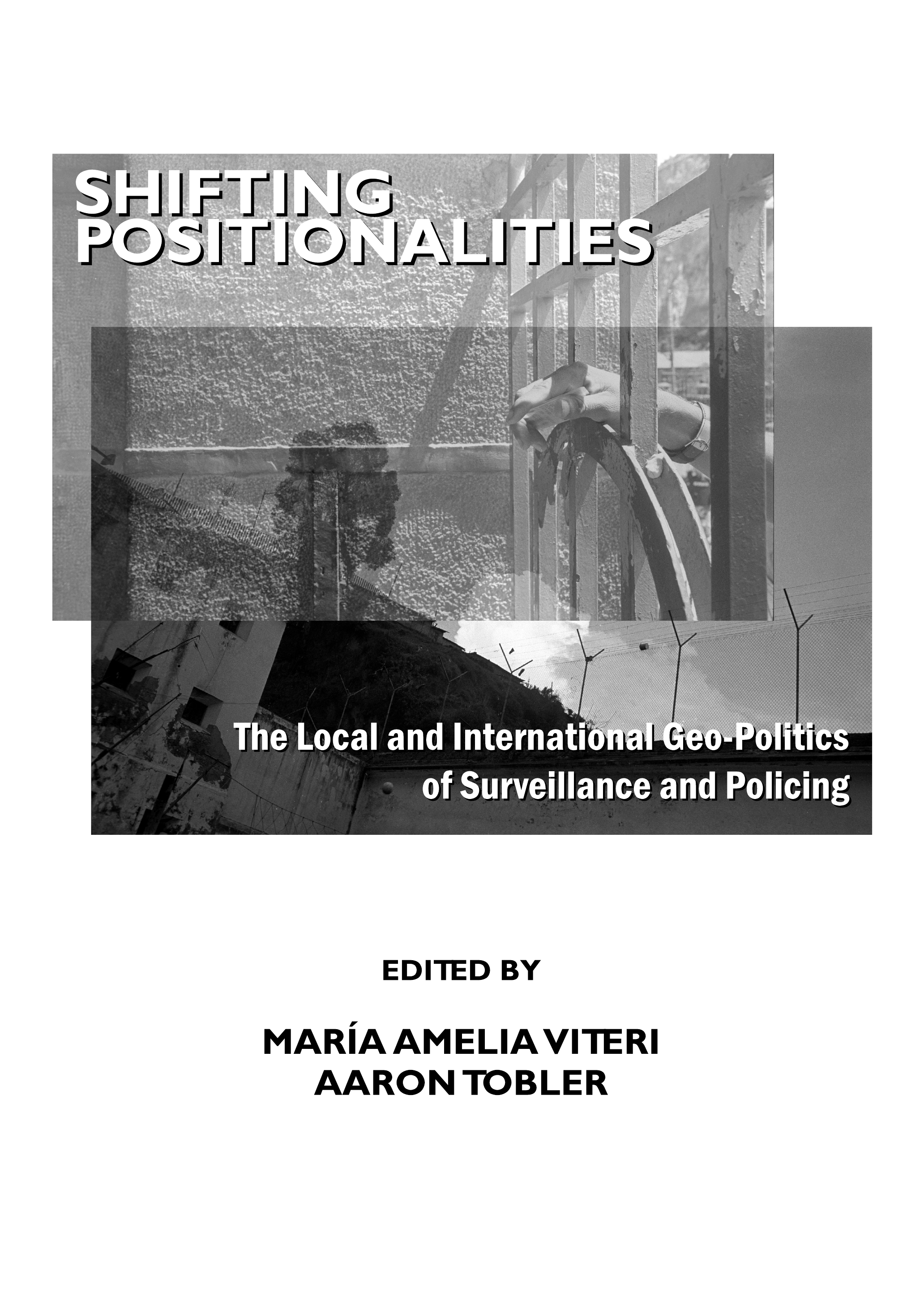
Shifting Positionalities

The Local and International Geo-Politics of Surveillance and Policing
Edited By: Aaron Tobler, María Amelia Viteri

From £19.99

Shifting Positionalities examines the surveillance of sexual, racial, and ethnic identities in the post-9/11 era. It reveals how individuals and communities utilize techniques of actively resisting the policing of their daily lives across borders.

The local-level and international contributors of Shifting Positionalities encompass particular common themes through in-depth social science research in an effort to understand the meanings of…
From £19.99
From £19.99
Share

The local-level and international contributors of Shifting Positionalities encompass particular common themes through in-depth social science research in an effort to understand the meanings of the reformulation of state discourses and practices in this post-9/11 era. Current conjunctions between sexual, racial and ethnic identities—and the surveillance practices of those identities—calls for a thorough examination of the multiple and usually unexpected meaning-making practices adapted by individuals. Far from being predictable, the latter speaks to the possibility of individuals and communities utilizing techniques of actively resisting—as opposed to passively embracing—the policing of their daily lives. Shifting Positionalities: The Local and International Geo-Politics of Surveillance and Policing addresses surveillance and policing as practices and sites that speak to the various ways in which bio-power, displacement and resistance converge to constitute particular subjectivities across borders.

María-Amelia Viteri is a native of Ecuador with a Ph.D. in Cultural Anthropology currently working on a book that looks at the intersections of migration, citizenship, gender and sexuality in El Salvador, Ecuador and the U.S. Dr. Viteri speaks from a situated space as a transnational herself, teaching and researching between the geo-political spaces of the U.S. (Catholic University, Washington D.C.) and FLACSO/Ecuador (Latin American School for the Study of Social Sciences). She has recently incorporated performance and cultural studies as additional tools for cultural activism.

Aaron Tobler is a doctoral candidate with the Department of Anthropology at American University, Washington, D.C. His dissertation research surrounds the Gay and Lesbian Liaison Unit of the Metropolitan Police Department in Washington, D.C., and issues of sexuality, discourse and the state. Recent publications include: “‘We do General Policing’: Sexuality in the Gay and Lesbian Liaison Unit of the Metropoltian Police Department, Washington, DC” in the Graduate Journal of Social Science and “‘A 20/20 Focus on Gaydar”: Examinations of Sexuality in Television News Magazines” in the NeoAmericanist online journal.

Mysara Abu-Hashem, Ahmed Afzal, Michelle Carnes, Ben Chappell, Gwen D’Arcangelis, Kolleen Duley, Samuel Goodstein, Nazia Kazi, Eric Pelofsky, Fredy Rivera, Jacob Stump, Mark Theodorson, Maria Amelia Viteri, Aaron Tobler

Hardback

  • ISBN: 1-4438-0186-0
  • ISBN13: 978-1-4438-0186-7
  • Date of Publication: 2009-03-02

Paperback

  • ISBN: 1-4438-1441-5
  • ISBN13: 978-1-4438-1441-6
  • Date of Publication: 2010-01-14

Ebook

  • ISBN: 1-4438-1183-1
  • ISBN13: 978-1-4438-1183-5
  • Date of Publication: 2010-01-14

Subject Codes:

  • BIC: JHM, JFFS, JPA
  • BISAC: SOC063000, SOC004000, SOC002010, POL066000, POL014000, POL062000
  • THEMA: JHM, GTQ, JPA
230
  • Thank you very much for the opportunity to read and comment on your terrific book. Below you will find my reactions. The book is a terrific achievement and a wonderful contribution to resisting the dangerous expansion of surveillance and policing in all our lives. In the post-September 11, 2001 world, surveillance and policing have become pervasive, and yet mostly unexamined, parts of our lives—from ubiquitous security cameras and exhaustive airport searches to unprecedented levels of government wiretapping and surveillance of phone and web communications to the monitoring of library and financial records to the expansion of corporate surveillance of individual internet usage to the targeting of ethnic and religious minorities by police forces for observation, disappearance, and detention. Shifting Positionalities makes a critical contribution to documenting and understanding how these and other forms of surveillance and policing are shaping and damaging our lives and our society. Beyond the more obvious restriction of freedoms and rights, Viteri and Tobler's diverse collection of essays insightfully shows how practices of surveillance and policing are subtly influencing our thoughts about ourselves and others, reshaping ethnic, racial, gender, sexual, and national identities, deepening state and corporate control over our bodies, and contributing to the further marginalization and demonization of Muslims, Arabs, and others deemed to be "terrorist" threats. Encouragingly, Shifting Positionalities also reveals how the expansion of surveillance and policing has led to the invention of surprising forms of resistance to these forms of dangerous social control. Given the threat that surveillance and policing pose to basic democratic and human rights, Shifting Positionalities strikes an important blow against a new and increasingly insidious Big Brother.
    - - David Vine Assistant Professor, Department of Anthropology, American University, Washington, DC Author of the book "Island of Shame: The secret history of the US Military Base on Diego Garcia" by Princeton.

Processing Your Order

Please wait while we securely process your order.
Do not refresh or leave this page.
You will be redirected shortly to a confirmation page with your order number.