• 0 Items - £0.00
    • No products in the cart.

£39.99

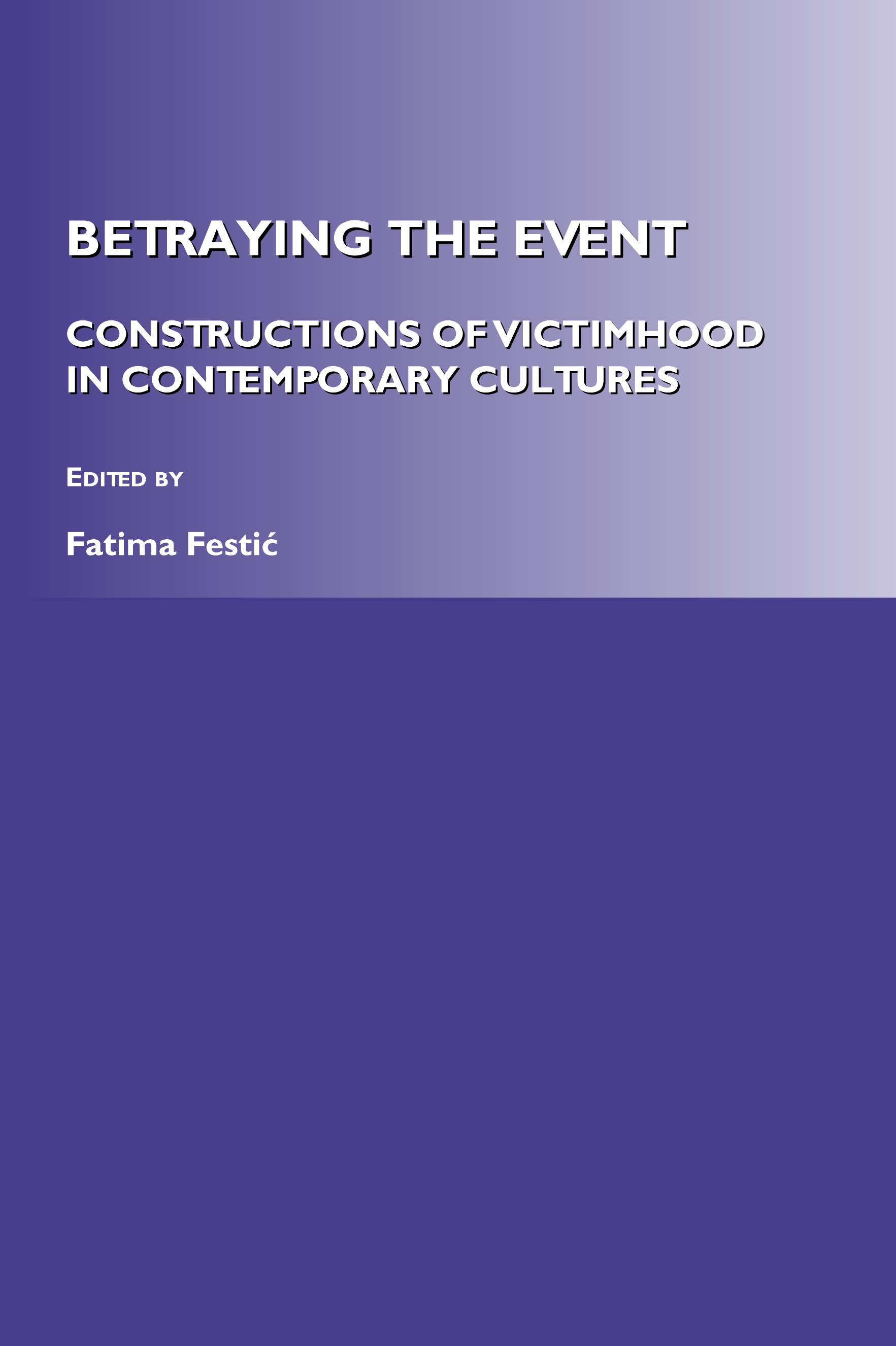
Betraying the Event

Constructions of Victimhood in Contemporary Cultures
Edited By: Fatima Festić

£39.99

This volume offers a critical reconsideration of victimhood, exposing its cultural and political constructions. It examines how language can be manipulated to devise a vicious reversal of victim/victimizer positions, raising awareness of the consequences.

In gaining an instrumental part, becoming a fashion, the victimhood theme has drawn attention to its fascinatory and manipulative aspects, and has asked for a…
£39.99
£39.99
1-4438-0516-5 , , ,
Share

In gaining an instrumental part, becoming a fashion, the victimhood theme has drawn attention to its fascinatory and manipulative aspects, and has asked for a critical reconsideration.
This volume makes note of an attempt to sustain a conversation about changes in the ways the processes of victimization are written out and comprehended. The contributors aim to expose some recent instances and modalities of cultural and political constructions of victimhood in various parts of the world. Our concern with the overlapping areas of victimhood and rhetoric points to the ambiguous manner in which language and images thread their way into the critical discourses of today, and even devise a vicious reversal of the victimized/victimizer positions.
Although we ask: can the victim’s real ever be fully represented?, we keep holding on the simple assurance that only an attempt at representation of the real in an actual performance can bring us closer to the victimizing event, make us grasp its other contested constructions and foresee the materiality of the effects of its linguistic implications.
We try to suggest a comparative approach that would link different experiences of victimization, possibly enabling a cognitive exchange, and emphasize the necessity of raising the writers’ and readers’ awareness of the narrative consequences of victimizing processes and the policies following on from them.

Fatima Festić has worked as a Professor, Lecturer and Research Fellow at various universities in USA, Europe, South Africa, Turkey. She is currently working on her third and fourth book – on politicization of horror, and on gender and trauma. She published more than 40 articles pertaining to literary, psychoanalytic and feminist theory/criticism, semiotics and cultural studies.

Hardback

  • ISBN: 1-4438-0516-5
  • ISBN13: 978-1-4438-0516-2
  • Date of Publication: 2009-04-23

Ebook

  • ISBN: 1-5275-6125-9
  • ISBN13: 978-1-5275-6125-0
  • Date of Publication: 2009-04-23

Subject Codes:

  • BIC: JF, GT, JFFE
  • BISAC: SOC026040, SOC002010, SOC051000, POL010000, POL009000, POL029000
  • THEMA: JB, GT, JBFK
225
  • Bloody the spectacle; tamed its society. Yet, even if atrocity is our contemporary, rather than curating a gallery of token victims, Fatima Festić offers a collection that attempts to give victims the right to not speak on the stage that the lobbyists of pity keep unfolding. From Singapore's minorities to the Romanian communist Holocaust, from the rape trials in South Africa to the crushing theatricality of the Bosnian war, and from the Turkish coup d'état narratives to the heavily biased Western broadcasting of the horrors of the war in Iraq, banalized victimhood comes undone. Against white guilt's self-mirroring display, if you think you are a victim, read this book and think again.
    - - Călin-Andrei Mihăilescu Professor of Critical Theory, University of Western Ontario"
  • 'In "Betraying the Event', Fatima Festić brings together a significant collection on the construction of victimisation in contemporary cultures that takes a comparative approach. This volume is a reconsideration of a vital topic. Rhetoric, imagery and political manipulation are all part of the representation and reception of victims. Festić and her contributors examine key questions of power and authority in legal, political, literary and other forms of communication, such as the media. What event occurred in the world and how and the way that events are represented become central to the task at hand. Otherness and genocide are also at the core of the collection. The very victims and their representations and narratives of victimisation come to be challenged, misused and exploited and can be displaced into political metaphor. This impressively wide-ranging collection reconfigures a pressing question about victims and genocide, the nature of texts and the world, the place of literature between actual and possible worlds and in the context of social and political stresses.
    - - Jonathan Hart Professor of English, Comparative Literature and History, University of Alberta

Processing Your Order

Please wait while we securely process your order.
Do not refresh or leave this page.
You will be redirected shortly to a confirmation page with your order number.