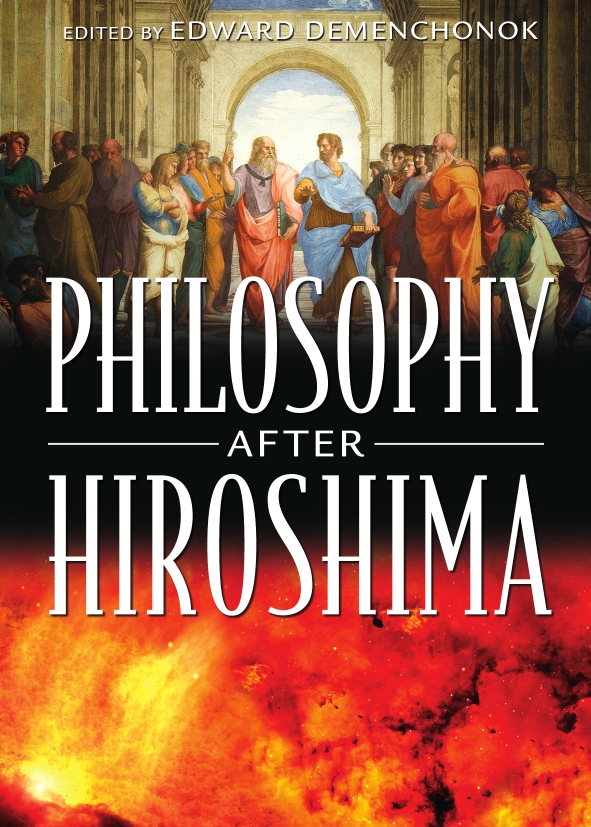
Philosophy after Hiroshima offers a philosophical analysis of the issues surrounding war and peace, and their challenges to ethics. It reminds us that the threat posed to civilization by nuclear weapons persists, as does the need for continuing philosophical reflection on the nature of war, the problem of violence, and the need for a workable ethics in the nuclear age.
The book recalls the atomic bombings of Hiroshima and Nagasaki as the beginning of the nuclear age, the Cold War, and subsequently of the hegemonic unilateralism of the sole superpower. Reviewing early critical responses to the first atomic bombings by such figures as Camus, Sartre, Russell, Heidegger, Jaspers and others, the authors themselves respond to contemporary threats to peace, including the US “global war on terrorism,” the recrudescence of militarism, and the continuation of imperial power politics by other means. In the nuclear age, the use of military force as a political instrument threatens the future of humanity. This poses formidable challenges to philosophy and calls for its transformation.
In using memories of the atomic bombings to help us to grasp the moral implications of the current escalation of global violence, the authors hope to show the urgent relevance of nonviolence in the contemporary context. Drawing on a range of philosophical traditions—Taoist and Western—the contributors take up a welter of philosophical and political concerns of topical interest, including human rights, toleration, the politics of memory, intercultural dialogue, the ethics of co-responsibility, and the possibility of a cosmopolitan order of law and peace. Going beyond postmodernism and deconstruction, several of the authors develop a post-critical, constructive paradigm of thinking—a philosophy of the possible and a new methodology for the realization of the creative potential of the humanities. Philosophy is viewed as a peace-promoting global dialogue.