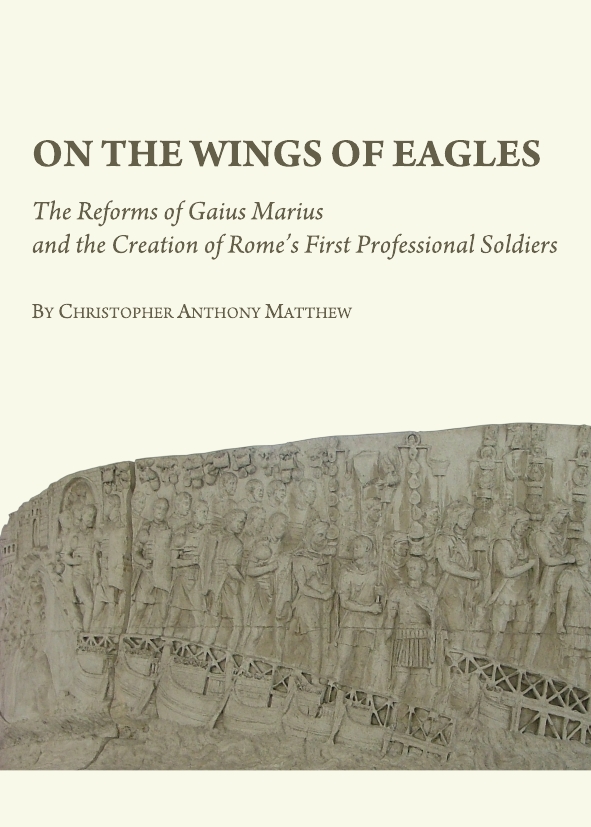
Gaius Marius (157-86B) was one of the most innovative and influential commanders of antiquity. With Marius in command of its legions, Rome prevailed on the battlefields of North Africa and defeated a two-pronged invasion of the Italian peninsula by 300,000 migrating Germanic tribesmen. The reason for this success was a series of five ground-breaking reforms through which Marius dramatically altered the demographics, recruitment, training and operation of the Roman army. In effect, Marius’ reforms changed the Roman military from a service of short-term militia into a professional standing army. This allowed Rome to use the military as an effective tool for military expansion and internal security and laid the foundations for the role of the Roman army for centuries to come. Many of these reforms, however, came at a cost to the stability of the state. This book charts the military implications of Marius’ reforms: what they were, why they were made, how they were made, and how they altered the functionality of the Roman military.