• 0 Items - £0.00
    • No products in the cart.

£39.99

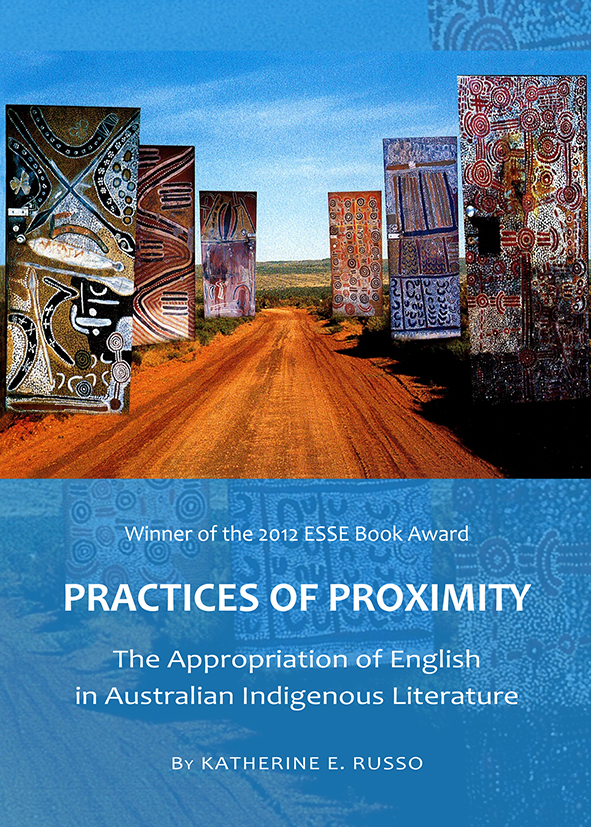
Practices of Proximity

The Appropriation of English in Australian Indigenous Literature
By: Katherine E. Russo

£39.99

This study investigates the appropriation of English in the literary contact zone between ‘white’ and Indigenous Australia. It insists on the multilateral ownership of the language, seeing Indigenous literature as a space to rethink co-habitation and sovereignty.

Practices of Proximity investigates the appropriation of the English language taking place in the Australian literary contact zone between an official ‘white’ Australia—the apparent owners…
£39.99
£39.99
Share

Practices of Proximity investigates the appropriation of the English language taking place in the Australian literary contact zone between an official ‘white’ Australia—the apparent owners of both the land and the English language—and Australian Indigenous peoples. Rescuing the debate from seemingly peripheral locations—the ‘empty’ Great Sandy Desert, or the abject urban margin—it insists on the complex, ultimately open-ended and multilateral ownership of the English language by all who inhabit the intersubjective space of literature, rendering the inherited authority of who ‘owns’ meaning problematical and ethically suspect. Documenting the complex practices of bricolage and re-lexification of a multi-accentuated Australia, the book invites readers to consider Australian Indigenous literature as a space from which a re-routing of issues of co-habitation, sovereignty, and being and becoming Australian might begin. This interdisciplinary study of Australian Indigenous practices of appropriation ranges from texts produced during the first encounters of Indigenous and non-Indigenous peoples to the work of established and rising authors, such as Oodgeroo Noonuccal, Jack Davis, Lionel Fogarty, Romaine Moreton and Kim Scott.

Katherine E. Russo, PhD University of New South Wales (Sydney), is currently Post-Doctoral Fellow in English at the University of Naples “L’Orientale”, where she also lectures. Her research focuses on post-colonial Englishes and literatures, modernity and modernism, translation studies, and gender studies. She has published several articles on strategies of appropriation, editorial relations and cross-cultural exhibitions. Her publications include ContamiNATIONS (2005), a special issue of New Literatures Review, and, as co-author, Middle Passages: English for Cultural and Postcolonial Studies (2007).

Hardback

  • ISBN: 1-4438-2161-6
  • ISBN13: 978-1-4438-2161-2
  • Date of Publication: 2010-06-04

Ebook

  • ISBN: 1-4438-2166-7
  • ISBN13: 978-1-4438-2166-7
  • Date of Publication: 2010-06-04

Subject Codes:

  • BIC: JFSL, CF, DSBH
  • THEMA: JBSL, CF, DSBJ
210
  • “Katherine Russo’s ground-breaking study is the first comprehensive analysis of the transformations of Aboriginal English in literature. Russo’s study goes deeper and further than anything yet produced and shows the development of Aboriginal English as a lived phenomenon. Practices of Proximity is a lively, sophisticated and compelling analysis of a central post-colonial phenomenon.”
    - Bill Ashcroft University of New South Wales, Sydney
  • “As an Italian Australian scholar Russo engages with Aboriginal literature within the parameters of her own complex intimacies. She brings a thoughtful, new perspective to bear upon the literature, analysing established foundational writers such as Oodgeroo and Jack Davis alongside rising stars such as Romaine Moreton. She examines these writers within the context of pressing global issues such as anxieties about border control and migration ... This is a compelling and thought-provoking read which changes the way we think about Aboriginal literature and sets it within current global conditions.”
    - Anne Brewster University of New South Wales, Sydney
  • “This well-written book makes a valuable intervention in the field of postcolonial studies. Yet, this intervention has a universal scope. Russo's discussion offers ways of reading and understanding cultural and historical as well as linguistic paradigms that are pertinent to any situations of conflict, colonial domination, neocolonial power systems and questions of minority cultural production.”
    - Winner of the 2012 European Society for the Study of English Book Award in Cultural Studies ESSE website

Meet The Author