• 0 Items - £0.00
    • No products in the cart.

£44.99

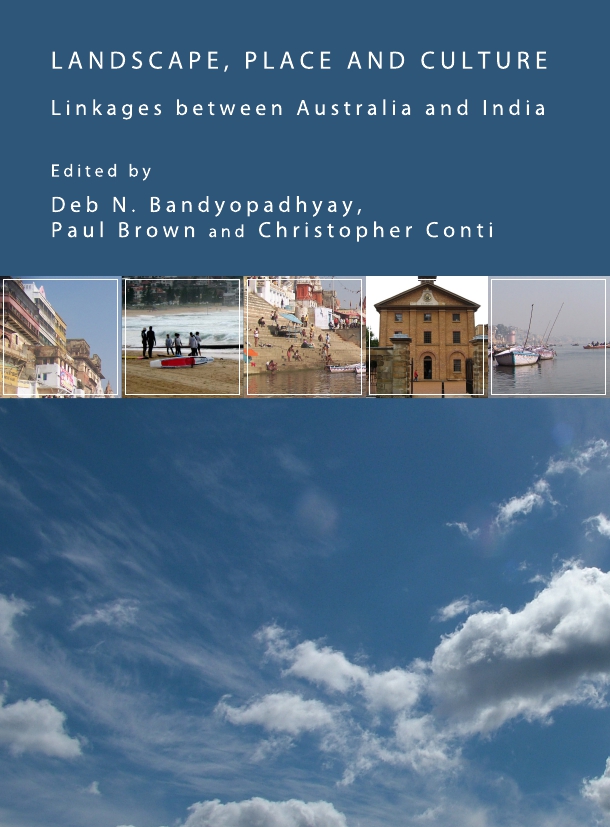
Landscape, Place and Culture

Linkages between Australia and India
Edited By: Deb Narayan Bandyopadhyay, Paul Brown

£44.99

This collection of essays explores the cultural, social, and ecological dimensions of the Australia-India relationship. Through comparative studies of colonial experience, migration, and shared environmental crisis, this work reassesses our relationship to place.

This collection of essays takes an interdisciplinary approach to the ecological, social, economic and, in particular, the cultural dimensions of the Australia-India relationship. The essays…
£44.99
£44.99
, 1-4438-2632-4 , , ,
Share

This collection of essays takes an interdisciplinary approach to the ecological, social, economic and, in particular, the cultural dimensions of the Australia-India relationship. The essays provide many levels of focus on environment, place and culture. Some evoke appreciation of particular “places,” either in India or Australia. Many explore how literature has treated “landscape,” while some are comparative studies of cultural, historical and political development.

The essays arise from a particular gathering of scholars: The East India chapter of the Indian Association for the Study of Australia (IASA) held its inaugural international conference in Kolkata on 22–23 January 2009. Much of the work is comparative, exploring common Indian and Australian themes of colonial and postcolonial experience, implications of migration and diaspora, and shared language and literature. The work also explores shared environmental crisis, manifest in landscapes such as the Mouths of the Ganges and Australia’s Murray Darling Basin. Such comparisons indicate our shared experience of the “crisis” of ecological, social, economic and cultural sustainability.

As human future is colonized through environmental degradation, and determined by human migration and shared culture and values, our relationship to “place” is revitalized and reassessed. We seek simultaneously a reconciliation between humans and a realignment of the human-nature relationship. This is the most basic meaning of social and ecological sustainability.

Deb Narayan Bandyopadhyay is a Professor in the Department of English, Burdwan University, India, and Honorary Director of the Centre for Australian Studies, Burdwan University. He is the Secretary of the Indian Association for the Study of Australia, Eastern Region. He has held visiting positions at several Australian and US universities, and publishes widely in literature, politics and history.

Paul Brown is Head of the School of History and Philosophy at University of New South Wales, Australia. The school hosts an Australian studies program, and courses in Indian history. Paul co-ordinates interdisciplinary environmental studies at UNSW, and his own research takes in social, political and cultural dimensions of environmental policy.

Christopher Conti holds a PhD in English Literature from the University of Sydney, Australia, and is Associate Lecturer and Tutor in the Department of Humanities and Languages at the University of Western Sydney. His work has appeared in journals such as Literature and Aesthetics, Arizona Quarterly, and Studies in the Novel.

Hardback

  • ISBN: 1-4438-2632-4
  • ISBN13: 978-1-4438-2632-7
  • Date of Publication: 2010-12-14

Ebook

  • ISBN: 1-4438-2756-8
  • ISBN13: 978-1-4438-2756-0
  • Date of Publication: 2010-12-14
300

Subject Codes:

  • BIC: HBLW, HBJM, JPS
  • BISAC: SOC053000, SOC015000, SOC002010, LIT020000, LIT004070, LIT008020
  • THEMA: NH(3MP), NHM, JPS
300