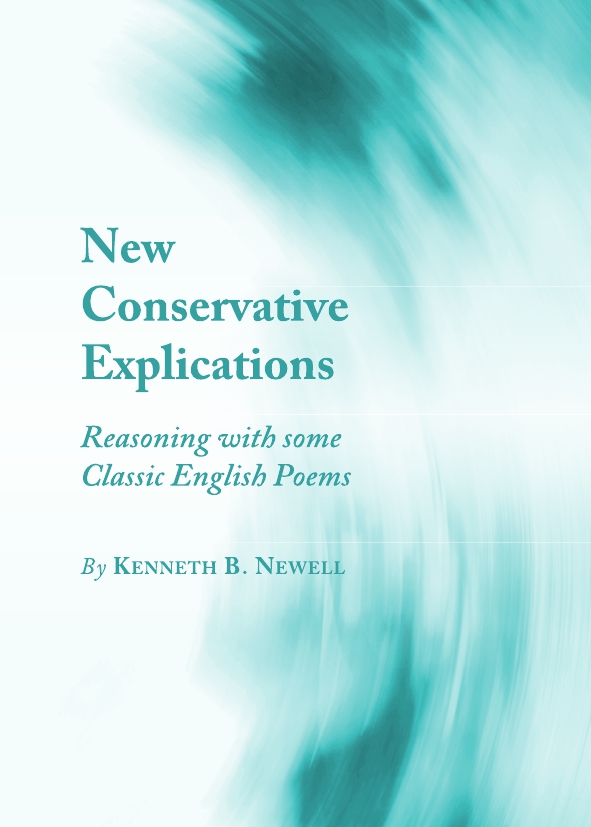
This book presents current multidisciplinary research and theory from 17 different fields (most of them never before applied to literary explication) in order to provide (1) justification for the practice of a relative-probability type of explication as distinguished from interpretation, (2) a relativistic foundation for the preference of some explication(s) of a literary work over others, and thereby (3) a middle way between the postmodern pluralist view that a work has only an unlimited number of equally acceptable though different explications and the modern intentionalist view that it has only one acceptable explication (the author’s). Nine of the 17 fields are of primary relevance: critical theory, hermeneutics, probability theory, philosophy of science, second-order logic, and four fields of cognitive science (linguistics, epistemology, neuropsychology, and artificial intelligence). But the book also touches upon textual criticism, legal theory, measure theory, fuzzy logic, animal learning behavior, developmental psychology, evolutionary epistemology, and neurobiology.
The book shows that those using a relative-probability type of explication on a literary work can achieve consensus because the healthy, adult human brain has an evolved, uniform, and probably innate ability to form relative-probability judgments and to form them in the practice of activities (like reading and explicating) that are not uniform and innate.
Lastly, the book contributes to the scholarly areas of explication theory and practice, first, by providing a relativistic foundation for a craft (explication) that currently is not acknowledged to have any foundation but nonetheless continues and will continue to be practiced and, second, by presenting a means (relative epistemic probability) by which judging some explication(s) of a literary work to be more acceptable than others may be justified philosophically—an uncommon circumstance in this postmodern era in which philosophical justification of many beliefs and practices is thought to be untenable.