• 0 Items - £0.00
    • No products in the cart.

£68.99

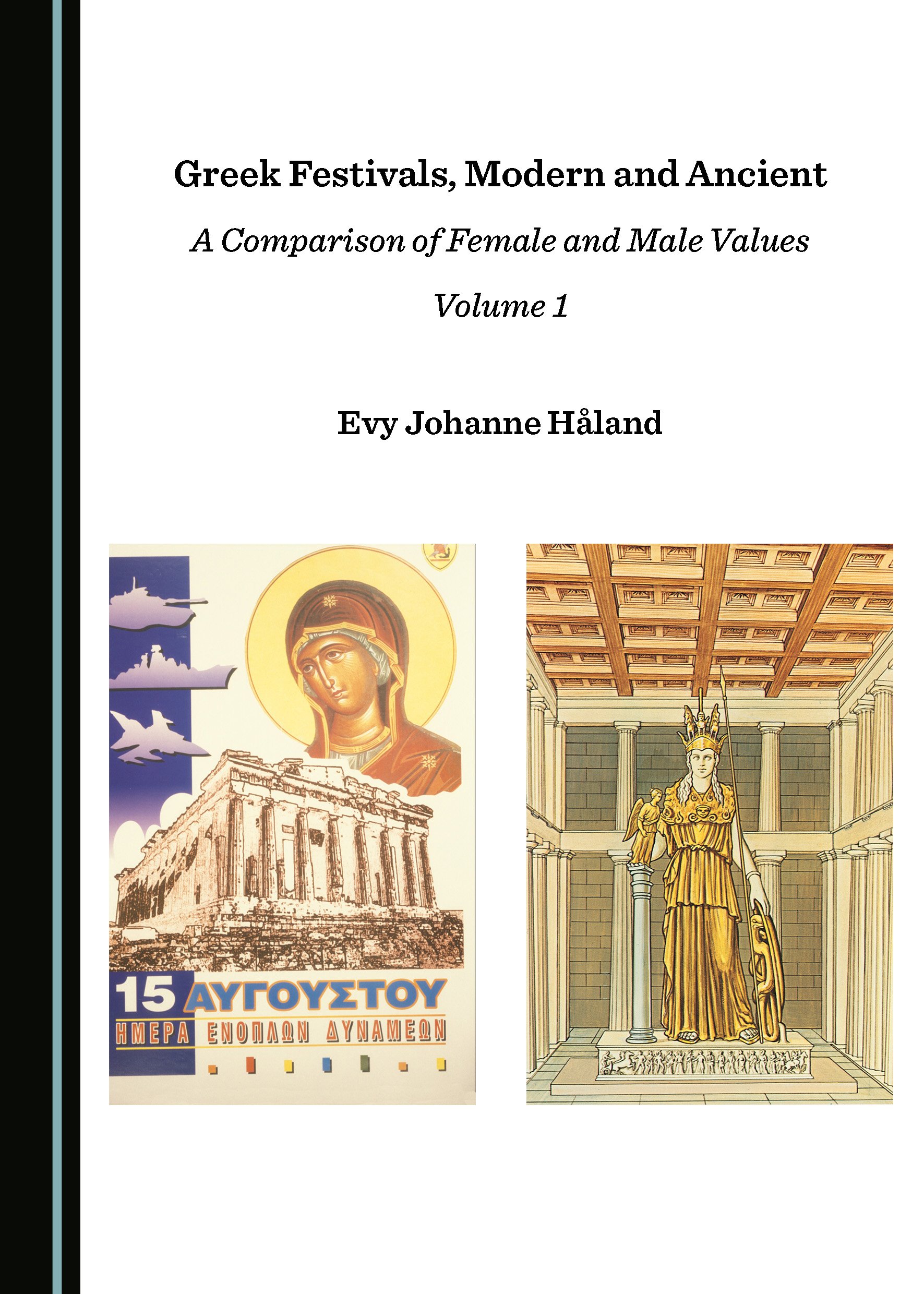
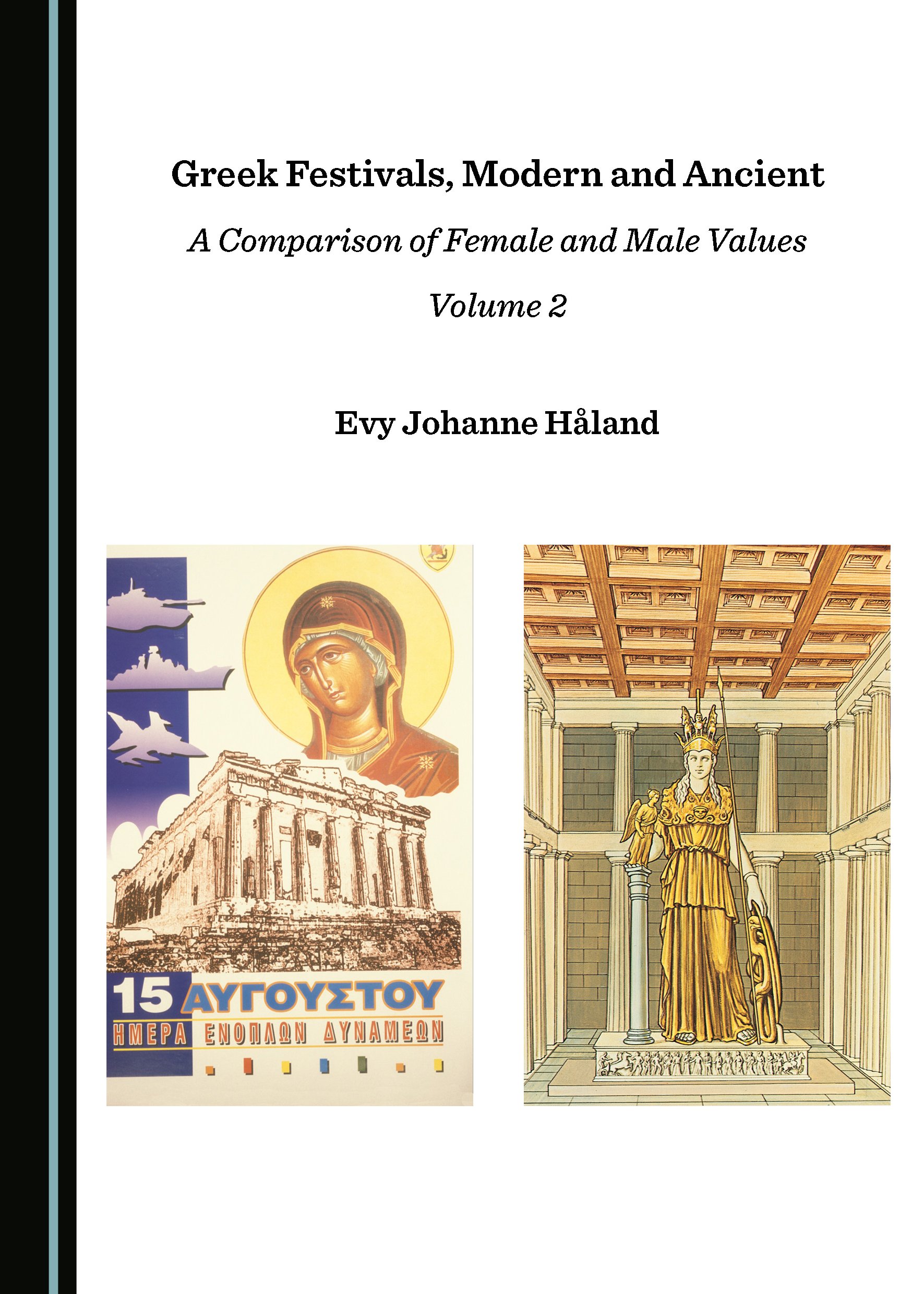
Greek Festivals, Modern and Ancient

A Comparison of Female and Male Values Volume 2
By: Evy Johanne Håland

£68.99

Håland’s two-volume book represents a cross-period product of fieldwork conducted in contemporary Greece in combination with ancient sources. It investigates the importance of cults connected with the Greek female sphere and its relation to the official male-dominated ideology.

This volume represents a multi-faceted, cross-period product of fieldwork conducted in contemporary Greece in combination with ancient sources. Based on a comparative analysis of important…
£68.99
£68.99
1-4438-3151-4 , , ,
Share

This volume represents a multi-faceted, cross-period product of fieldwork conducted in contemporary Greece in combination with ancient sources. Based on a comparative analysis of important religious festivals and life-cycle rituals, the book investigates the importance of cults connected with the Greek female sphere and its relation to the official male-dominated ideology. Within these festivals are encountered supplementary, complementary or competing ideologies connected with men and women, and it is shown that there is not a one-way power structure or male dominance within Greek culture, but rather competing powers linked to the two sexes and their respective spheres. In addition to gender, the book also explores the relationship between the “great” and “little” societies, in the form of official and popular religion. As such, it will serve to broaden the reader’s knowledge of ancient, but also modern, society, because it concerns the relationship between various spheres of life which each possess their own competing and overlapping, but also co-existing, value-systems.

Dr Evy Johanne Håland is a Norwegian historian and researcher. Since 1983, she has conducted several periods of fieldwork in the Mediterranean, mainly in Greece and Italy, where she has also researched religious festivals since 1987. Her most important publications include Rituals of Death and Dying in Modern and Ancient Greece: Writing History from a Female Perspective (2014), Competing Ideologies in Greek Religion, Ancient and Modern (2011), and Women, Pain and Death: Rituals and Everyday-Life on the Margins of Europe and Beyond (2008). Håland is ex-Senior Researcher and Marie Curie Intra-European Fellow in the Department of Archaeology and History of Art at the National and Kapodistrian University of Athens, where she worked on the project, “Greek Women and Death, Ancient and Modern: A Comparative Analysis”, which was financed by the EU’s 7th framework Programme.

Hardback

  • ISBN: 1-4438-3151-4
  • ISBN13: 978-1-4438-3151-2
  • Date of Publication: 2017-05-12

Ebook

  • ISBN: 1-4438-9611-X
  • ISBN13: 978-1-4438-9611-5
  • Date of Publication: 2017-05-12

Subject Codes:

  • BIC: HB, HBLA, HRA
  • THEMA: NH, NHC, QRA
551
  • “This extensive monograph in two volumes, translated into English by the author herself, draws on Håland’s PhD dissertation (University of Bergen 2004). Through a comparative analysis of a selection of modern and ancient religious festivals, Håland aims to shed light on the position of women in ancient and modern Greece, and to fill the gaps in the sources describing ancient festivals. She asserts a cultural continuity between ancient and modern ‘popular’ cultures in the same geographical area: that is to say, between agricultural societies sharing a common repertoire of symbols and rituals. […] Håland shows herself well aware of the problems aroused by survivalist, ‘pseudosurvivalist’ and anti-survivalist research. She keeps her distance from ‘Western concepts’ such as classicism and orientalism, but nevertheless employs modern anthropological theories as heuristic tools. […] Her study reveals a complementary relationship between the roles of the two genders and also the common values shared by two competing cultures: official ideology and popular cult. Greek Festivals, Modern and Ancient: A Comparison of Female and Male Values is a provocative book. [The] book offers a new and often neglected point of view – the female one – as well as several interesting descriptions of modern festivals. It will be welcomed by those interested in Greek religion, and in festivals in particular, both modern and ancient.”
    - Maria Patera Hellenic Open University and Open University of Cyprus; Journal of Hellenic Studies 139 (2019)
  • “Rather than a single dominant position, that of males, across the whole of Greek life, Håland details the respective male and female spheres, indicating how men lose power in the female sphere, and how women side-step or undermine the male sphere under certain circumstances. Crucial questions include from what position does one assess such gendered power relations?”
    - Professor Carole Cusack University of Sydney
  • “Among the greatest contributions that Dr. Håland makes to classical scholarship in this book are the copiously documented records of her fieldwork at seven contemporary agrarian festivals (two of them never before recorded), which she then compares to seven ancient agrarian festivals. […] [The book] provides us with new ways of interpreting some of the core events of Classical Greek culture, its festivals.”
    - Dr E.J.W. Barber Professor Emerita of Archaeology and Linguistics,
  • “The author has written a book densely packed with information and theoretical discussions which will be of great interest to a diverse audience. Classicists, anthropologists, scholars of gender and of modern Greece will all find new consideration of old topics and theories relevant to their fields. […] This book is large, rich and well documented and will repay careful reading by classicists, anthropologists and other academics. It vigorously challenges our conventional wisdom that Greek women’s subliminal contestation of patriarchy via ritual reveals them as feminists avant la lettre. [...] Putting this hoary notion to rest is certainly among the more important features of this study.”
    - Allaire B. Stallsmith Associate Professor of History, Towson University, USA

Meet The Author