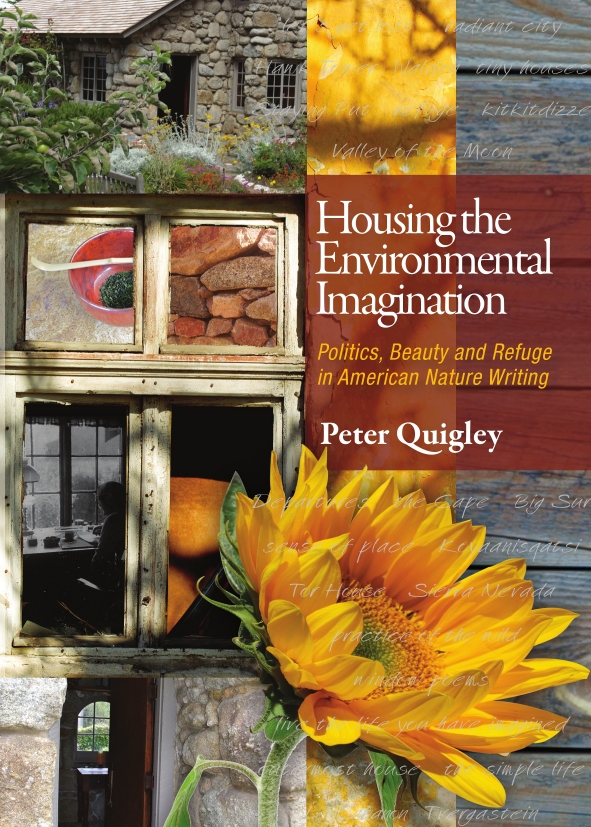
The last few decades have seen an explosion of interest in literature and the sense of place. Many essays, books and presentations have explored the aesthetics, politics, and urgency of understanding and appreciating the unique qualities of coasts, mountains, deserts, bioregions, and more. Little attention, however, has been given to the process of establishing residence in these special places and what it means to make a life there. Housing the Environmental Imagination focuses directly on this omission by examining the writing, houses, and lives of Thoreau, Robinson Jeffers, Gary Snyder, Wendell Berry, Scott Russell Sanders, Arne Naess, Mary Austin, Jack London, and many others. In addition to addressing the lack of study on this theme of living in place, Quigley adds a crucial additional element: living and writing in place. The unique aspect of this study is the selection of those writers whose writing project is inseparable from the living project. In other words, without the cabin at the pond, there would be no Walden. The same can be said of Snyder’s Kitkitdizze and Jeffers’ Tor House and Hawk Tower. Therefore, it’s Quigley’s intention to throw open the issue of the meaning of houses and to explore the role houses play in the lives of some of the more well-known nature writers. Thoreau is cited by Quigley as a good point of departure for examining the meaning and role of houses: “Most men appear never to have considered what a house is.” In this way, Quigley claims to have identified a new genre of writing and in the process pushes back against postmodern approaches. This writing, connected inseparably to house and region, depends on and is anchored in experience and to a world of natural processes and values. An interesting aspect of the book is the way Quigley takes this basic formula (place, house, writing) and examines how lifestyle and ritual are associated with place, house and writing. In addition, this triad also is seen to work its way forward in different historical times and pressures. Quigley examines the different political, social and architectural pressures felt by these writers in the 19th, and early and late 20th centuries. The conclusion of this study points forward, however, as the title of the last chapter suggests: “Alternative Futures.”
Quigley takes as his guiding theme throughout, two polar thoughts from Thoreau that govern the writers under examination as well as Quigley’s approach. Thoreau championed the heroic virtue of the imagination in practical terms by urging folks to move “confidently in the direction of [one’s] dreams.” By doing so, if one “endeavors to live the life he has imagined, he will meet with a success unexpected in common hours.” Again the practical and the imaginative are brought together with Thoreau’s other claim that it is “vain to sit down to write when you have not stood up to live.” Nature, war, individualism, love, family, stone, wood, glass, ocean, mountains, farming, community and more come together in this broad ranging discussion. This is a book about writers in place, but it also is about rethinking how we might live the best lives we can, every day. Essentially this book addresses the long standing question “And how shall we live?”
http://housesinthepoeticwild.org/