• 0 Items - £0.00
    • No products in the cart.

£39.99

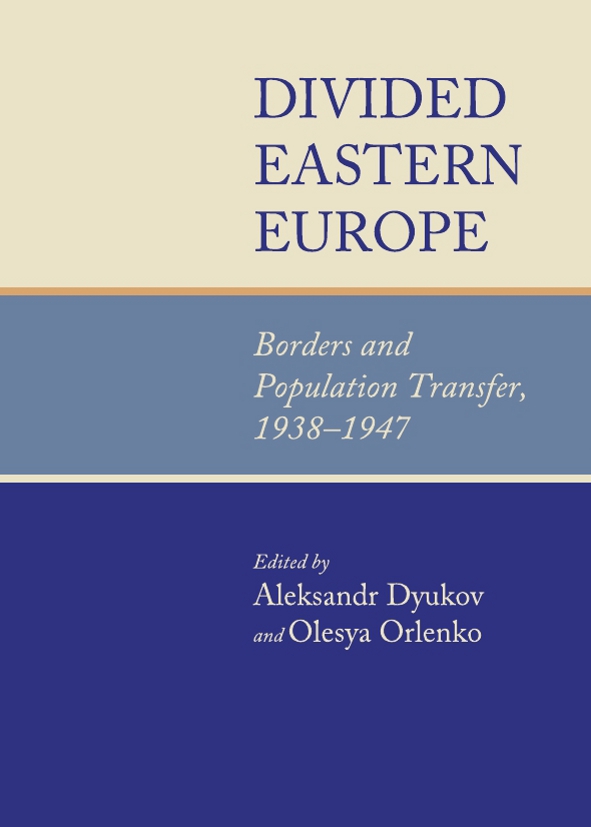
Divided Eastern Europe

Borders and Population Transfer, 1938-1947
Edited By: Aleksandr Dyukov, Olesya Orlenko

£39.99

In 1938, new borders divided Eastern Europe, creating the foundation for conflict. This collection of articles by international researchers explores national border changes from 1938 to 1947: population transfers, interethnic purges, and their modern legacy.

In 1938, on the eve of what would mark the beginning of the Second World War during the international crisis, Eastern Europe was divided –…
£39.99
£39.99
Share

In 1938, on the eve of what would mark the beginning of the Second World War during the international crisis, Eastern Europe was divided – in every sense of the word. New governments, which were generally regarded as national states, rose from the ashes of the old pre-modern Austro-Hungarian and Russian empires. However, civic nations were not formed within them; the titular ethnic groups were far from being the only representing populations in these states. The new states in Eastern Europe were the offspring of wars and revolutions. Their borders were initially determined by the rights of the powerful. New borders divided entire peoples, having created the very foundation for inter-state conflicts as well as the desire to revise the established order in the region. One of the consequences of the Second World War was the revision of Eastern European borders. Still today, historians have yet to agree upon a single assessment of the eastern European events in the 1930s and 1940s.

Researchers from Russia, Belarus, Ukraine, Poland, Moldavia, Israel, Germany and the USA have all contributed articles featured in this collection. The book is focused on national border changes in Eastern Europe during the period from 1938 to 1947: population transfer as a result of foreign and domestic political considerations, interethnic relationships and ethnic purges of paramilitary units; the concept of self- perception of people living on frontiers forced to change their national and civil status; and the problems of modern East European borders.

Alexander Dyukov is the Director of the Historical Memory Foundation and Editor-in-Chief of the Jurnal rossiyskih i vostochnoevropeyskih istoricheskih issledovaniy (Journal of Russia and East European Historical Studies). He graduated in 2004 from the Institute for History and Archives, Russian State University for the Humanities. He is the author of more than 50 scientific works and about 150 popular science texts. His main publications are Vtorostepenniy vrag: OUN, UPA I resheniye “evreyskogo voprosa” (2008), Milost’ k padshim: Sovetskiye repressii protiv natsistskih posobnikov v Pribaltike (2009), and Likvisatsiya “vrazhdebnogo elementa”: natsionalisticheskiy terror i sovetskiye repressii v Vostochnoy Evropy (2012). His scientific interests include the history of the partisan movement, the period of the Nazi occupation, nationalist military units and the politics of memory.

Olesya Orlenko is Head of the International Programs Department at the Historical Memory Foundation and Deputy Chief Editor of the Jurnal rossiyskih i vostochnoevropeyskih istoricheskih issledovaniy (Journal of Russia and East European Historical Studies). She graduated in 2004 from the Institute for History and Archives, Russian State University for the Humanities. Her scientific interests include Nazi occupation policy, European international relations between 1900–1950, memory laws, history of negationism and Holocaust denials.

Hardback

  • ISBN: 1-4438-3582-X
  • ISBN13: 978-1-4438-3582-4
  • Date of Publication: 2012-02-16

Ebook

  • ISBN: 1-4438-3597-8
  • ISBN13: 978-1-4438-3597-8
  • Date of Publication: 2012-02-16

Subject Codes:

  • BIC: JPS, HBJ, HBLW
  • THEMA: JPS(3MP), NHB, NH
245