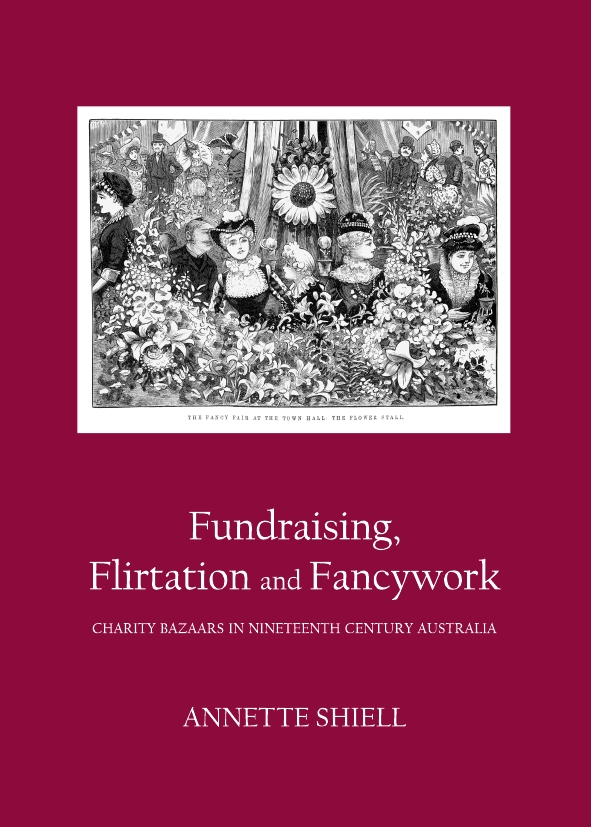
Fundraising, Flirtation and Fancywork examines the history and development of the charity bazaar movement in Australia. Transported from Britain, the charity bazaar played an integral role in Australian communal, social and philanthropic life from the early days of European settlement. Ranging in size and scale, from simple sales of goods to month long extravaganzas, charity bazaars were such a popular and successful means of raising revenue that they sustained the majority of the nation’s major public and religious institutions.
The nineteenth-century charity bazaar was a paradox. On the one hand, it encapsulated responsibility and civic duty through its raison d’etre, which was the provision of support for charitable causes. On the other, it encouraged a loosening of social and gendered restraint as women of the middle and upper classes repositioned themselves in a public space where the acquisition of material goods, gambling and flirting with men was actively encouraged.
From their inception, bazaars were the domain of women. They provided middle and upper class women with an opportunity to exercise their organisational, creative and social skills outside the domestic sphere, within a framework of socially acceptable philanthropic endeavour. Women’s dominance and public role in charity bazaars destabilised conventional gender relations.
The nucleus of the charity bazaar was the fancywork produced by women for sale on the stalls. Bazaars were an accessible and important repository for the display and sale of women’s creative work and the bazaar movement was instrumental in shaping women’s fancywork.
Bazaars were revered and reviled in colonial Australia. Despite the criticisms and the many social and cultural changes that occurred in nineteenth-century Australia, charity bazaars continued to escalate in number, popularity and complexity. They predated and influenced the great international exhibitions and the development of larger shops and emporiums and by the end of the century, had evolved into themed entertainment and shopping spectacles known as grand bazaars.
Charity bazaars mirrored and shaped the social customs, mores and fashions of their time and are a rich, largely untapped, interdisciplinary historical source.