• 0 Items - £0.00
    • No products in the cart.

From £34.99

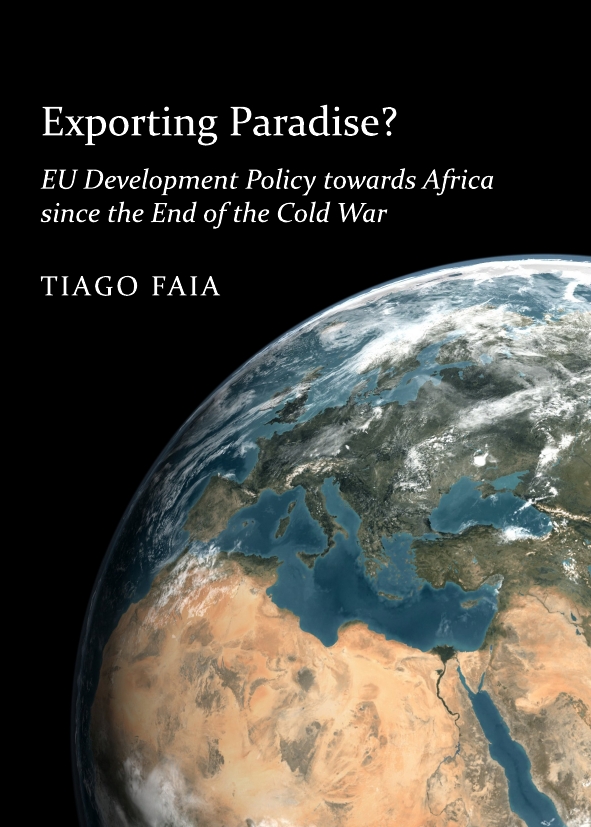
Exporting Paradise? EU Development Policy towards Africa since the End of the Cold War

By: Tiago Faia

From £34.99

This book defines EU development policy in Africa since the Cold War. It argues the EU fell short of its efforts to export its ‘paradise’ to Africa, limited by its inability to stand as a distinct and leading actor in international development.

The central aim of this book is to define the approach of EU development policy regarding Africa since the end of the Cold War. It…
From £34.99
From £34.99
Share

The central aim of this book is to define the approach of EU development policy regarding Africa since the end of the Cold War. It focuses on the impact of EU development policy on the domain of international development and the objective of the EU to become a prominent international actor.

The book relies on Martha Finnemore’s Social Constructivist research. It concentrates on the dynamics maintained by the EU with the normative basis that characterises the structure and agents of international development, and assesses how it affected EU behaviour, as expressed through its development policy concerning Africa. By doing so, it exposes both the marked effect of EU development policy in the domain of international development, and the form of ‘paradise’ (model of development) the EU promoted in Africa.

Therein, the volume largely confirms the identified agents as the source of the norms that define the structure of international development, and the EU as its derivative. It argues that EU development policy is currently a general projection of the normative structure of international development, specifically regarding the policy orientation of its identified agents. As a result, the book contends that the EU fell short of its efforts to export its form of ‘paradise’ to Africa since the end of the Cold War, as a corollary of its limitations to stand as a distinct and leading actor in the domain of international development.

Tiago Faia (PhD, University of Bath, UK) is a researcher and consultant in Africa-EU development cooperation. He has worked as a researcher for the European Parliament and Peacerights, and collaborated as a consultant with the European Centre for Development Policy Management and the Carter Center. His most recent research featured in Foreign Policy in Focus, Pambazuka News, and Revista Autor.

Hardback

  • ISBN: 1-4438-4192-7
  • ISBN13: 978-1-4438-4192-4
  • Date of Publication: 2012-11-06

Paperback

  • ISBN: 1-4438-4928-6
  • ISBN13: 978-1-4438-4928-9
  • Date of Publication: 2013-07-22

Ebook

  • ISBN: 1-4438-4368-7
  • ISBN13: 978-1-4438-4368-3
  • Date of Publication: 2013-07-22

Subject Codes:

  • BIC: JPSN2, JPSN2, LBBU
  • THEMA: GTP(1QFE), JPSN, LBBU
320
  • “The book is a much needed correction of the official EU writing of history on its own development policy. The book successfully shows that the EU development policy aimed at Africa was not ‘unique’. Furthermore, it boldly demonstrates that EU development policy has not been providing ‘leadership’ neither to the discourse nor the practice of international development”.
    - - Professor Gorm Rye Olsen, Professor of Global Politics and Head of Institute of Society and Globalization, Roskilde University “Taking a social constructivist approach, Faia convincingly invalidates the EU’s claims that it demonstrates ‘leadership’ and ‘uniqueness’ in its development policy to Africa. He shows that since 1989 the EU has been a ‘norm taker’, adopting the dominant ideas of the Bretton Woods institutions. The book will be of interest to both scholars and practitioners of EU development policy and those with a broader interest in the role played by the EU in international politics since the end of the Cold War”.

Meet The Author