• 0 Items - £0.00
    • No products in the cart.

£44.99

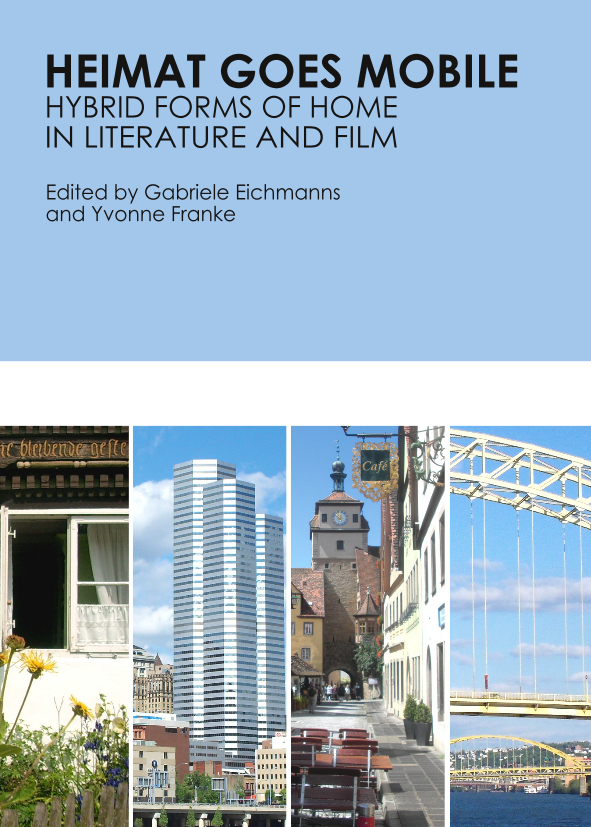
Heimat Goes Mobile

Hybrid Forms of Home in Literature and Film
Edited By: Gabriele Eichmanns, Yvonne Franke

£44.99

The German concept of Heimat—a feeling of home and belonging—is evolving in a globalized world. This collection of essays explores new, hybrid forms of Heimat in film, literature, and culture, showing how the notion now transcends boundaries of nation and race.

Heimat has been a crucial concept for the construction of identity in the German-speaking world. Seemingly impossible to translate, Heimat has served to describe feelings…
£44.99
£44.99
Share

Heimat has been a crucial concept for the construction of identity in the German-speaking world. Seemingly impossible to translate, Heimat has served to describe feelings of comfort and belonging that are traditionally tied to a specific location, be it one’s place of birth or childhood home. Yet, in a world characterized by ever increasing global influences and a fast-paced lifestyle, the notion of Heimat as a static, inflexible and rather exclusionary idea is becoming more and more obsolete and is giving way to new hybrid Heimat forms that encompass traditional as well as foreign elements. Thus, Heimat can no longer be perceived as a solely German concept but is rapidly merging binary opposites, shaping Germans’ understandings of home in new and unexpected ways.

The nine essays in this anthology explore these hybrid forms of Heimat in our globalized world from multiple angles. Some take a look at traditional genres of Heimat like the Heimatfilm or Heimatroman and examine how contemporary filmmakers (Tom Tykwer, Fatih Akın) and authors (Hans-Ulrich Treichel, Hugo Loetscher) have appropriated those genres to arrive at an updated version of Heimat in the 21st century. Other articles focus on gendered readings of Heimat and show how Mo Asumang’s Roots Germania and Ula Stöckl’s Das alte Lied emancipate the term from its nurturing, motherly qualities and instead provide women—including women of color—with powerful agency. Finally, contributors explore Heimat in the regional and historical contexts of East and West Germany, Switzerland and Romania. In the process, this anthology inscribes itself into the ongoing discourse on Heimat and enriches it by showing how the current notion of Heimat transcends traditional boundaries of nation, culture and race.

Gabriele Eichmanns is Associate Teaching Professor of German at Carnegie Mellon University in Pittsburgh. She received her PhD in German Literature from the University of Washington-Seattle in 2008. Her research focuses primarily on travel writing, questions of home and identity, trans-cultural writers and pop literature. She has published on Christian Kracht, Christoph Ransmayr, Yadè Kara and German travel writing on Japan and is currently working on a textbook on globalization for advanced students of German.

Yvonne Franke is Assistant Professor of German in the Department of Foreign Languages at Midwestern State University in Wichita Falls, Texas. She received her PhD from the University of Pittsburgh in 2013. Her research interests include contemporary German audiovisual culture and literature against the backdrop of European expansion.

John Blair, Inke Brust, Necid Chronister, Jeroen Dewulf, Katharina Häusler-Gross, Axel Hildebrandt, Michel Mallet, Yvonne Franke

Hardback

  • ISBN: 1-4438-4787-9
  • ISBN13: 978-1-4438-4787-2
  • Date of Publication: 2013-08-15

Ebook

  • ISBN: 1-4438-5087-X
  • ISBN13: 978-1-4438-5087-2
  • Date of Publication: 2013-08-15

Subject Codes:

  • BIC: JFC, DSB, H
  • THEMA: JBCC, DSB, NH
214
  • "Using apt cross-disciplinary approaches, the essays not only connect with each other thematically, but they also cleverly expand the Heimat studies genre, particularly in the context of analyzing the transformation of Europe over the past twenty-five years. This expansion ultimately explores the process of how one remembers and appreciates the past and present. Defining something riddled with connotations and dripping with exclusion in a postwar context is not easy. It requires arresting erudition and extensive definitions of memory and of history. Casual readers wil shy away from the complexities of this study, but it is an admirable and authoritative collection on a topic of increasing interest in German studies."
    - Kristy R. Boney University of Central Missouri