• 0 Items - £0.00
    • No products in the cart.

£49.99

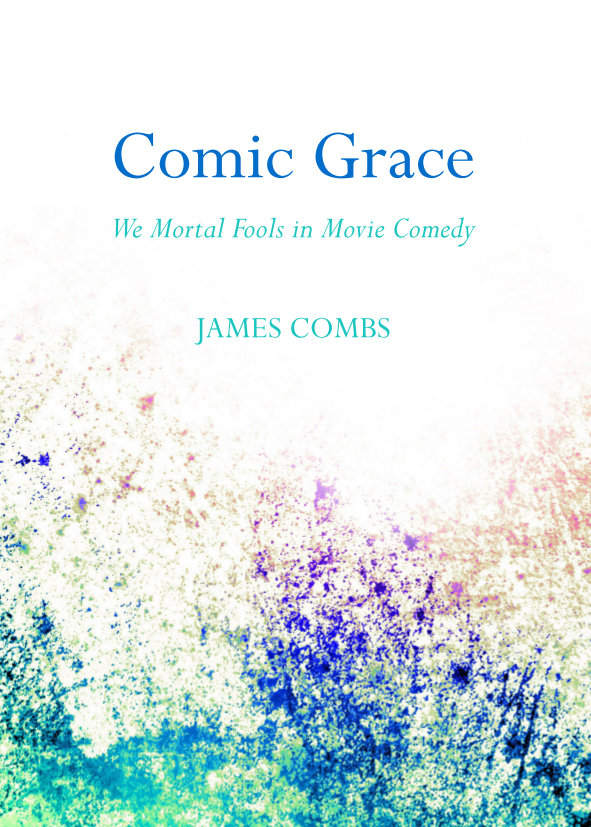
Comic Grace

We Mortal Fools in Movie Comedy
By: James Combs

£49.99

This book asks not only why some movie comedies are great, but what is unique and enduring in the legacy of comedy on film. It entertains the proposition that comedy may be motion picture’s greatest achievement, inquiring into what audiences cherish.

Comic Grace is Comb’s third book on the movies for Cambridge Scholars Publishing. These books hardly form a trilogy, but they do express a pragmatic…
£49.99
£49.99
1-4438-4923-5 , , ,
Share

Comic Grace is Comb’s third book on the movies for Cambridge Scholars Publishing. These books hardly form a trilogy, but they do express a pragmatic interest of the author; namely, the aspects of movies that we have not adequately studied. More specifically, the first, Movie Time, examines the inadequately understood temporal appearance of movies, in movies set in the past, the present, and the future, attempting to make sense of such questions as to why certain past periods still fascinate, how an emergent present is accompanied by cinematic treatment, and what kind of futures we like to speculate about by watching alternative futures on film. This temporal interest was complemented in the second book, Wit’s End by examination of qualitative interest, discussing how and why certain movies come to be regarded and remembered by the movie culture as great and memorable. Even though there is obviously no unanimous agreement on which movies are “canonical”, there is enough consensus among those who study and value films for us to constitute inquiry into why some films are thought great.

This third book in this sustained inquiry poses the question of not only why we think some movie comedies are great, but also what is unique and enduring in the legacy of comedy on film. The book looks at comedy with humane interest, entertaining the proposition that comedy may well be motion picture’s greatest achievement. If so, then it behooves inquirers to understand what movie audiences enjoy and cherish about movie comedy, and what it is about the film medium that so adequately communicates the comedic across such vast audiences and why they never tire of certain kinds of comedy. These interests will inspire students of the remarkable medium of film to inquire further into not only these questions, but also others that they find interesting and illuminating about the film experience.

James Combs is Professor Emeritus from Valparaiso University in Indiana, USA. He is the author of twenty-three books, and is currently at work on another, Magical Suspension: The Movies as Ludenic Experience, an exploration of the aesthetics and pragmatics of movie play in an effort to understand what is going on in that experience. As a lifelong fan and mature academic student of the movies, he is curious to know. He lives quietly with Sara and seven stray cats in a peaceful mountain setting, venturing out only to see movies and make occasional trips to England.

Hardback

  • ISBN: 1-4438-4923-5
  • ISBN13: 978-1-4438-4923-4
  • Date of Publication: 2013-09-11

Ebook

  • ISBN: 1-4438-5099-3
  • ISBN13: 978-1-4438-5099-5
  • Date of Publication: 2013-09-11

Subject Codes:

  • BIC: APF, JFCA, JHBA
  • BISAC: PER004090, PER004030, PER015000, PER004000
  • THEMA: ATF, JBCC1, JHBA
345
  • Building in many ways on his earlier work, ‘The Comic of Democracy,' Combs takes comedy and comic inquiry seriously and proves once again that the comic perspective can offer insight and understanding, discovering comic truth by examining and explicating the locus of the genre in popular movies through a comprehensive, yet unobtrusive, eclectic theoretical frame. Here, however, he goes beyond the confines of politics and embraces the larger human condition, arguing that amity and comity acquired through comic learning ‘perpetuates human grace, valuing and practising gratitude and graciousness as habits of living well.'
    - – Stephen Smith Professor of Communications, University of Arkansas
  • The book is divided into three main sections devoted to: 1) funny people, 2) funny things, and 3) funny ways, each section with its own well-chosen collection of example movies that range in time from the 1930s to the present. Throughout, Combs somehow manages to use such words as ‘ludenic,' ‘multiverse,' and ‘structuralism' without analyzing the fun out of the topic of comedy. Combs is a man who ‘takes comedy seriously' but who never forgets the essentially comic nature of all us fallible humans. I regard his book as a fine contribution to the literature of comedy and humor.
    - – Sam G. Riley Professor of Communication, Virginia Tech

Meet The Author

Processing Your Order

Please wait while we securely process your order.
Do not refresh or leave this page.
You will be redirected shortly to a confirmation page with your order number.