• 0 Items - £0.00
    • No products in the cart.

£44.99

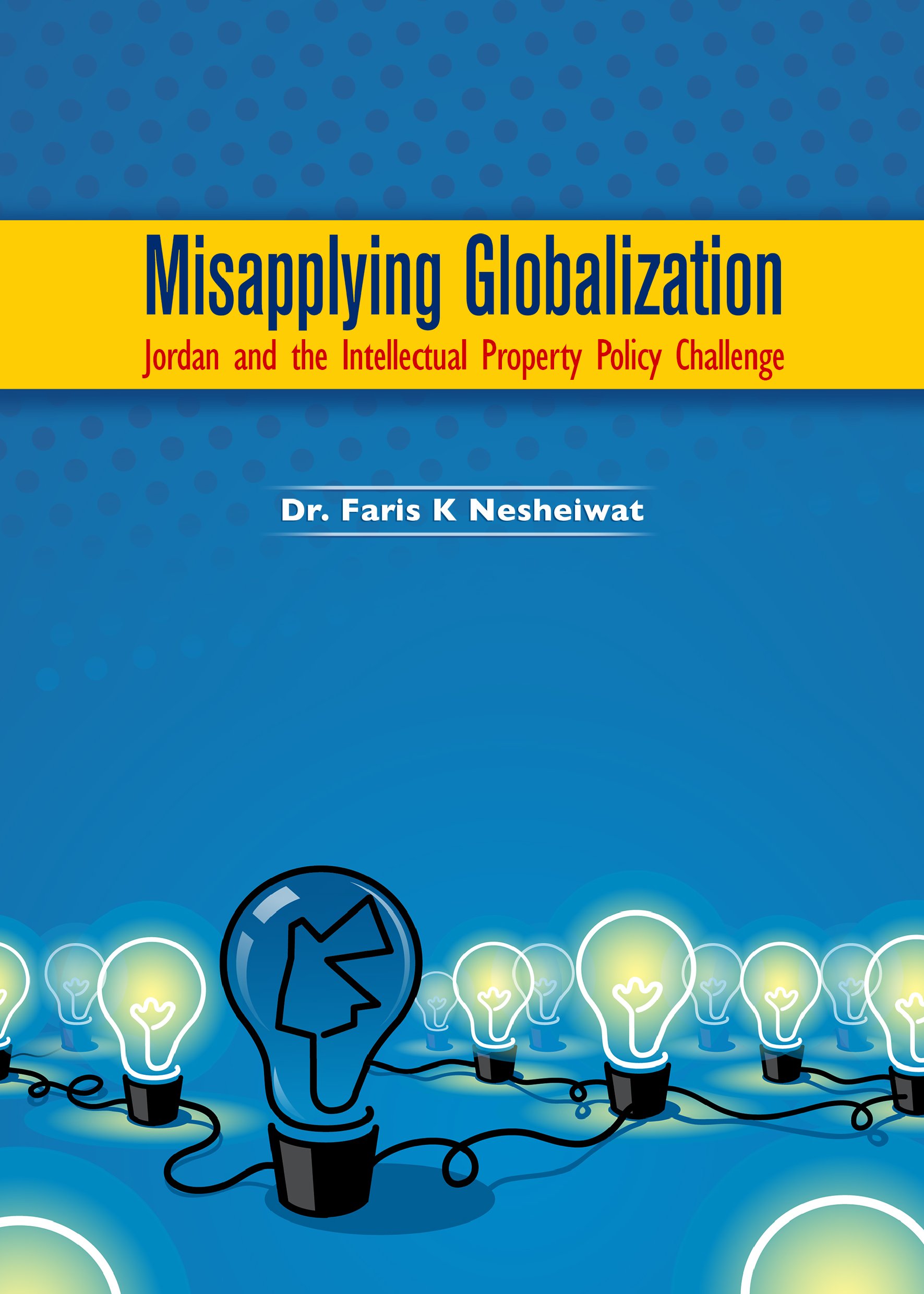
Misapplying Globalization

Jordan and the Intellectual Property Policy Challenge
By: Faris K. Nesheiwat

£44.99

This book studies Jordan's rapid adoption of TRIPS intellectual property laws. It argues these standards, designed for multinationals, are damaging Jordan’s legal institutions and foreclosing possibilities of innovation that could bring economic benefits.

In the space of only a few years, the Jordanian legal system was transformed from an Ottoman-era regime which made few provisions for intellectual property…
£44.99
£44.99
1-4438-5163-9 , , , ,
Share

In the space of only a few years, the Jordanian legal system was transformed from an Ottoman-era regime which made few provisions for intellectual property rights to one which incorporated all the provisions of TRIPS. The TRIPS principles, designed to protect the interests of multinational media and technology companies, thereby became grafted onto the legal architecture of a developing country which lacked judicial expertise on intellectual property, and whose population was culturally averse to recognizing such rights.

This book provides a detailed study of this transformation, and the ideological and financial pressures which brought it about. The book argues that the standards for IP protection have been elevated beyond the level at which Jordan is able to enforce compliance. This is damaging Jordan’s legal institutions, generating ill-will towards international legal norms, and foreclosing possibilities of innovation via imitation that could bring economic benefits to Jordan, the Middle East, and to the global economy.

This is the first detailed study of the impact of TRIPS on a Middle Eastern country, and will be of both academic and practical relevance to all who are interested in intellectual property rights, development, international law, globalization, and the Middle East.

Dr. Faris K. Nesheiwat is a Visiting Tutor at Durham University’s School of Law. His scholarship focuses on examining the interaction and relationship between the law, on the one hand, and economic and social policy on the other, with a particular emphasis on developing countries. He holds a JD from Seton Hall University and a PhD from Durham University.

Hardback

  • ISBN: 1-4438-5163-9
  • ISBN13: 978-1-4438-5163-3
  • Date of Publication: 2013-12-23

Ebook

  • ISBN: 1-4438-6244-4
  • ISBN13: 978-1-4438-6244-8
  • Date of Publication: 2013-12-23

Subject Codes:

  • BIC: LAQ, LBDK, JFFS
  • BISAC: LAW050000, LAW051000, LAW014010, POL033000, POL011020, POL059000
  • THEMA: LAQ, LBDK, GTQ
210
  • The debate about the impact of the domestic political context on the further development of the global governance of intellectual property rights (IPRs) is often conducted without much actual local evidence. In this book, Faris Nesheiwat explores the case of Jordan to set out the manner in which local attitudes, politics and interests impact on the reception of the global message about IPRs. This ‘localized contextualisation' underlines the need to move away from a one-size-fits-all model of intellectual property legislation and take seriously the wildly varying needs, structures and normative commitments that are evident in different societies. Through a close analysis of Jordan, Nesheiwat provides a vital corrective to top-down treatments of intellectual property governance and by doing so encourages a more nuanced and subtle treatment of the problem of intellectual property in the new millennium.
    - —Professor Chris May Lancaster University

Meet The Author

Processing Your Order

Please wait while we securely process your order.
Do not refresh or leave this page.
You will be redirected shortly to a confirmation page with your order number.