• 0 Items - £0.00
    • No products in the cart.

£80.99

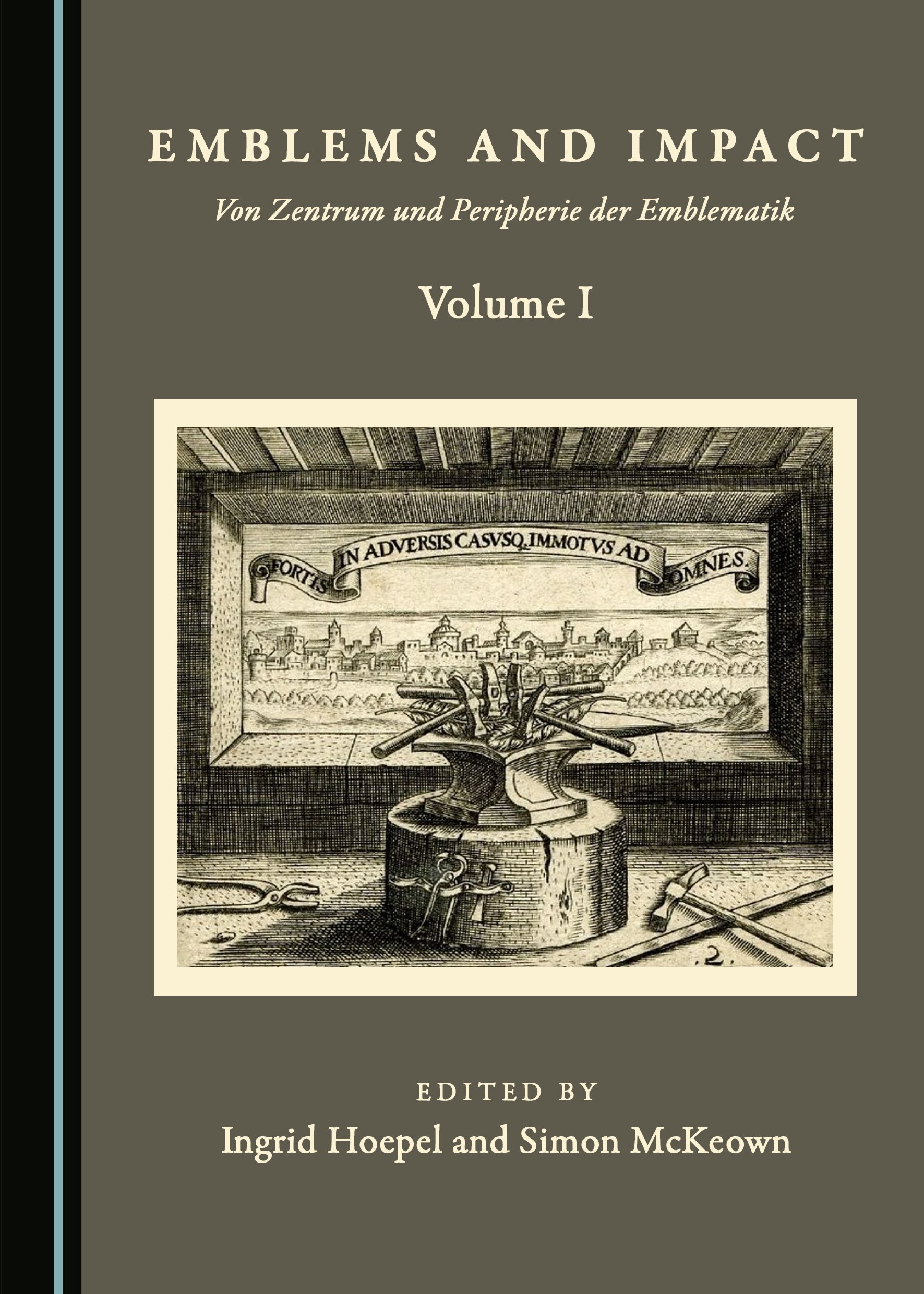
Emblems and Impact Volume I

Von Zentrum und Peripherie der Emblematik
Edited By: Ingrid Hoepel

£80.99

The study of emblems allows this two-volume work to look back at the collaborative endeavours of creative minds of earlier times. It argues that while the world seeks to come to terms with globalization, emblems allow reflection on strongly shared cultural values and connections.

The art of the emblem is a pan-European phenomenon which developed in Western and Central Europe in the early modern period. It adopted meanings and…
£80.99
£80.99
1-4438-5184-1 , , , ,
Share

The art of the emblem is a pan-European phenomenon which developed in Western and Central Europe in the early modern period. It adopted meanings and motifs from Antiquity and the Middle Ages as part of a general humanistic impulse. Technological developments in printing that permitted the combination of letterpress with woodblock, and later copperplate, images, ensured that the emblem spread rapidly by way of printed collections. With time, emblematic ideas moved beyond Europe, conveying their insights and wisdom in the compact form of the book. These same books came to influence artists and designers working in the decoration of buildings, furniture, and household items, so that emblems entered personal life; they infiltrated festive culture, too. In such environments beyond the book, emblems were transported, adapted, and embedded in new functional contexts shaped by social, political, or religious conditions, but also by architectonical and regional art historical parameters. The results of these transformations are often of an intricate and complex meaning. The combination of word and image that constitutes the emblem still has resonance in contemporary art and architecture.

The study of emblems allows us to look back at the collaborative endeavours of creative minds of earlier times from across Europe and beyond. At a time when that continent is under strain, and the world in general seeks to come to terms with globalization, emblems allow reflection on strongly shared cultural values and connections.
Dr Ingrid Hoepel is Honorary Professor at the Christian-Albrechts-University zu Kiel, Germany, and Chair of the Society for Emblem Studies. She has published and edited books and numerous articles on emblematics, including Emblem und Sinnbild (1987), Emblems around the Baltic (2016), and two volumes of Glasgow Emblem Studies.

Dr Simon McKeown is Head of History of Art at Marlborough College, UK, and is author and editor of several books on Renaissance and Baroque iconography. He sits on the advisory boards of the Society for Emblem Studies, the book series Imago Figurata, and the journal Emblematica.

Gabriele Ball, Andreas Bässler,
Andreas Beck,
Thorsten Burkard,
Anna Christina Schütz, Timothy Cole, Bartłomiej Czarski,
Rosa de Marco,
Tom D. Kilton, Rudolf Drux, Zoltán Erdös, Harriett Green, Lawrence Grove., Myung-Ja Han, Alexandra Ida Maria Mütel,
Stefan Kiedroń, Tomáš Kleisner, Walter Kroll, Ulrich Kuder,
Agnes Kusler,
Michael La Corte, Patricia Lampron, Walther Ludwig,
Andrea Maceiras Lafuente,
Simone Maria Kaiser, Christine McCall Probes,
Tim Meier, Barbara Milewska-Waźbińska, Julia Neumann, Dietmar Peil,
Nicolas Potysch, Friederike Rückert, Dorothea Scholl, Ulf Schütte, Joanna Skubisc,
Manfred Steingräber,
Antje Theise., Michaela Wilk

Hardback

  • ISBN: 1-4438-5184-1
  • ISBN13: 978-1-4438-5184-8
  • Date of Publication: 2017-03-13

Ebook

  • ISBN: 1-5275-0435-2
  • ISBN13: 978-1-5275-0435-6
  • Date of Publication: 2017-03-13

Subject Codes:

  • BIC: A, HB, JFC
  • THEMA: A, NH, JBCC
650