• 0 Items - £0.00
    • No products in the cart.

£44.99

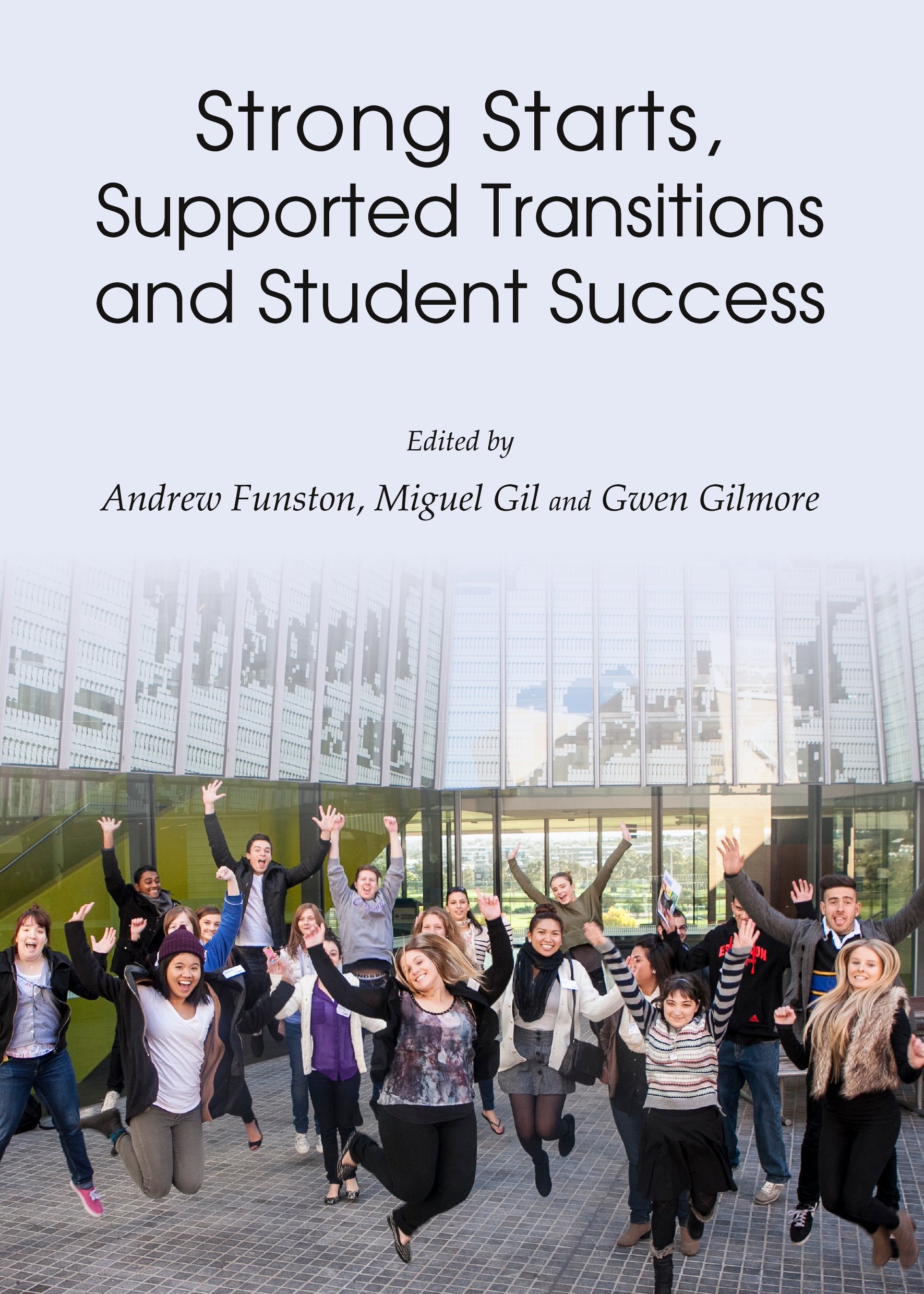
Strong Starts, Supported Transitions and Student Success

Edited By: Andrew Funston, Miguel Gil, Gwen Gilmore

£44.99

This book celebrates the diversity of universities but recognises the challenges faced by new students. It offers research, case studies, and practical advice from international experts on student transition, retention, and the first-year experience.

The shift to mass participation in higher education is a welcome international trend. In Australia the number of young adults attempting a degree course at…
£44.99
£44.99
, , 1-4438-5499-9 , ,
Share

The shift to mass participation in higher education is a welcome international trend. In Australia the number of young adults attempting a degree course at university has increased by close to twenty five percent in less than a decade. Campuses are becoming more culturally and linguistically diverse. More university students are coming from poorer families and disadvantaged educational backgrounds. The authors of Strong Starts, Supported Transitions and Student Success celebrate the diversity of new university learning communities while recognising the challenges faced by many commencing students. This book presents research findings, strategic thinking and innovative approaches to student transitions and retention at one of Australia’s newer institutions, designated “The University of Opportunity”. Drawing extensively on international scholarship and the work of retention and transition experts in North America, the United Kingdom, Australia and New Zealand, the book provides several theoretically-informed case studies, as well as more general discussions and practical advice to academics and professional staff involved in “the first year in higher education”, and especially those practitioners working to enhance “the student experience”.

Dr Andrew Funston holds a BA (hons), MA and PhD from the University of Melbourne. He is a Lecturer and Course Coordinator in the College of Arts at Victoria University. Andrew has researched young people’s use of mobile (cell) phones, “digital divide” issues and disadvantaged young people’s access to the Internet, and in recent years his research has focussed on foundation pedagogies and student transitions. In 2012, he published Non-traditional Students Making Their Way in Higher Education (Youth Research Centre Melbourne).

Dr Miguel Gil holds a BA (Universidad de Navarra), MA (Monash University), PhD (La Trobe University) and a Postgraduate Diploma in Translation (Victoria College). Miguel has gathered a wide range of experience in the field of retention, transition and first-year student experience; first as a retention officer at Edith Cowan University (2004–2010) and through his current work as a Transition and Retention Coordinator at Victoria University in Melbourne. He is completing research on the graduate attribute of “global citizenship”, and is also working on a book titled Academic Writing in Context.

Dr Gwen Gilmore holds a BA and Diploma of Teaching (Canterbury University, NZ), a Masters of Education Administration and Diploma of Second Language Teaching (Massey University, NZ) and a PhD (University of Exeter, UK). She is a Lecturer in Literacy and Student Retention and coordinates core units in the Diploma of Education Studies and the Masters of Education programs in the College of Education at Victoria University. Gwen’s current research aims to build knowledge and principles for improving teacher education settings, inclusive education, social justice and staff and student engagement.

Hardback

  • ISBN: 1-4438-5499-9
  • ISBN13: 978-1-4438-5499-3
  • Date of Publication: 2014-03-25

Ebook

  • ISBN: 1-4438-5789-0
  • ISBN13: 978-1-4438-5789-5
  • Date of Publication: 2014-03-25
295

Subject Codes:

  • BIC: JNM, JNF, JNFN
  • THEMA: JNM, JNF, JNFK
295
  • "This book contributes to the scholarship on concepts of persistence, success, attrition and institutional culture and opens critical debates on pervasive and systemic issues that often impair progress. Add-on, short-term and other such insular interventions remain impotent at challenging the exclusionary status quo. The authors provide cogent examples, cases and evidence to lend weight to the argument that institutional efforts and systemic collaborations are probably the most potent methods of addressing the broad concerns of persistence and success. [...] Overall, the book is an extremely valuable resource for anyone in higher education who is committed to the complex tasks of realising the ideals of higher education as an equaliser."
    - Dr Birgit Schreiber Senior Director Student Affairs, Stellenbosch University