• 0 Items - £0.00
    • No products in the cart.

£44.99

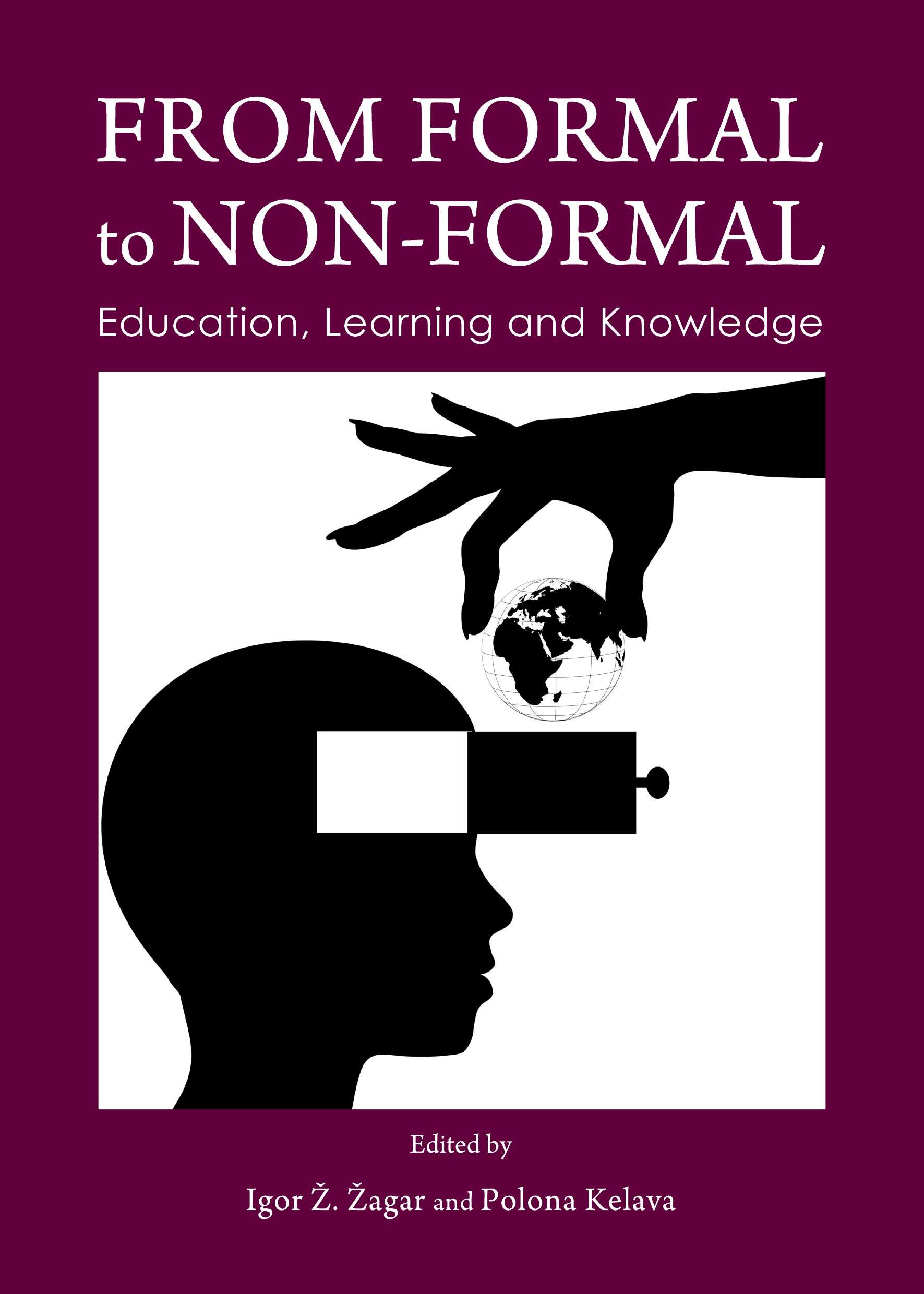
From Formal to Non-Formal

Education, Learning and Knowledge
Edited By: Polona Kelava, Igor Ž. Žagar

£44.99

Authors from diverse fields—including sociology, philosophy, and history—explore non-formal education, learning, and knowledge. This diversity of approaches offers new findings and a basis for reflection on the varied dimensions of formal and informal learning.

The monograph From Formal to Non-Formal: Education, Learning and Knowledge presents a review of selected aspects of non-formal education and learning, and is written by…
£44.99
£44.99
, 1-4438-5910-9 , , ,
Share

The monograph From Formal to Non-Formal: Education, Learning and Knowledge presents a review of selected aspects of non-formal education and learning, and is written by António Fragoso, Petra Javrh, Polona Kelava, Taja Kramberger, Nives Ličen, Marko Radovan, Drago B. Rotar, Klara Skubic Ermenc, Tadej Vidmar, Igor Ž. Žagar, Tihomir Žiljak and Sabina Žnidaršič Žagar. These authors are all anthropologists, sociologists, philosophers, political scientists, education scientists and historians of education. As such, the subject covered is a broad one and reaches into fields that at first glance appear to be very distant from each other. It is precisely this diversity of approaches that offers the best promise of new findings regarding non-formal learning, education and knowledge and that represents a fruitful basis for further reflection on these topics. The monograph thus offers answers to some starting points for reflection on the increasingly varied dimensions and possibilities of formal, non–formal and informal knowledge and learning.

Igor Ž. Žagar studied philosophy, sociology, and linguistics in Ljubljana, Paris, and Antwerp. He received his doctoral degree in Sociology of Culture from the University of Ljubljana. He is a Professor of Rhetoric and Argumentation at the University of Primorska, and a Senior Research Fellow and Head of the Centre for Discourse Studies at the Educational Research Institute, Ljubljana, Slovenia. He has lectured in Belgium, the United States, Italy, China, the United Kingdom, the Netherlands, Spain, Russia, Romania, Poland and France. His interests lie in pragmatics (speech act theory, (critical) discourse analysis), philosophy of language, argumentation, and rhetoric. He is the author/co-author and editor/co-editor of twelve books and more than a hundred articles.

Polona Kelava is a Research Assistant in the Centre for Evaluation Studies at the Educational Research Institute and a Teaching Assistant at the Faculty of Education, University of Maribor. Her main research areas are adult education and vocational education and training. In her research, she deals mainly with the recognition of non-formal and informal learning and social inclusion based on educational attainment. She is the author of scholarly and other journal articles in these fields, and is also the co-author of a monograph.

Klara Skubic Ermenc, António Fragoso, Petra Javrh, Polona Kelava, Taja Kramberger, Nives Licen, Marko Radovan, Drago B. Rotar, Tadej Vidmar, Tihomir Žiljak, Sabina Ž. Žnidaršič

Hardback

  • ISBN: 1-4438-5910-9
  • ISBN13: 978-1-4438-5910-3
  • Date of Publication: 2014-08-21

Ebook

  • ISBN: 1-4438-6181-2
  • ISBN13: 978-1-4438-6181-6
  • Date of Publication: 2014-08-21

Subject Codes:

  • BIC: JH, JN, JNP
  • BISAC: EDU021000, EDU040000, EDU002000, SOC026000, SOC002010, SOC026040
  • THEMA: JH, JN, JNP
285
  • "This book proves that an interest in local developments is not necessarily a hindrance to understand developments on a broader scale. The authors are well informed about all kinds of transformations taking place in policy developments on the European level, and in philosophical, sociological and anthropological perspectives on education and learning. They are representatives of a strong critical intellectual tradition in Central-Europe with long standing historical and cultural roots. For me, the discovery of this continental intellectual tradition is one of the major qualities of the book. All authors give evidence of careful, critical argumentation, of insight in wider historical and political aspects that influence the concrete developments in formal and non-formal education. [...] I highly recommend this edited book to all those interested in studying the formal, non-formal education and informal dimensions of education and learning."
    - Danny Wildemeersch KU Leuven University