• 0 Items - £0.00
    • No products in the cart.

£47.99

W.B. Yeats and Indian Thought

A Man Engaged in that Endless Research into Life, Death, God
By: Snezana Dabic

£47.99

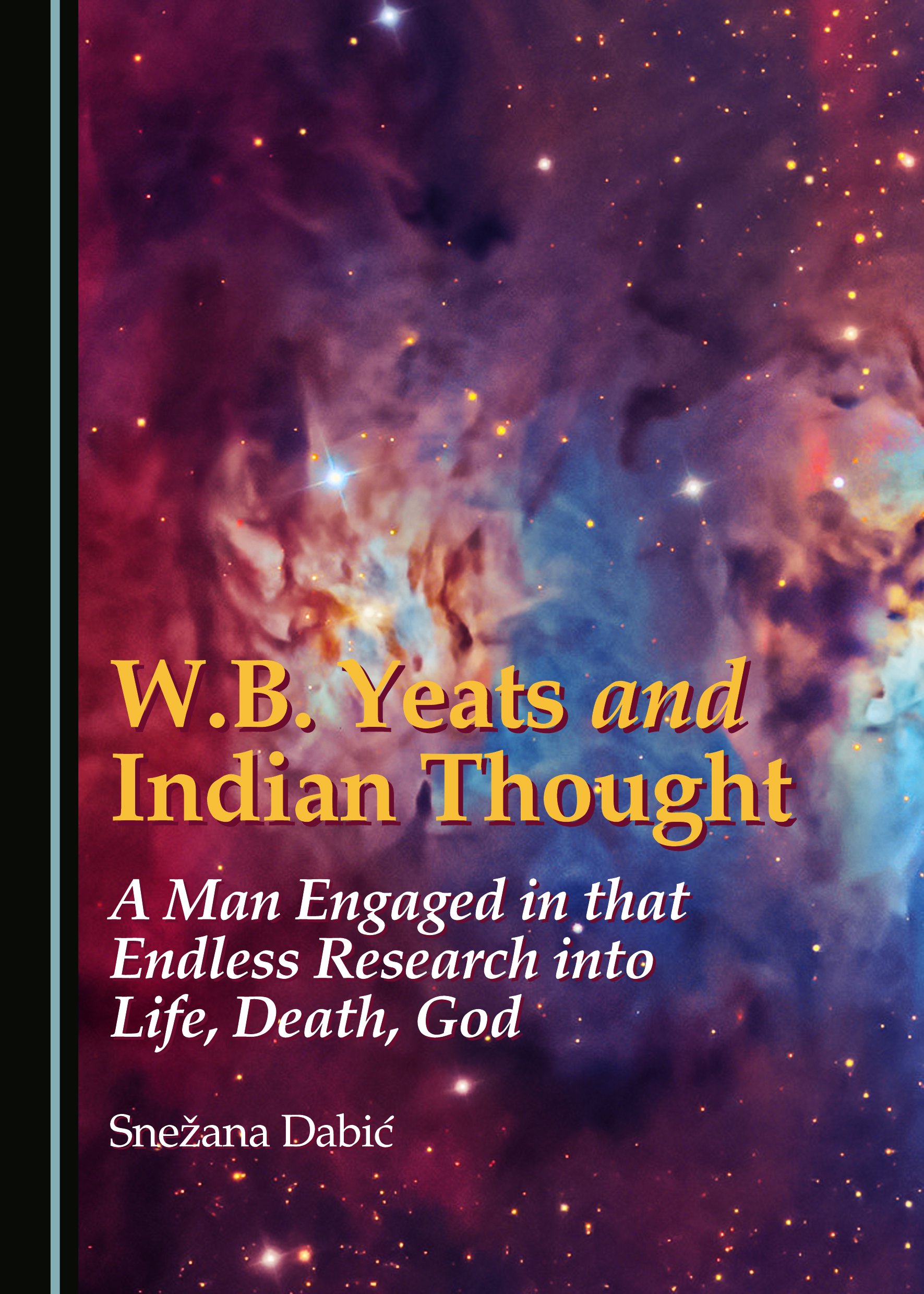
Dabić investigates the impact of Indian philosophy and religion on Yeats’s poetic and dramatic work, exploring its development from his early impressionistic work to his more mature incorporation of such ideas into his writing.

This book presents an in-depth study of the influence of Indian philosophical and religious thought on W.B. Yeats’s poetic and dramatic work. It traces the…
£47.99
£47.99
1-4438-8086-8 , ,
Share

This book presents an in-depth study of the influence of Indian philosophical and religious thought on W.B. Yeats’s poetic and dramatic work. It traces the development of this influence and inspiration from Yeats’s early impressionistic work to the mature and elaborate incorporation of Indian ideas into the structure, themes and symbolism of his writing. It recognizes the importance of his Indian friendships, Indian essays, and shows the limits of his Indianness.

While providing a comprehensive analysis of Yeats’s poetry and his bizarre poetic play, The Herne’s Egg, from an Eastern perspective, the book examines how Indian philosophical concepts guided Yeats in constructing his characters, imagery, and symbology, and in shaping the structure of his dramatic narrative. Yeats’s liminal positioning between Orientalism and Celticism, Irish nationalism and British imperialism, and his heterogenous literary aspirations and modernist poetic idiom are probed and explored in order to position him on a pendulum of postcolonial debate. The focus in this book is on the aesthetic appreciation of the parts of Yeats’s creative opus where he engaged with Eastern thought, with genuine interest and enthusiasm, when the pendulum swings towards Yeats being a mythopoetic and anticolonial writer.

Snežana Dabić is an independent scholar, residing in Melbourne, Australia. Her work ranges from education, publishing, translating and academic research to organising professional development conferences for teachers. As a language and communications educator, she has taught English, critical literacy and cross-cultural communication to many migrant professionals, as well as refugees and international students. Snežana is the author of various journal articles dealing with language and literature, in addition to several literary translations published in both English and Serbian, including a co-translation of Patrick White, the first Australian Nobel laureate for literature. Her research interests focus on sociolinguistics, language teaching and learning, discourse analysis, and literary studies, topics on which she has presented at various international conferences. Snežana has written about Yeats’s dramatic verse from the interface of systemic functional linguistics and Indian philosophy, identity formation and multiliteracies in language learning, and pronunciation teaching.

Hardback

  • ISBN: 1-4438-8086-8
  • ISBN13: 978-1-4438-8086-2
  • Date of Publication: 2015-10-19

Ebook

  • ISBN: 1-4438-8489-8
  • ISBN13: 978-1-4438-8489-1
  • Date of Publication: 2015-10-19
265

Subject Codes:

  • BIC: D, DSC, DSBH5
  • BISAC: LIT004120, LIT020000, LIT025040, PHI026000, PHI003000, PHI046000
  • THEMA: D, DSC, DSBH5
265
  • “Snezana Dabic's study of Yeats and India is admirably non-dogmatic about the syncretic and eclectic ways in which Yeats explored Eastern ways of doing spirituality, and interestingly, ontology. She notices an increasingly nuanced and sophisticated use of Indian concepts as Yeats's familiarity with his subcontinental mentors, notably Rabindranath Tagore, Purohit Swami, and Mohini Chatterji, increased. She attempts to sift what was overdetermined in the world of late nineteenth-century mysticism, and what was specific, and also what was aesthetic and what philosophical. It is a fascinating study of a man adrift in a myriad of possibilities for self-fashioning a spirituality, and she demonstrates his progress as a man at war with himself becoming a man at peace with himself.”
    - Dr Frances Devlin-Glass Honorary Associate Professor, Deakin University; Director, Bloomsday in Melbourne
  • “Western scholars have not adequately explored the Indian ideas in Yeats’s work, […] especially when Indian ideas have heavily influenced Yeats’s fast-shifting perspectives on the visible and the invisible world, directly and indirectly. It is in this context that Dabic’s work on W.B. Yeats assumes extraordinary significance. The efforts that have gone into her explication of Yeats’s poetry and drama related to Indian philosophy will undoubtedly make her work one of the most useful, indeed outstanding, in the area. [W]hat makes Dabic’s work very impressive is not simply the huge size of the scholarship she has gathered about Indian philosophical ideas or the amazing dexterity with which she has used the Indian tools in explicating Yeats’s work, but her irresistible (and typically Yeatsian) passion for learning difficult and alien ideas, as well as the unusual skill with which she weaves patterns and forms in an obscure area of critical discourse.”
    - Professor Sankaran Ravindran University of Calicut

Meet The Author