• 0 Items - £0.00
    • No products in the cart.

£47.99

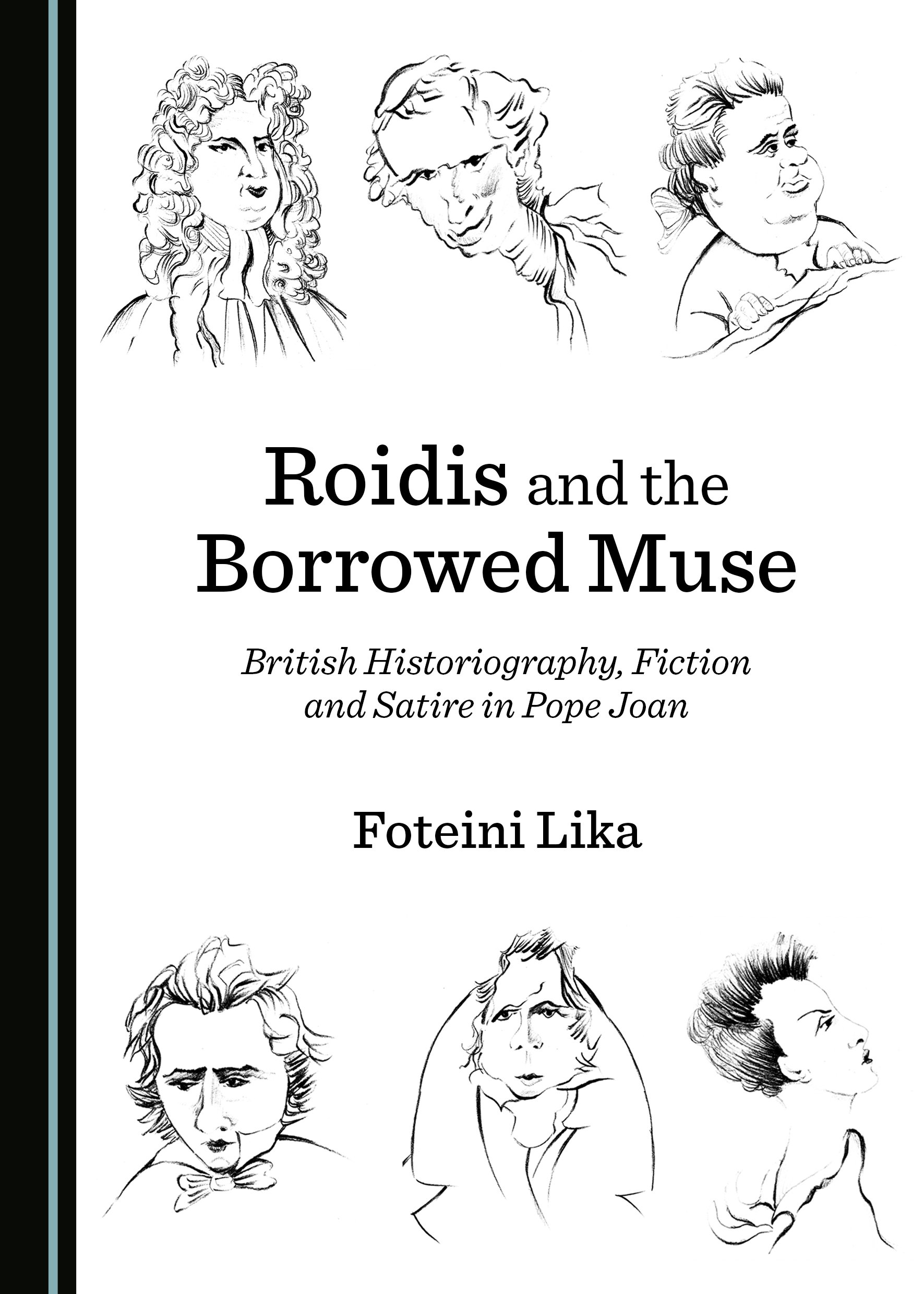
Roidis and the Borrowed Muse

British Historiography, Fiction and Satire in Pope Joan
By: Foteini Lika

£47.99

Using diverse sources ranging from hagiographies and historiographies to historical novels and satirical poems, this is the first full-length examination of Emmanouil Roidis’ Pope Joan (1866).

Using diverse sources ranging from hagiographies and historiographies to historical novels and satirical poems, this is the first book-length examination of Emmanouil Roidis’ Pope Joan…
£47.99
£47.99
1-4438-8113-9 , ,
Share

Using diverse sources ranging from hagiographies and historiographies to historical novels and satirical poems, this is the first book-length examination of Emmanouil Roidis’ Pope Joan (1866). Providing a long-overdue and authoritative introduction to the sinuous poetics of one of the most celebrated Modern Greek novels, Roidis and the Borrowed Muse takes in a broad gamut of British writers, from Swift, Sterne and Gibbon to Scott, Macaulay and Byron, and casts a fresh and original eye on the intertextual connections between their work and Roidis’ magnum opus. This comprehensive comparative study will appeal not only to intellectual historians, literary critics and students, but also to scholars of Romanticism and readers interested in the many facets of satire.

Foteini Lika studied Modern Greek and Comparative Literature at the Aristotle University of Thessaloniki, Greece, and received her PhD in Modern and Medieval Languages from the University of Cambridge. She has taught Modern Greek literature and language teaching at the University of Cambridge, the Aristotle University of Thessaloniki and the Open University of Cyprus. She has published several articles on various Modern Greek and British writers. Her research interests include nineteenth and twentieth-century historiography and fiction, genre theories, poetics of satire and intertextuality. She is currently teaching European literature at the Hellenic Open University, Greece.

Hardback

  • ISBN: 1-4438-8113-9
  • ISBN13: 978-1-4438-8113-5
  • Date of Publication: 2018-08-29

Ebook

  • ISBN: 1-5275-1832-9
  • ISBN13: 978-1-5275-1832-2
  • Date of Publication: 2018-08-29
309

Subject Codes:

  • BIC: D
  • BISAC: LIT020000, LIT024040, LIT004130, LIT025010, LIT016000, LIT006000
  • THEMA: D
309
  • "This is a thorough, painstaking and thoughtful account of the origins and creation of Emmanouil Roidis’ 1866 masterpiece, Pope Joan, the apocryphal story of a ninth-century English girl who, through a series of bizarre developments, became Pope and then died in childbirth. Unreal though it may seem, there is substantial historical evidence for the idea. […] The author, Foteini Lika (who teaches European literature at Greece’s Open University), has two arrows to her bow: she first discusses the contemporary furore caused by the publication of Pope Joan and its aftermath, and then examines Roidis’s possible sources for the topic of history in relation to fiction, as he employed medieval and later documents as the basis for his story. Lika pays full attention to modern textual studies and influences, and is particularly interested in Julia Kristeva’s and Roland Barthes’s ideas on intertextuality. In examining the “British” literary and historiographical traditions which might or might not have given Roidis some inspiration, Lika looks at Edward Gibbon (Decline and Fall of the Roman Empire), the near-contemporaneous History of England by Thomas Babington Macaulay, Laurence Sterne’s Tristram Shandy, Jonathan Swift’s Gulliver’s Travels, Walter Scott’s “Waverley” novels and Byron’s Don Juan as stylistic models. Her treatment of these possible influences is persuasive, provided one is willing to accept this form of intertextual study rather than regarding Roidis as simply telling a story without recourse to influence other than what he acknowledged in his own text. […] Her study of intertextuality shows us how very modern Roidis was in his conception: not least the “intratext” between his own narrative and his Introduction and Notes. Roidis was modern, too, in the way, as Lika expertly shows, that he combined history and fiction (a trait which his most successful translator, Lawrence Durrell, would carry to extremes in The Avignon Quintet [1974-1985]). […] Lika’s last word on the subject — “In short, Roidis changed every rule in the book” — is fascinating: Roidis, writing in mid-nineteenth-century Greece, when the Greek novel was in its infancy, predicted the way in which Greek writers would question authority, the nature of the state, the interpretation of history and the nature of religious faith – all of them current today in both literature and politics."
    - Richard Pine, C.20, February, 2021
  • "Roidis and the Borrowed Muse is a multilayered and coherent study that sequentially addresses the 'intertextuality', 'paratextuality', 'metatextuality', and 'hypertextuality' of Pope Joan (238-40). Roidis's novel is deliberately opaque and playfully antiquarian, but Lika dissects it with clarity, frequently recapping, generously providing key quotations, and parsing out subtle differences when comparing texts. Lika's book is a valuable critical guide for both the modern reader who is unfamiliar with the satirical textual games of Pope Joan and the student of transnational Romanticism. As such, it is not only a welcome contribution but an indispensable one."
    - Kostas Boyiopoulos, Durham University

Meet The Author