• 0 Items - £0.00
    • No products in the cart.

£67.99

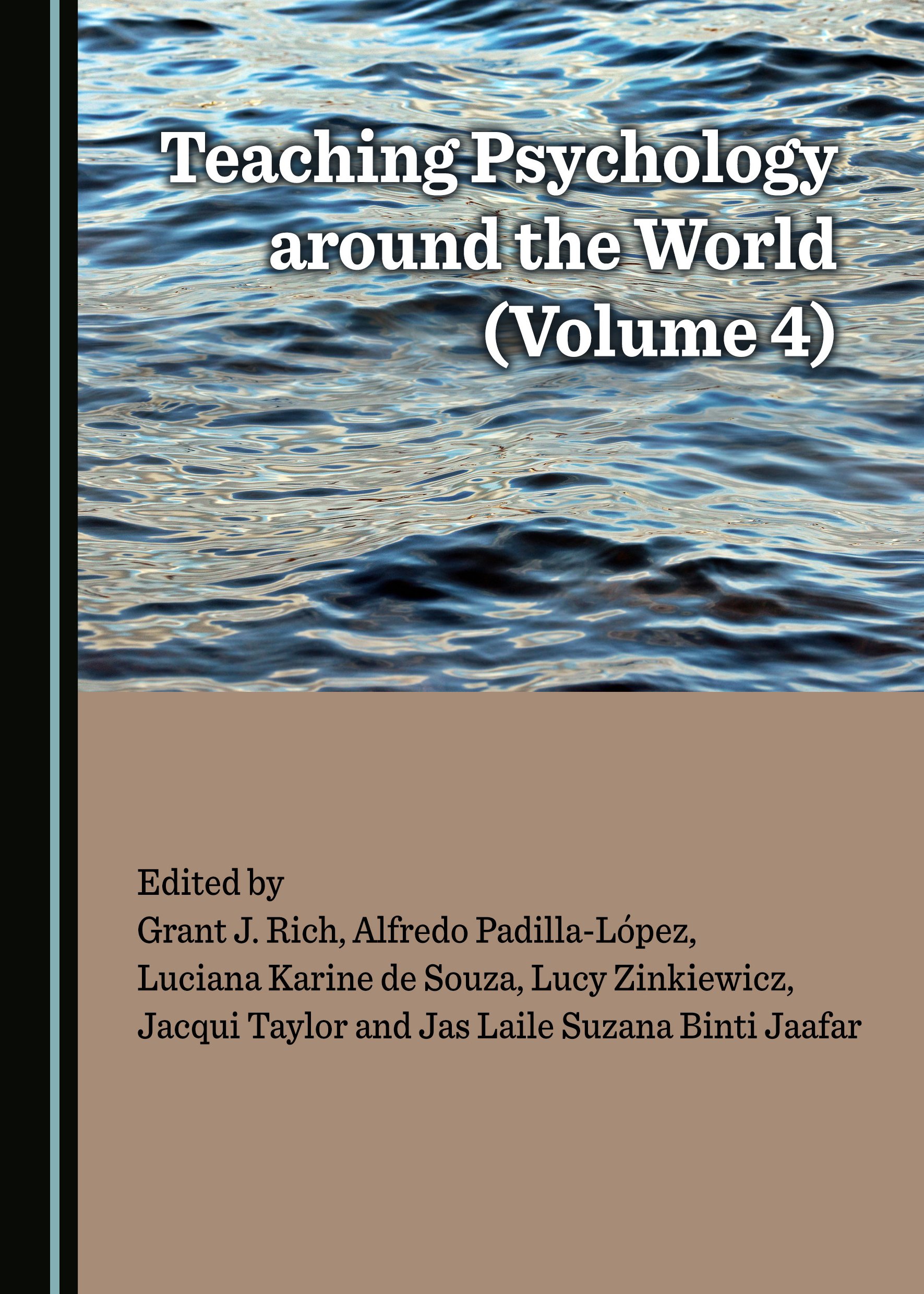
Teaching Psychology around the World (Volume 4)

Edited By: Alfredo Padilla-López, Grant J. Rich, Luciana Karine de Souza

£67.99

This handbook helps psychology professors internationalize their courses and curricula. It offers practical tips and innovative ideas to enrich teaching, with authors from every major geographic region providing a truly global perspective on psychology education.

This book provides a one-volume overview of psychology’s globalization, and will serve as a handbook for psychology professors around the globe wanting to internationalize and…
£67.99
£67.99
Share

This book provides a one-volume overview of psychology’s globalization, and will serve as a handbook for psychology professors around the globe wanting to internationalize and diversify their courses and curricula and seeking innovative ideas to enrich their teaching. Topics covered include practical tips to diversify specific courses, such as abnormal psychology, lifespan development, and psychotherapy, and innovative methods of assessment of student learning. Additionally, a number of chapters focus on describing the training of psychologists and the history and future of psychology education in various nations and regions. Co-edited by six distinguished, international academics, the thirty-three chapters represent each major geographic region around the world, with authors based in nations in Africa, Asia, Australia, Europe, Latin America, and North America. Instructors of cross cultural, cultural, and international psychology and of multicultural education will be especially interested in the book, as will program evaluators, policy makers, and university administrators.

Grant J. Rich is a Fellow of the American Psychological Association and the Society for the Teaching of Psychology, and is a consulting psychologist in Juneau, Alaska. His recent books include Internationalizing the Teaching of Psychology (2017).

Alfredo Padilla-López studies the neuropsychological and psychophysiological bases of behavior. He is a Professor-researcher at the Universidad Autónoma de Baja California, Mexico.

Luciana Karine de Souza works at the Universidade Federal do Rio Grande do Sul, Brazil. She conducts research, teaches, publishes, and advises post-graduate students in social developmental psychology and interdisciplinary leisure studies.

Lucy Zinkiewicz works at Deakin University, Australia. She is an applied social psychologist who teaches social, health and organizational psychology at both the undergraduate and postgraduate level.

Jacqui Taylor works at Bournemouth University, UK. She has been instrumental in developing the concept of ‘psychological literacy’ in undergraduate psychology teaching.

Jas Laile Jaafar is a Professor in the Department of Educational Psychology and Counselling at the University of Malaya, Kuala Lumpur. Her research interests include well-being, resiliency, happiness, self and identity, personality, moral reasoning, body image and adolescents.

Hardback

  • ISBN: 1-5275-1411-0
  • ISBN13: 978-1-5275-1411-9
  • Date of Publication: 2018-08-24

Ebook

  • ISBN: 1-5275-2004-8
  • ISBN13: 978-1-5275-2004-2
  • Date of Publication: 2018-08-24

Subject Codes:

  • BIC: JM, JNC, JNFR
  • THEMA: JM, JNC, JNF
499
  • "In 1948, the World Health Organization defined the concept of health as a state of general well-being that described three major areas of well-being: the physical, the psychological, and the social. A central theme in psychological professional activity was established; that psychology should serve a social need, and contribute to the welfare of humanity, through the use of professional skills appropriate to the reality in which it must intervene: Research, Professional Application, and Teaching. The changes produced by artificial intelligence have taken us, in four decades, from the home phone to the ‘SmartPhone’ that connects us today ‘without distances’, shrinks the world, and widens access to information. Today teaching is no longer a matter of delivering information, but of analyzing and synthesizing information and creating new paths for human development. I must say it clearly, it is no longer a matter of teaching, but learning; the student is at the center of construction, and other educational actors, among which is the teacher, contribute to the creation of learning environments. Teaching Psychology Around the World (volume 4) moves us to reflection not only on the ‘State of the Art’, but beyond, to the encounter of the human being with global needs, surpassed by a reality that mutates at a greater speed than understanding, which requires a scientific and professional company for the construction of new paths towards harmony, with itself and with its social and natural environment. That is a Scientific Psychology that promotes social development in the inhabitants of the world collective, built without borders by men and women of good will, Investigating, Educating, and Applying.”
    - Raymundo Calderón Sánchez, National Director of Psychology, Universidad del Valle de México; Past-President of National Council of Teaching and Research in Psychology (CNEIP)