• 0 Items - £0.00
    • No products in the cart.

From £29.99

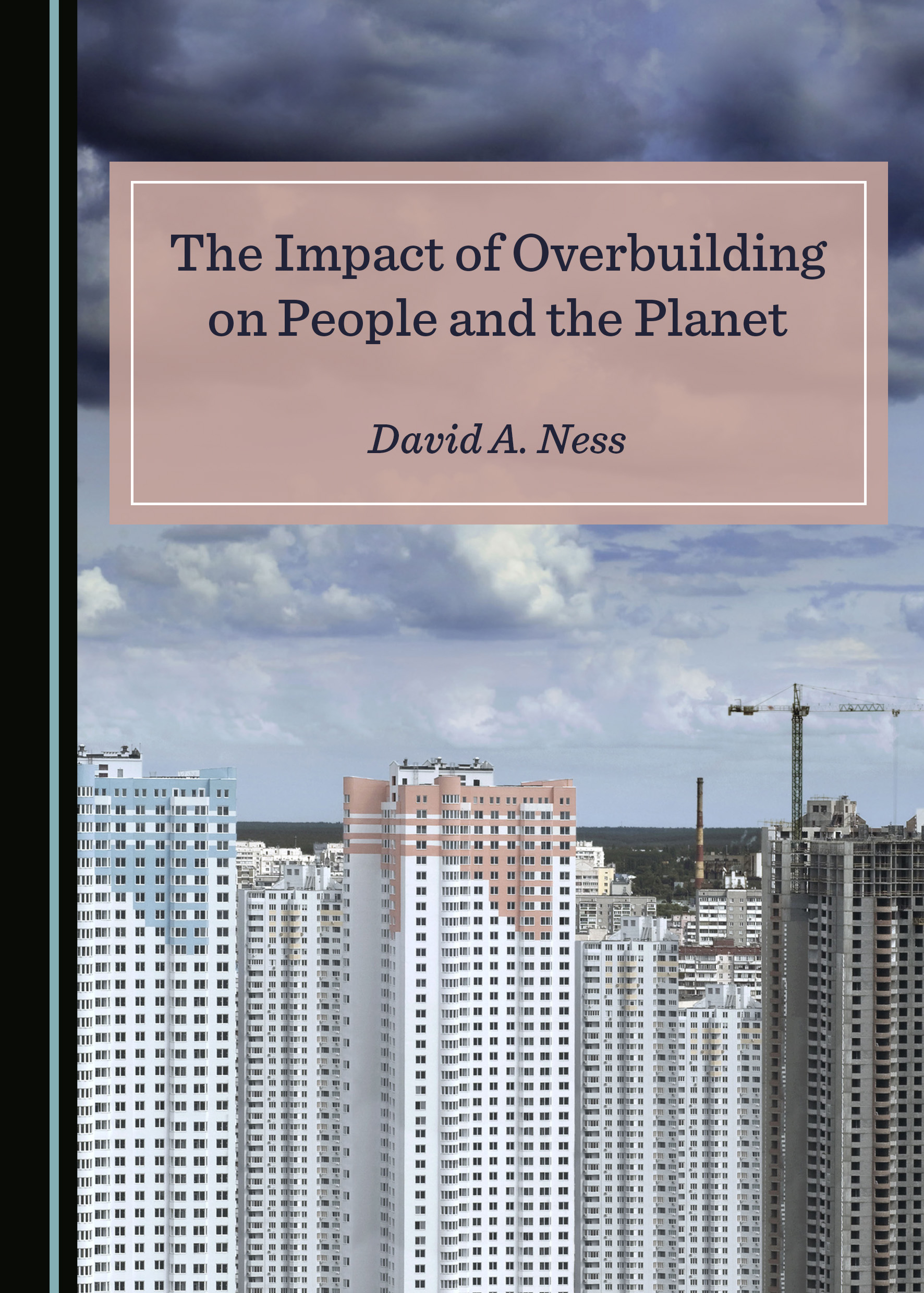
The Impact of Overbuilding on People and the Planet

By: David A. Ness

From £29.99

Challenging the profligate building and urban development which severely impacts upon society and the environment, this study questions the ethics, equity and sustainability of overbuilding, thereby exposing a number of ‘elephants in the big green room’.

This book challenges the status quo where profligate building and urban development is described as ‘green’ and ‘low carbon’, exposing a number of ‘elephants in…
From £29.99
From £29.99
Share

This book challenges the status quo where profligate building and urban development is described as ‘green’ and ‘low carbon’, exposing a number of ‘elephants in the big green room’ that severely impact upon society and the environment. It questions the ethics, equity and sustainability of continued growth of the building stock in industrialized contexts amid diminishing demand, whilst the developing world is deprived of basic resources and infrastructure. Even a ‘circular’ built environment may not go far enough, when dramatic reduction in consumption of resources is required to meet ‘sufficient’ service levels. More socio-economic value may be derived from built resources by their stewardship, adaptation, reuse and equitable sharing, while ameliorating the adverse impacts of overconsumption. By taking a wider perspective of a sustainable built environment, the text—illustrated by case studies from the Olympics and nine countries—reframes the policy debate and reforms current approaches through a new theory and manifesto. It will appeal to policy makers, architects, urban designers, educators, students and green building practitioners.

Dr David A. Ness is an Adjunct Professor at the School of Natural and Built Environments, University of South Australia. He has over 65 publications to his credit, including 40 articles and book chapters and two co-authored books. His research focuses on delivering more services with less resource consumption and less cost, applied to products, buildings and infrastructure. In seeking to adapt the circular economy concept to the built environment, he leads an ARUP Global Research Challenge project on reusing building components via Cloud-enabled services.

Hardback

  • ISBN: 1-5275-2402-7
  • ISBN13: 978-1-5275-2402-6
  • Date of Publication: 2019-02-05

Paperback

  • ISBN: 1-5275-7470-9
  • ISBN13: 978-1-5275-7470-0
  • Date of Publication: 2021-10-08

Ebook

  • ISBN: 1-5275-2761-1
  • ISBN13: 978-1-5275-2761-4
  • Date of Publication: 2021-10-08

Subject Codes:

  • BIC: AMCR, KJMV4, TNKX
  • BISAC: ARC018000, ARC010000, ARC022000, SOC026030, SOC026040, SOC042000
  • THEMA: AMCR, KJMV4, TNKX
267

Meet The Author