
• 0 Items - £0.00
    • No products in the cart.

From £30.99

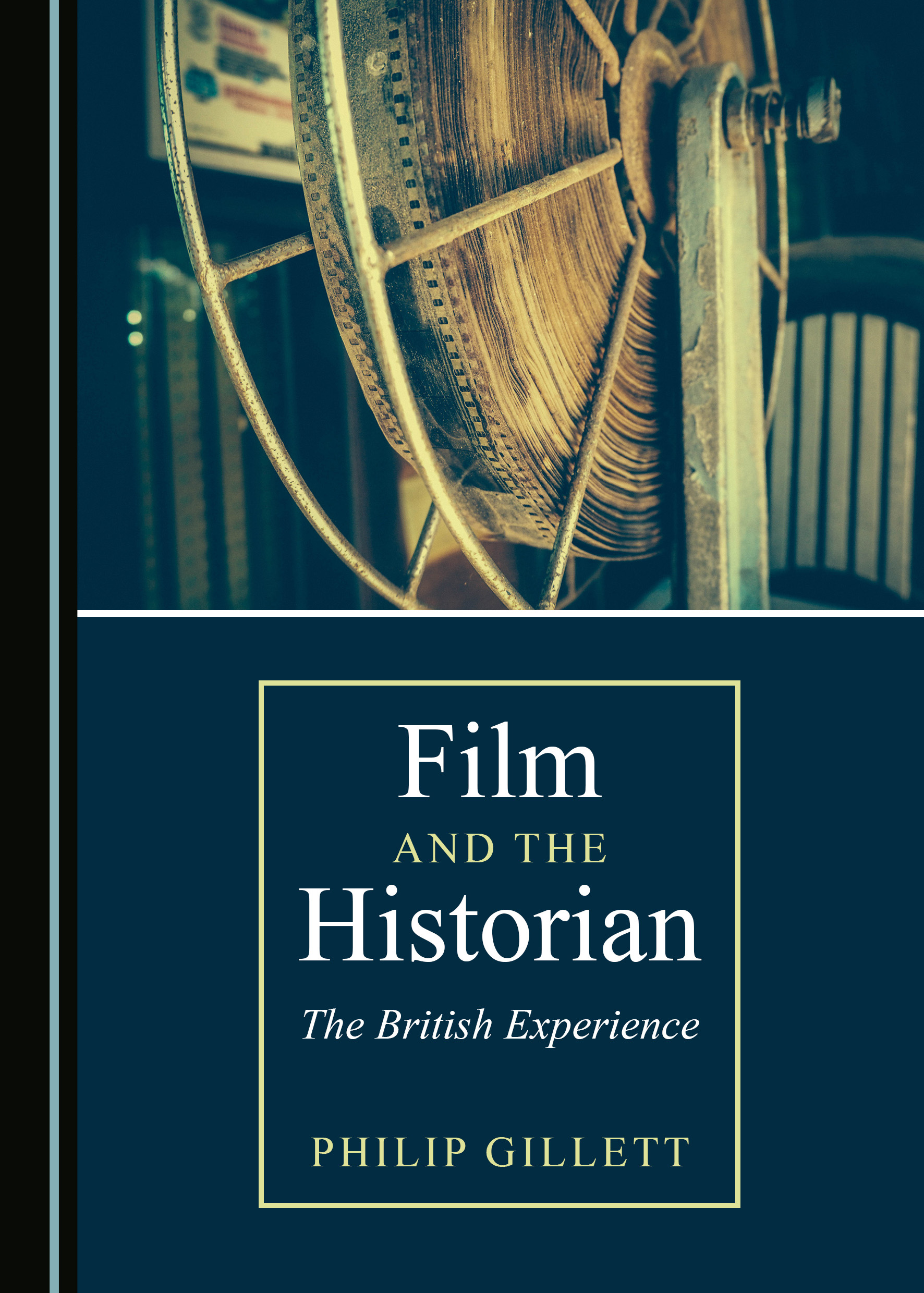
Film and the Historian

The British Experience
By: Philip Gillett

From £30.99

Films are not just for audiences. A film exposes the attitudes people took for granted. This volume surveys British cinema from the Second World War to the early 1970s, exploring societal change through films from the well-known Odd Man Out to the forgotten It’s Hard to be Good.

Films are not just for audiences: historians of the twentieth century have much to learn from them. A film exposes the attitudes and unconsidered trifles…
From £30.99
From £30.99
1-5275-3269-0 , , , ,
Share

Films are not just for audiences: historians of the twentieth century have much to learn from them. A film exposes the attitudes and unconsidered trifles that people took for granted and which were not considered worth recording elsewhere. This volume surveys British cinema from the final days of the Second World War to the early 1970s, exploring societal change across a range of topics including housing, the countryside, psychiatry and the law. This provides a basis for cross-cultural comparisons, with many issues deserving of further research being highlighted. The films discussed range from the well-known Odd Man Out to the forgotten It’s Hard to be Good.

Philip Gillett is an independent film researcher and author of The British Working Class in Postwar Film (2003). He is a contributor to the online journal Offscreen. His publications include Forgotten British Film: Value and the Ephemeral in Postwar Cinema (2017) and Film and Morality (2012).

Hardback

  • ISBN: 1-5275-3269-0
  • ISBN13: 978-1-5275-3269-4
  • Date of Publication: 2019-05-14

Paperback

  • ISBN: 1-0364-3629-2
  • ISBN13: 978-1-0364-3629-2
  • Date of Publication: 2024-12-16

Ebook

  • ISBN: 1-5275-3450-2
  • ISBN13: 978-1-5275-3450-6
  • Date of Publication: 2024-12-16

Subject Codes:

  • BIC: APFN, HBAH, HBTB
  • BISAC: PER004030, PER004040, PER004000, HIS015070, HIS054000, HIS016000
  • THEMA: ATFN, NHAH, NHTB
262
  • “Philip Gillett opens Film and the Historian: The British Experience by discussing ways in which film texts can be used as legitimate historical sources, both within film studies and outside the discipline. Beginning with an outline of work conducted by pioneering film scholars of the 1970s, Gillett then highlights important studies by British authors Jeffery Richards and Anthony Aldgate, particularly relevant since Britain is the country of the monograph’s focus. […] Gillett states that, like the disciplines it has borrowed from, including anthropology, sociology and literature, film studies has had to fight for acceptance. He notes that the field earned acceptance only when scholars began applying semiotic, Marxist, feminist and psychological theory. […] As he points out, for historians, film is just one source among many, and historical film remains a contentious issue that raises its own particular problems. […] A wide range of sources are employed throughout the book, clearly divided in the bibliography under sections titled official papers; unpublished sources; reference websites, trade papers, yearbooks and newspapers; books and journal articles. Particularly poignant is the close of chapter four, which states that at the core of cinema lies ‘the illusion that the flickering shadows are real people playing out their lives for the audience’ (p. 67). Furthermore, while many of these stories have ancient roots, they are also interwoven with contemporary concerns. The problem, according to the author, is how to critically approach this since they are ‘difficult to compare and open to varied interpretations’ (p. 67). He concludes that, although anthropologists and ethnologists may be required in order to decipher these, this is no reason for not attempting the task (p. 67).”
    - Gillian Kelly University of Glasgow; Journal of Film, Radio and Television, 40:2, 2019

Meet The Author