• 0 Items - £0.00
    • No products in the cart.

From £25.99

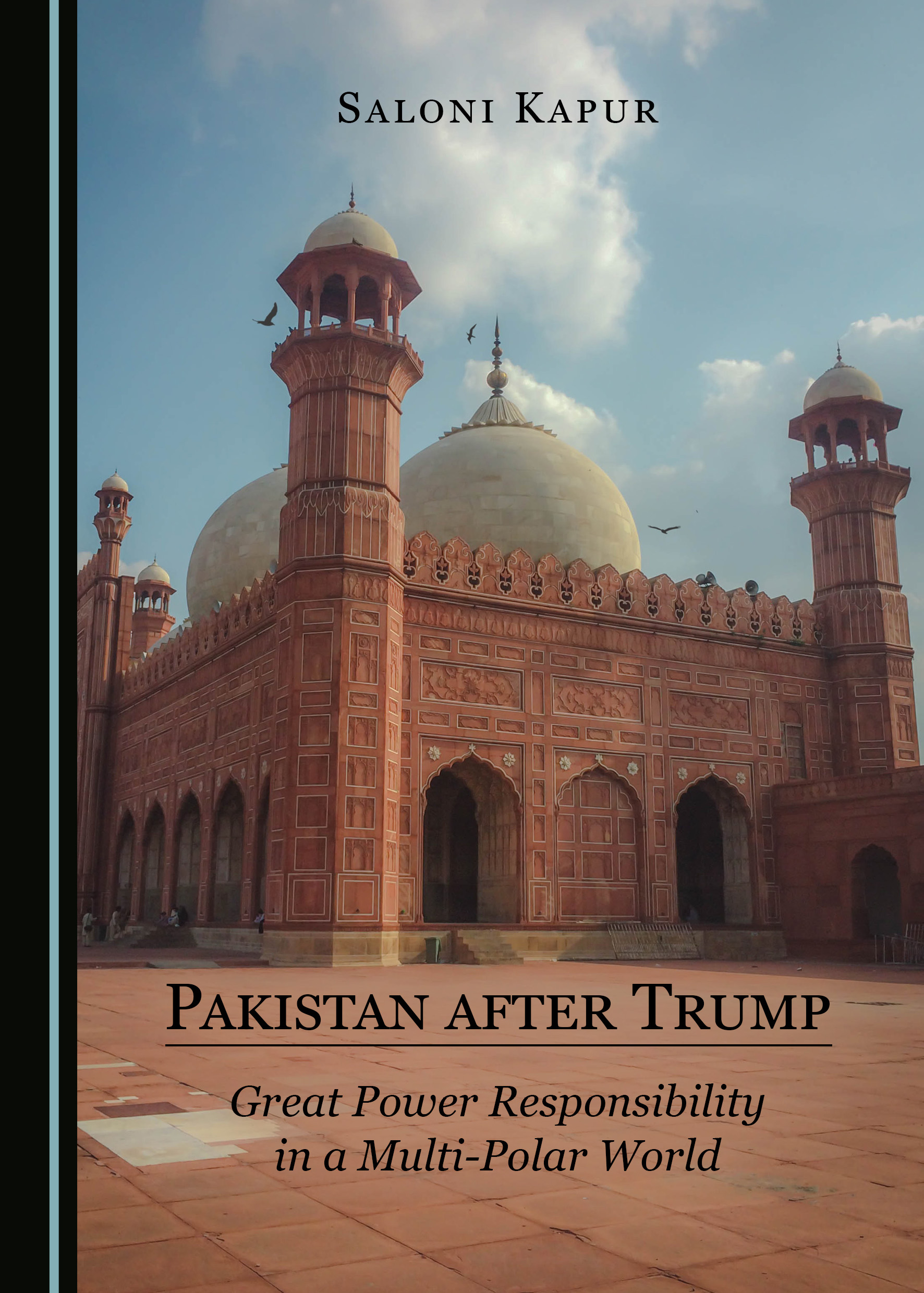
Pakistan after Trump

Great Power Responsibility in a Multi-Polar World
By: Saloni Kapur

From £25.99

This book questions the dominant narrative of Pakistan as a "safe haven" for terrorists. It shows how great powers—the US, China, India, and others—directly caused the militant ecosystem in Pakistan, a country whose people have borne the brunt of terrorist violence.

Since 9/11, the international narrative on Pakistan has painted a picture of a country that is a “safe haven” for terrorists and a “state sponsor…
From £25.99
From £25.99
Share

Since 9/11, the international narrative on Pakistan has painted a picture of a country that is a “safe haven” for terrorists and a “state sponsor of terrorism” that plays a “double game” as it pretends to fight militant Islamist extremists while nurturing them in its “backyard.” This discourse came to prominence in January 2018 when US President Donald Trump famously tweeted that his country had “foolishly” provided military aid to Pakistan since 2001, in return for which Pakistan had given “safe haven to the terrorists [they] hunt in Afghanistan.” This book questions this dominant narrative by showing how the great powers—the United States, the United Kingdom, China, India, Saudi Arabia, and Iran—have directly caused the emergence of a militant ecosystem in Pakistan.

Drawing on interviews with journalists, diplomats, academics, military officers, and government officials, it argues that it is Pakistanis who have borne the brunt of terrorist violence, especially since 9/11. The book uses the English School of International Relations’ concept of great power responsibility to explore how powerful states could help fight militancy in Pakistan holistically. It highlights the Pakistani military’s effort to rehabilitate young militants, and posits that international society must support not only “hard” counterterrorism through military aid, but also “soft” counterterrorism such as rehabilitation to address the root causes of radicalisation. With the Trump administration’s suspension of military aid to Pakistan, this timely book offers guidance for policymakers in both the West and Asia on how best to approach Pakistan’s security quagmire.

Saloni Kapur is Assistant Professor of International Studies at FLAME University, India. She works at the intersection of critical security studies, international relations theory, and South Asian studies. She is the co-editor of Securitisation in the Non-West (2019), and has contributed to numerous scholarly journals, academic blogs, and newspapers. She is a Fellow of the Richardson Institute, UK, and has previously worked at the London and Delhi offices of International SOS-Control Risks and at the United Nations Office on Drugs and Crime in Vienna. She holds a PhD in International Relations from Lancaster University, UK, an MA in International Relations from the University of Warwick, UK, and a BA in Economics from the University of Pune, India.

Hardback

  • ISBN: 1-5275-6517-3
  • ISBN13: 978-1-5275-6517-3
  • Date of Publication: 2021-03-19

Paperback

  • ISBN: 1-5275-7673-6
  • ISBN13: 978-1-5275-7673-5
  • Date of Publication: 2021-11-11

Ebook

  • ISBN: 1-5275-6727-3
  • ISBN13: 978-1-5275-6727-6
  • Date of Publication: 2021-11-11

Subject Codes:

  • BIC: JPS, JPSN, JPWL
  • THEMA: JPS, JPSN, JPWL
337

Meet The Author