• 0 Items - £0.00
    • No products in the cart.

From £32.99

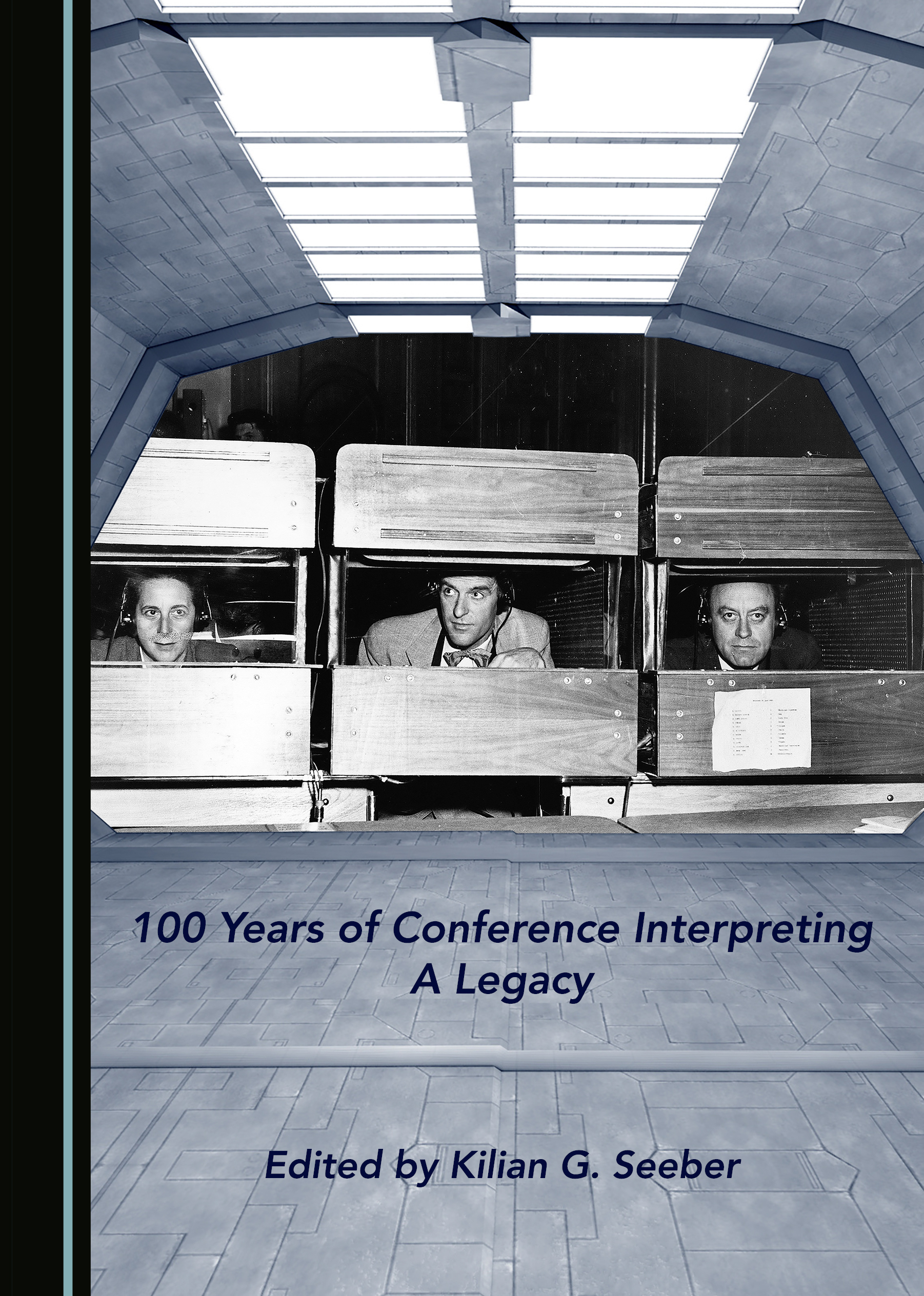
100 Years of Conference Interpreting

A Legacy
Edited By: Kilian G. Seeber

From £32.99

Born at Versailles in 1919, conference interpreters made modern diplomacy possible. This volume celebrates one century of this exceptional profession, exploring its milestones and future post-pandemic through a candid discussion with practitioners, researchers, and trainers.

When Woodrow Wilson, David Lloyd George, Vittorio Emanuele Orlando and Georges Clemenceau met in Versailles in January 1919, they ushered in the modern era of…
From £32.99
From £32.99
Share

When Woodrow Wilson, David Lloyd George, Vittorio Emanuele Orlando and Georges Clemenceau met in Versailles in January 1919, they ushered in the modern era of multilateral diplomacy and—perhaps inadvertently—laid the foundation for a new profession. Indeed, communication among these statesmen was only possible thanks to the first conference interpreters. For the following 100 years, these interpreters would become a permanent fixture at all international multilateral conferences. As we celebrate one century of conference interpreting, this volume takes stock of some of the most important milestones throughout the history of this exceptional profession and looks at its future at a time when the global COVID-19 pandemic has transformed the world of international meetings.

Thanks to its refreshingly interactive format, this volume gives a voice to different stakeholders in the world of conference interpreting today, including practitioners, managers, researchers and trainers. The result is a surprisingly candid and critical discussion of some of the most hotly debated topics in the world of conference interpreting.

Kilian G. Seeber heads up the Interpreting Department at the Faculty of Translation and Interpreting of University of Geneva, Switzerland. With formal training in conference interpreting and psycholinguistics, he is best known for his research into cognitive processes underlying complex language tasks, including cognitive load and integration during multimodal processing, as well as the development of research-based and technology-enhanced training approaches.

Jesús Baigorri Jalón, Christopher Thiéry, Carlo Eugeni, Rocio Bernabé, Maria Mikhaylovskaya, Andrey Kalinin, Maya de Wit, Onno Crasborn, Jemina Napier, Franz Pöchhacker, Monika Stoegerer, Carmen Delgado, Nathalie Loiseau, Alicja Okoniewska, Josh Goldsmith, Michelle Hof, Lucia Ruiz Rosendo, Marie Diur, Florika Fink-Hooijer, Agnieszka Walter-Drop, Robin Setton, Kim Ludvigsen, Monica Varela Garcia, Gillian Misener, Helen Campbell, Matthew Ball, Uros Peterc, Sophie Hengl, Rawdha Cammoun-Claveria, Marie Muttilainen, Ian Newton, Raluca Droahna, Marc Orlando, Ebru Diriker, Bart Defrancq, Karin Sibul, Daniel Gile, Javier Hernandez Saseta, Jonathan Downie, Maha El-Metwally, Evelyn Moggio

Hardback

  • ISBN: 1-5275-6719-2
  • ISBN13: 978-1-5275-6719-1
  • Date of Publication: 2021-04-27

Paperback

  • ISBN: 1-0364-2587-8
  • ISBN13: 978-1-0364-2587-6
  • Date of Publication: 2024-12-13

Ebook

  • ISBN: 1-5275-6878-4
  • ISBN13: 978-1-5275-6878-5
  • Date of Publication: 2024-12-13

Subject Codes:

  • BIC: CFP, HBLW, JPSD
  • THEMA: CFP(3MP), NH, JPSD
342
  • “This book celebrates 100 years of conference interpreting through the papers of representatives of the various stakeholders in the interpreting field. […] Drawing on the legacy and the modern practices in the professional exercise, training, and research of the field, 100 Years of Conference Interpreting: A Legacy draws from past lessons to project the reader into the future, which began to emerge with the COVID-19 pandemic. Given the alienation and the increased cognitive load felt by interpreters now working remotely, the professionals and researchers who contributed to this book call for the acceptance of the new normal, which should be regarded as a natural historical evolution. Rather than experiencing technological change as a cognitive burden, they call on today's interpreters to face it with courage and adaptability.”
    - Professor Gina Abou Fadel Saad Faculty of Languages and Translation, Saint Joseph University, Lebanon
  • “[The book] is informative because it makes available such a wealth of facts, data, results, etc., that all readers will find and learn something new. In this respect, nothing in the book is more informative than the article on the early days at the International Labour Organization based on unpublished sources and old photographs unearthed from the Organization’s archives. It is thought-provoking as the ideas and occasionally conflicting views presented in the discussion section provide ample food for thought and will no doubt spark a debate and further discussions around crucial issues concerning all facets of conference interpreting. In short, [it is] a gem of a book and a great way to celebrate conference interpreting and its first 100 years.”
    - Maurizio Viezzi Professor, Università di Trieste