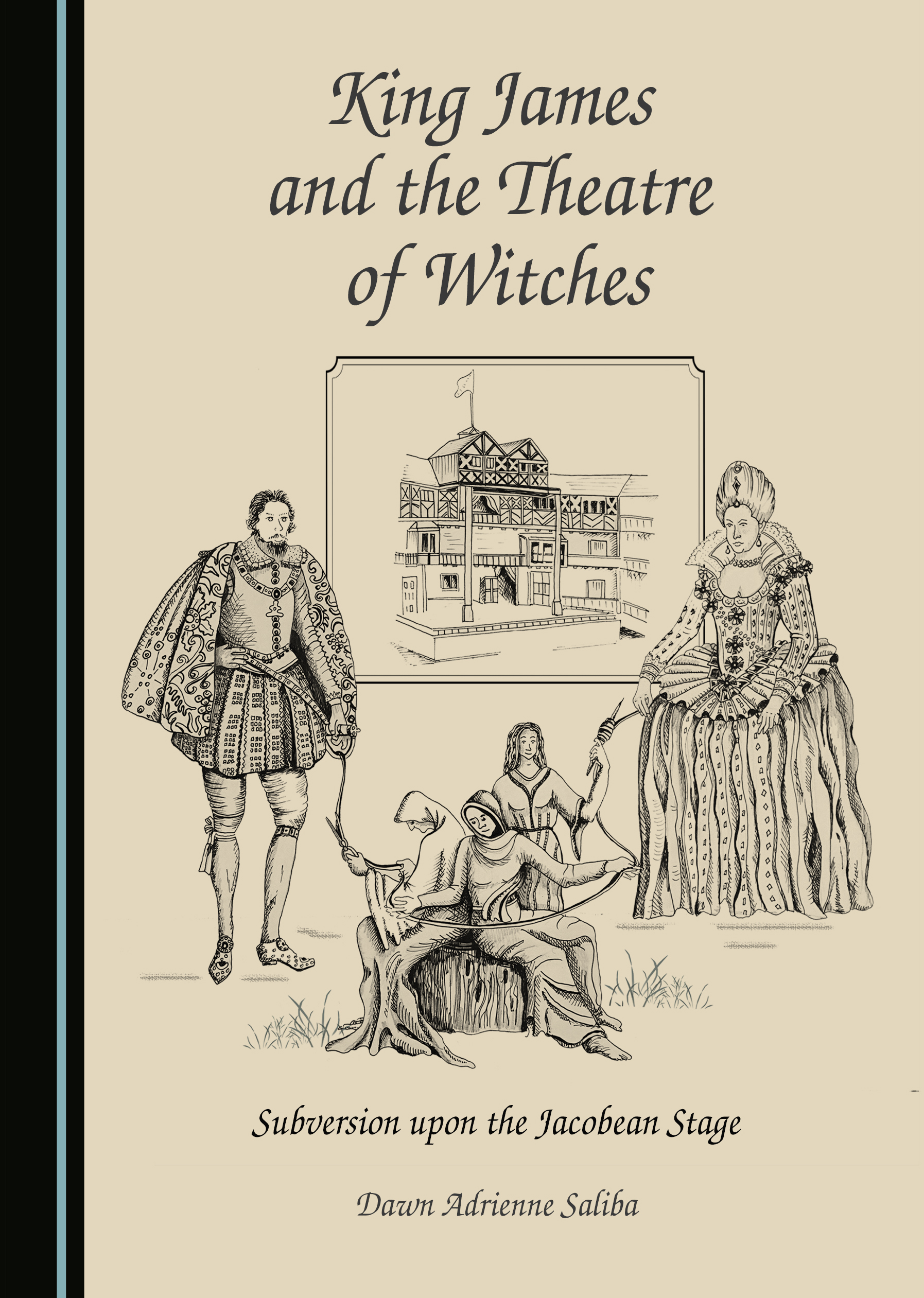
This book presents a cultural analysis of King James I of England’s evolving perspectives regarding witchcraft and his influence upon the “witch plays” of Renaissance England.
Early on during the Stuart monarch’s reign in Scotland (1588-1591), James directed a fevered hunt of witches whom he believed were trying to assassinate him, an event that later came to be known as “The North Berwick Affair.” He played a direct role in the interrogations, personally approving and, at times, overseeing the horrific torture of some of the accused. In 1597, the monarch also penned a compendium of witchcraft lore entitled Daemonologie, which acted as a manual for identifying, interrogating and punishing witches.
Once the King ascended to the British throne, London-based dramatists endeavored to please their monarch with plays that catered to his interests while at the same time subverting his beliefs in witchcraft lore. The King’s works and involvement in witchcraft trials are notably referenced, sometimes satirically, in William Shakespeare’s Macbeth, Ben Jonson’s Masque of Queenes, Thomas Middleton’s The Witch, and Dekker, Rowley and Ford’s The Witch of Edmonton—all of which respond to the King’s philosophical engagement with witchlore.
Through the analysis of four Jacobean “witch-plays” and an examination of King James’s role within the witchcraft debates and his involvement with contemporaneous witch trials, this work shows how the monarch’s various publications on witchlore transmuted stage and culture. Taken as a group, these dramas provide a window into the newly emergent humanism of the Renaissance world and its struggle with gender-driven categories—especially regarding the cultural praxis of accusing, torturing and executing “witches.”