• 0 Items - £0.00
    • No products in the cart.

From £31.99

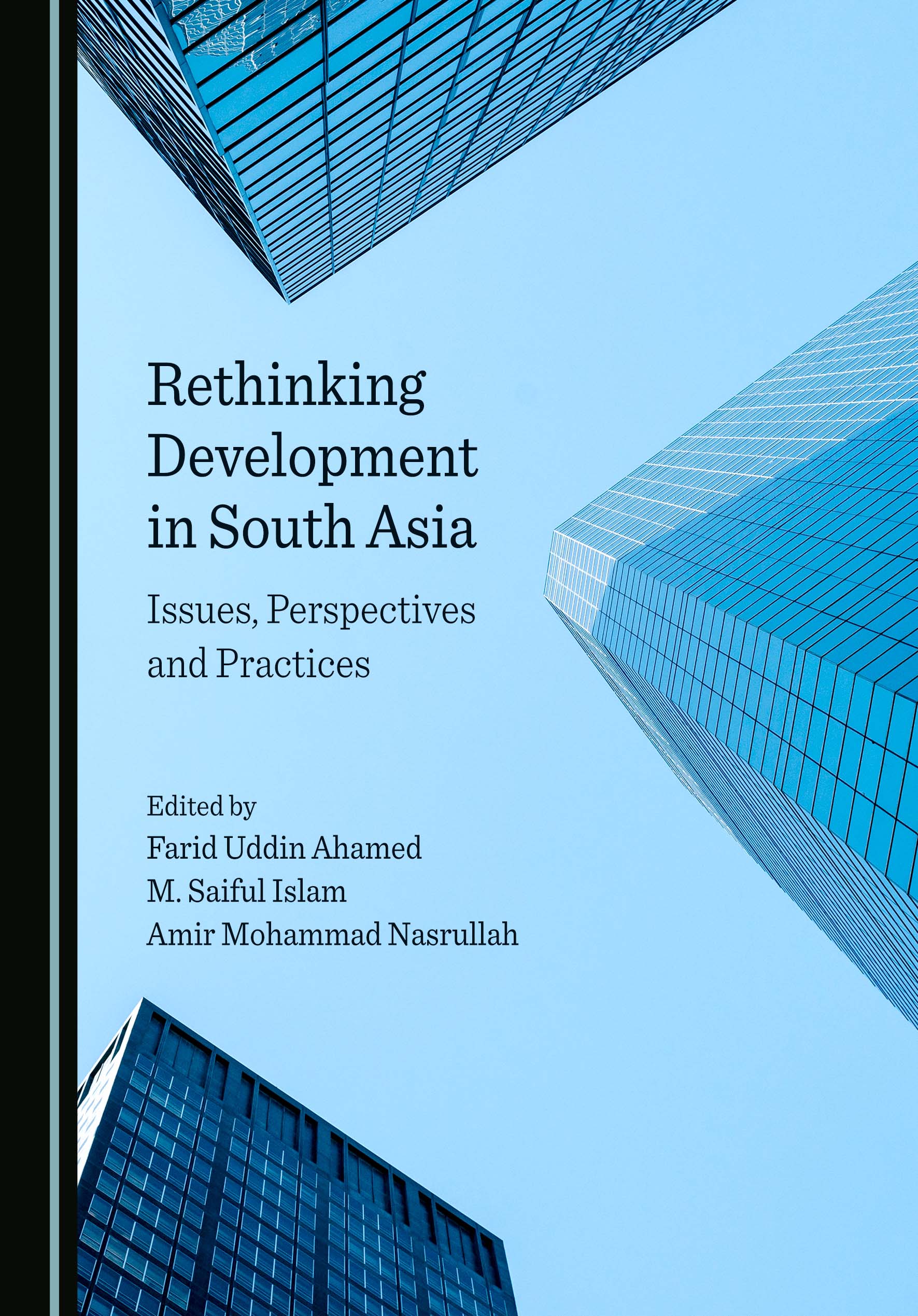
Rethinking Development in South Asia

Issues, Perspectives and Practices
Edited By: Farid Uddin Ahamed, M. Saiful Islam, Amir Mohammad Nasrullah

From £31.99

This book challenges conventional development in South Asia, revealing how it can be a destructive force. It argues for a new practice of development centered on people's freedom, choice, and participation, proposing alternative means for achieving greater well-being.

This book challenges the way development has been conceptualized and practiced in South Asian context, and argues for its deconstruction in a way that would…
From £31.99
From £31.99
Share

This book challenges the way development has been conceptualized and practiced in South Asian context, and argues for its deconstruction in a way that would allow freedom, choice and greater well-being for the local people. Far from taking development for granted as growth and advancement, this book unveils how development could also be a destructive force to local socio-cultural and environmental contexts. With a critical examination of such conventional development practices as hegemonic, patriarchal, devastating and failure, it highlights how the rethinking of development could be seen as a matter of practice by incorporating people’s interest, priorities and participation. The book theoretically challenges the conventional notion of hegemonic development and proposes alternative means, and, practically, provides nuances of ethnographic knowledge which will be of great interest to policy planners, development practitioners, educationists and anyone interested in knowing more about how people think about their own development.

Farid Uddin Ahamed is Professor of Anthropology and former Dean of the Faculty of Social Sciences of the University of Chittagong, Bangladesh. He earned his MPhil in Social Anthropology from Cambridge University and his PhD in Anthropology from University College London. He served as the founding faculty of Sociology at the South Asian University (SAU), New Delhi, India, and is an acclaimed anthropologist in South Asia. He is the author of a number of books, as well as numerous articles in journals such as Nature, Economic Geography, Transactions of the Institute of British Geographers, and Geoforum. His areas of specialization include financial and social inclusion, livelihood dynamics and coping strategies of indigenous communities.

M. Saiful Islam is an anthropologist and Associate Professor in the Department of Development Studies at the University of Dhaka, Bangladesh. He holds a PhD in Anthropology from the National University of Singapore and an MPhil in Anthropology from the Chinese University of Hong Kong. His articles appeared in journals such as Medical Anthropology, Asian Ethnicity, Harvard Asia Quarterly, and Asian Social Science, and he is the author of Culture, Health and Development in South Asia: Arsenic Poisoning in Bangladesh (2017) and Pursuing Alternative Development: Indigenous People, Ethnic Organization and Agency (2015). His research interests include health, environment, sustainable development, migration and gender issues.

Amir Mohammad Nasrullah is Professor and former Head of the Department of Public Administration at the University of Chittagong, Bangladesh. He received a PhD in Management Studies from Brunel Business School at Brunel University, UK. He has published four books, including Micro Enterprise Policy Development: A Developing Country Perspective (2015), as well as around 40 journals articles. He is currently a member of the South Asian Governance Research Network and the South Asian Network for Public Administration. He was also a member of the British Academy of Management and the International Council for Small Business. His areas of research include governance, rural development, and environmental management.

Sukirti Amatya, Anil Kumar Biswas, Anup Dhar, Sanjay Krishno Biswas, Amirul Islam, Choudhury Farhana Jhuma, Mashiur Rahman, Moumita Paul, Mustakim Ansary, Md. Ashadul Haque, Sumon Kumer Mazumder, Purbita Gupta, Jayanta Choudhury, Sabiha Raiyen Shoshi, Md. Imrul Kayes, Shafiqul Islam, Jannatul Naiym, M. Saiful Islam, Farid Uddin Ahamed, Amir Mohammad Nasrullah

Hardback

  • ISBN: 1-5275-7715-5
  • ISBN13: 978-1-5275-7715-2
  • Date of Publication: 2022-03-21

Paperback

  • ISBN: 1-0364-2171-6
  • ISBN13: 978-1-0364-2171-7
  • Date of Publication: 2024-12-13

Ebook

  • ISBN: 1-5275-7933-6
  • ISBN13: 978-1-5275-7933-0
  • Date of Publication: 2024-12-13

Subject Codes:

  • BIC: GTF, JH, JF
  • THEMA: GTP, JH, JB
250
  • “This is a timely and well-written volume that casts a scholarly, critical eye over traditional conceptions of development. It sets out rich new empirical work and provides theoretical insights about how development in the region can foster local participation and better incorporate people’s interests and priorities. It is an excellent text for diverse audiences, including practitioners, academics, and policymakers.”
    - Professor Paul Chaney Politics and Policy, Cardiff University, UK
  • “‘Development’ has always been a contested concept. However, understandings premised on high growth and consumption, with little consideration for natural and cultural ecosystems have tended to be dominant, especially within policy-making circles. This book provides a welcome addition to the literature that challenges such dominant understandings. It does so by marshalling well-crafted theoretical arguments as well as empirical evidence from actual development experiences, while also attempting to offer a more holistic understanding of development that avoids the pitfalls of natural and cultural ecosystemic destruction.”
    - Professor Vedi R. Hadiz Director, Asia Institute, University of Melbourne, Australia
  • “This volume attends to the practice of development in South Asia with examples from India, Bangladesh and Nepal. These cases show new framings of development and post-development work and reveal a pluriverse of concepts and practices. The urgent needs for improvements to make lives better now happen without the master framings of modernisation, or even necessarily growth.”
    - Professor Mike Crang Department of Geography, Durham University, UK