Do I dare disturb the universe? This is a question recognized by people around the world. If typed into the internet, hundreds of examples appear. Many know that it comes from one of the best-known poems of the previous century, T. S. Eliot’s The Love Song of J. Alfred Prufrock. What many do not know is that Eliot dramatically shifted his views at the height of his fame for writing such dark poetry as this and The Waste Land, becoming a sincere, devoted Christian. While his poetry is famous because it expresses the loss of a spiritual center in European civilization, a careful reading of it reveals that he was struggling with his Christianity from the beginning, not rejecting it, but trying to make it fit into the contemporary world. If the reader works through Eliot’s love song for all of the esoteric meanings, as he demands, it quickly becomes evident that he intended it as a struggle between agape, amour and eros. Beginning it with a quote from Dante forces that into place. Though the protestant forms of Christianity have changed their views on these, the Roman Catholic holds fast.
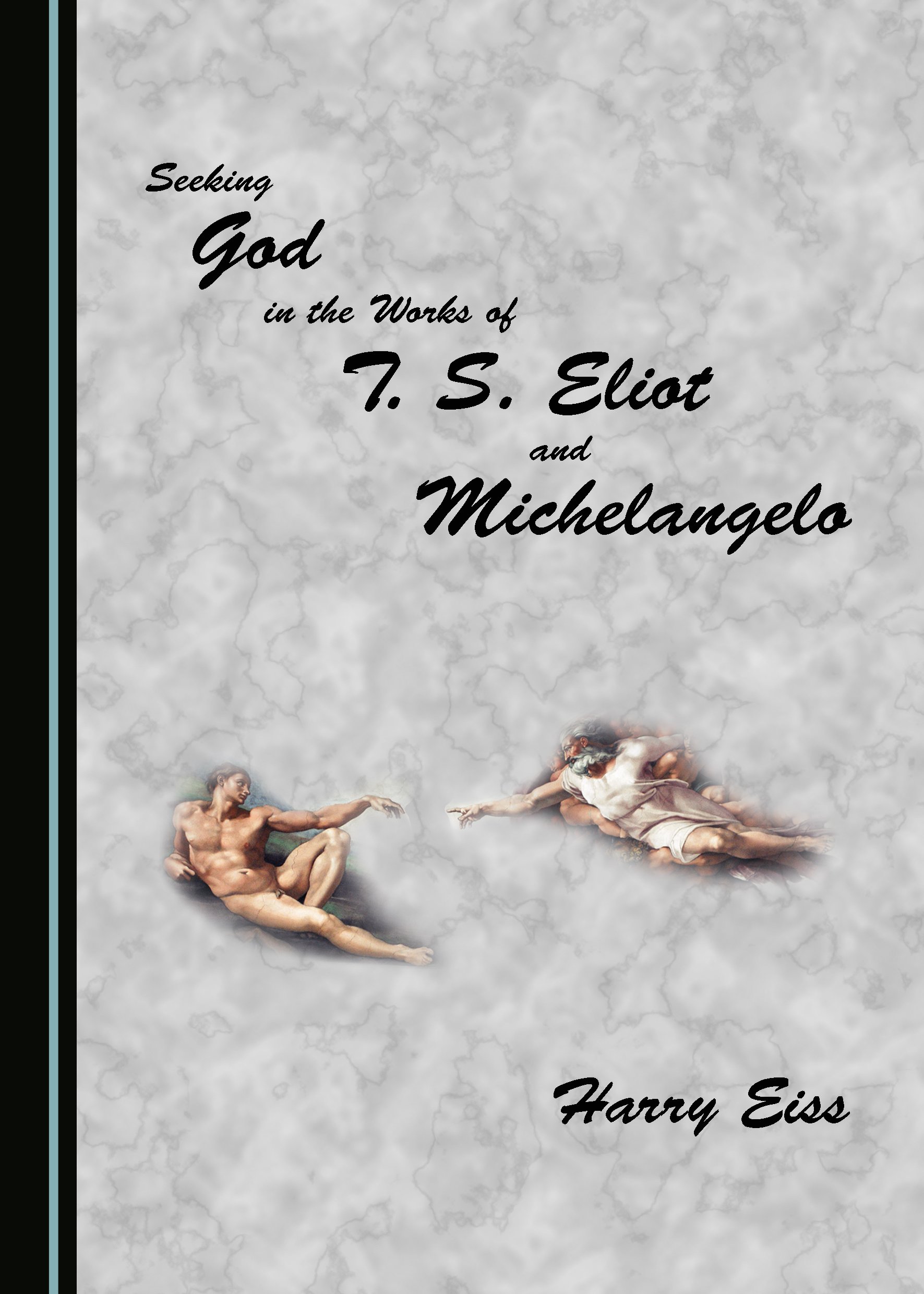
Eliot references Michelangelo in the poem, bringing in the great painter of the ceiling of the Sistine Chapel. Most immediately recognize his name and work, but do not realize how he expressed a similar personal struggle between the desires of the flesh and the spirit. Both of them admired Dante’s Divine Comedy, and its inclusion of amour as a means to salvation. Dante’s work is generally seen as the greatest literature ever to come out of Italy.
This book is an expanded revision of Seeking God in the Works of T. S. Eliot and Michelangelo. It explores how T.S Eliot struggled with the highest meanings of existence in his poetry and his own life, and perhaps managed to express what has become known as a modernist (and post-modernist) view of what Rudolph Otto designated the mysterium tremendum, the experience of a mystical awe, the experience of God.