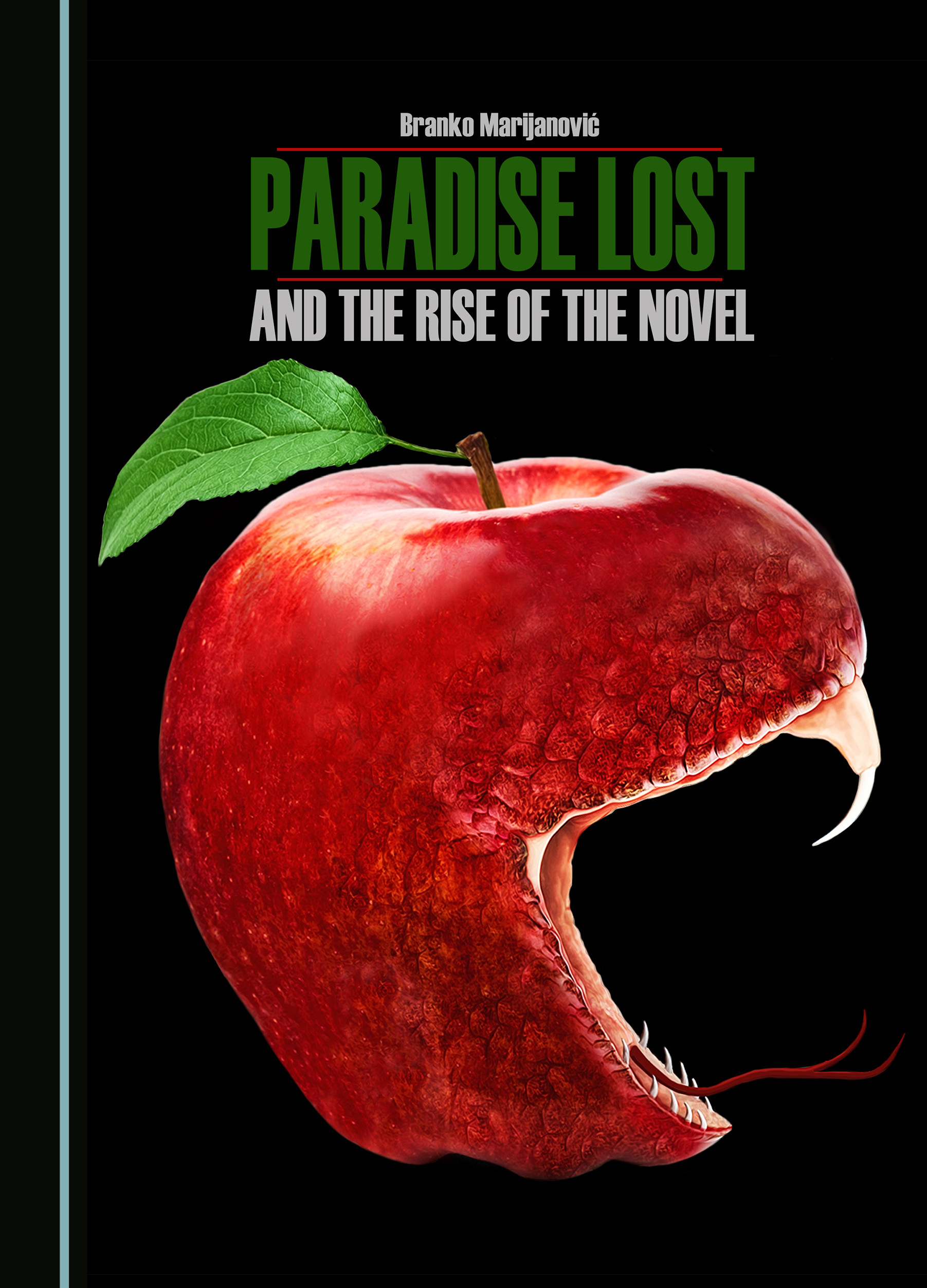
This book claims that Paradise Lost contains all the traits of the great epics, as well as the predominant characteristics of early modern novels, and that every history of the novel should acknowledge Milton’s (unintentional) contribution to the development of the genre. Milton’s Satan is presented as a novelistic character par excellence, preceding memorable literary characters of novelistic provenance like Dostoyevsky’s Raskolnikov, Shelley’s monster or Kafka’s beetle. In addition, this book proves that all the elements of modernity like capitalism, science, all-pervasive doubt, the absence of unquestionable ideals, radical individualism, and the insatiable desire for self-realization and incessant advancement are inherent to both Paradise Lost and Satan’s character. Just like a fully developed novelistic character and unlike any epic character in history, Satan constantly surprises us by failing, exceeding or simply contradicting our expectations. As such, the book demonstrates that Satan shares more common points with the likes of Tom Jones, Moll Flanders or Lovelace than with the traditional epic heroes like Achilles or Aeneas, proving that the novel as a genre owes an immense debt to Milton’s grand epic and that Satan may be perceived as a precursor of the great novelistic characters.