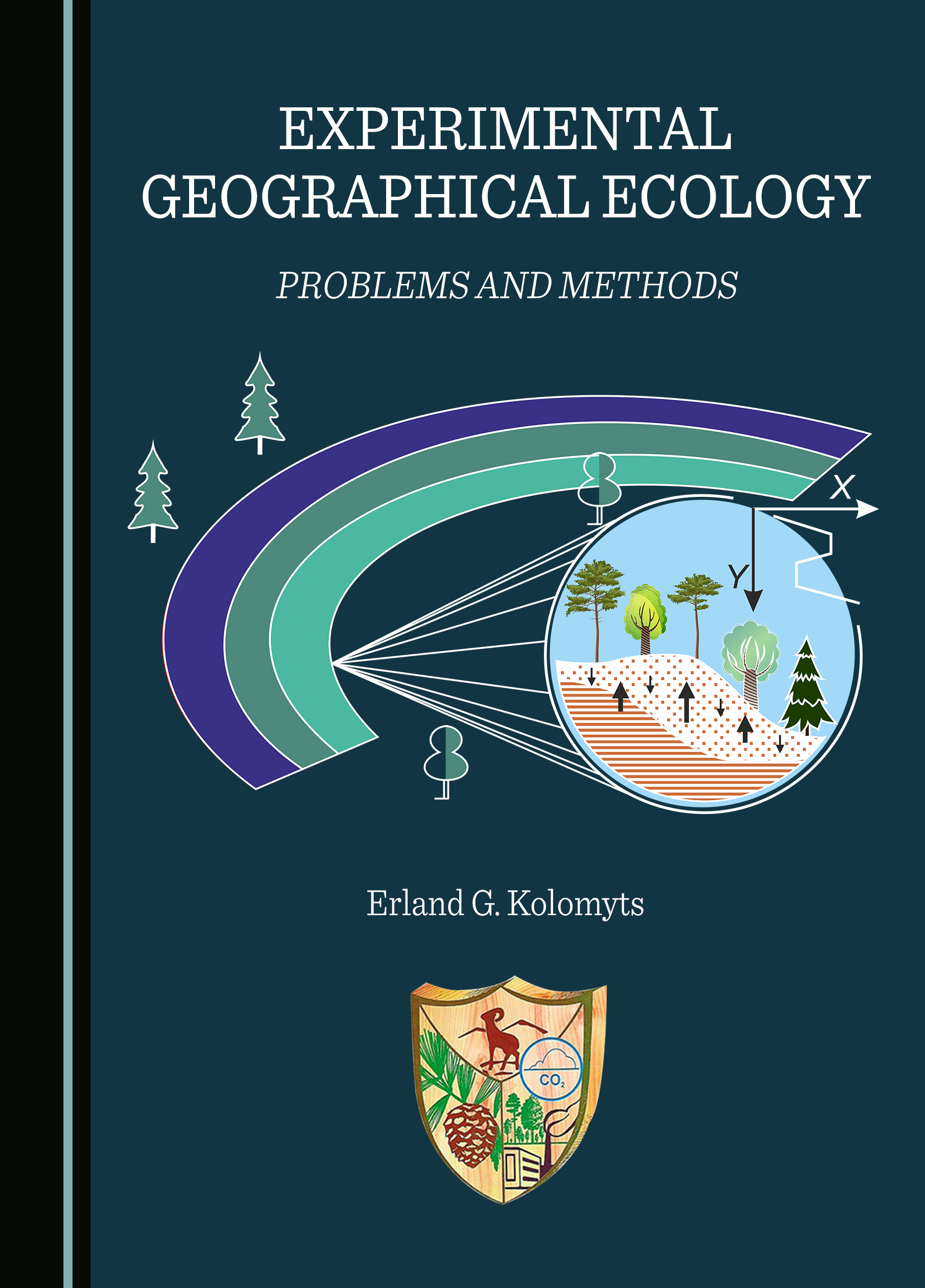

This book sets out a paradigm of experimental geographical ecology and its core—landscape ecology—providing a number of empirical statistical models and ecological geographical concepts developed on the basis of these. It highlights the mechanisms of formation of regional- and local-level landscape-ecological systems, their natural and anthropogenic dynamics, and their evolutionary trends. It presents numerical methods of making landscape-ecological forecasts and assessing forest sustainability, and provides quantitative estimates of local and regional biotic regulation of the carbon cycle according to the scenarios of modern temperature growth and mitigation of warming, set out by the Paris (2015) Agreement on Climate Change. As such, the book will be a useful source of reference for field research, statistical and cartographic processing of the obtained data, mathematical modeling, geoecological interpretation of results, and the creation of theoretical schemes of geosystem analysis. It will appeal to specialists in the fields of geographical ecology, landscape-ecological modeling, and environmental forecasting.
Plants experience stress from environmental changes. This book is a comprehensive reference on plant responses to both biotic and abiotic stress, consolidating topics that other books cover only in isolation. It details this essential aspect of plant life and adaptation.