• 0 Items - £0.00
    • No products in the cart.

From £32.99

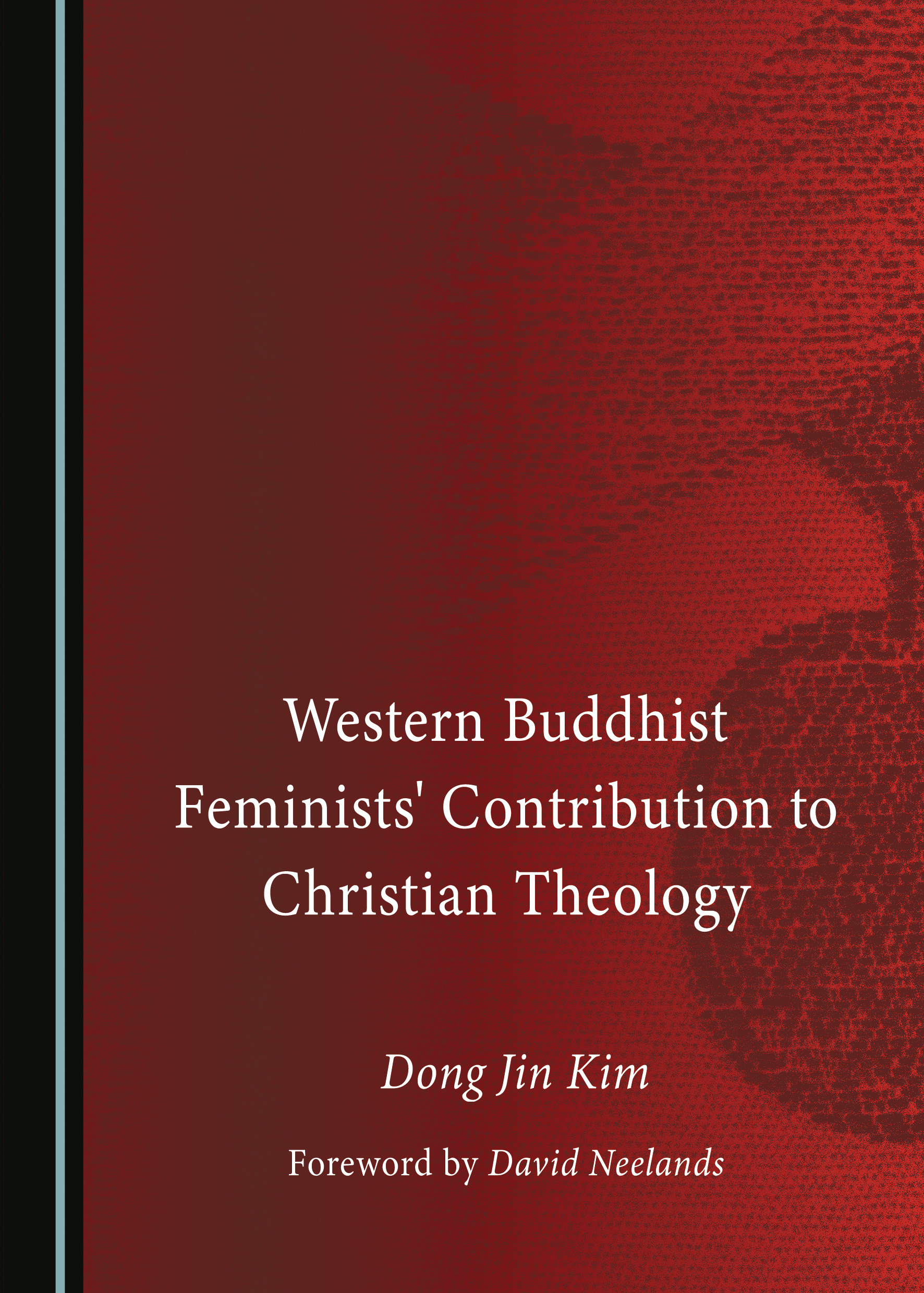
Western Buddhist Feminists’ Contribution to Christian Theology

By: Dong Jin Kim

From £32.99

This book tackles gender injustice in religion. It explores how Buddhist feminists meditate to empty the gender ego—a skill applicable in Christian theology. For women’s spiritual liberation and happiness, inner training and external social action must go together.

This book discusses gender injustice and justice in religious institutions and spiritual life. Fixed as a gender, God/Goddess leads those who have the same gender…
From £32.99
From £32.99
1-5275-9044-5 , ,
Share

This book discusses gender injustice and justice in religious institutions and spiritual life. Fixed as a gender, God/Goddess leads those who have the same gender to subordinate anyone who differs. In this sense, the patriarchal and androcentric system has caused many religious women to lose their spiritual and faithful equality and identities in a church. This book details how Western Buddhist feminists find that, after recuperating women’s equivalent rights and identities, both religious men and women need to meditate to achieve the emptiness of gender ego—gender privilege and prejudice—which then leads to awakening and enlightenment from ignorance. To apply such skills in Christian theology, gender justice comes from spiritual equality and courage—awakening and repentance—in their contemplative and meditative lives. This book suggests that, for women’s spiritual and real liberation and happiness, both inner trainings and external social actions have to go together.

Dong Jin Kim received a PhD in Theology from the University of St. Michael’s College, Canada, in 2020. He is currently teaching “Ecclesiology” and “Christianity and Community” as Visiting Professor at Hyupsung University, South Korea. His research interests are comparative religion, philosophy of religion, theology, and especially interfaith dialogue between Buddhism and Christianity. His recent publications include “Comparison of Eternity and Time between Certain Forms of Christianity and Confucianism” in Korean Journal of Systematic Theology 65 (2021) and “Evil and Judgement: A Comparison of Hannah Arendt and Reinhold Niebuhr” in Korean Journal of Christian Studies 125 (2022).

Hardback

  • ISBN: 1-5275-9044-5
  • ISBN13: 978-1-5275-9044-1
  • Date of Publication: 2023-01-11

Paperback

  • ISBN: 1-0364-2083-3
  • ISBN13: 978-1-0364-2083-3
  • Date of Publication: 2024-12-13

Ebook

  • ISBN: 1-5275-9045-3
  • ISBN13: 978-1-5275-9045-8
  • Date of Publication: 2024-12-13

Subject Codes:

  • BIC: HRAC, HRAB, HRLB
  • THEMA: QRAC, QRAB, QRVG
175
  • “A new and theologically significant direction for advancing Christian-Buddhist interreligious conversation. A textual juxtaposing of Western Buddhist feminism to Christian feminism that does at least two things. One is to throw in relief for each the theological and hermeneutical approaches and practical methods to end patriarchal sexism, gender injustice and psychologically liberate the self from inner sufferings such as angers, frustration, and sorrow. The other is to bring to the fore the practices of meditation, mindfulness, and compassion (karuna) by Western Buddhist feminism as a resource for Christian feminism to augment rehabilitating the self, God, and neighbor/other relationship.”
    - Abrahim H. Khan Professor, Faculty of Divinity, Trinity College, University of Toronto.
  • “Feminism has made attempts in the twentieth century to escape the masculine preconceptions about the divine by changing the inherited pattern within an altered Christian theology or by borrowing models from various pagan systems. Both have been welcomed by many hopefuls of escaping the sexist prejudices inherited in churches; neither has gained full acceptance. Dr Dong Jin Kim has proposed that the problem can be solved without problematic changes in theological systems and narratives by changing our spirituality, guided by selected Western Buddhists. This will also solve problems not addressed by previous feminism. His proposal should be welcome to a wider audience.”
    - David Neelands Dean Emeritus, Trinity College, University of Toronto

Meet The Author